COMPONENT / ROD-CLEVIS

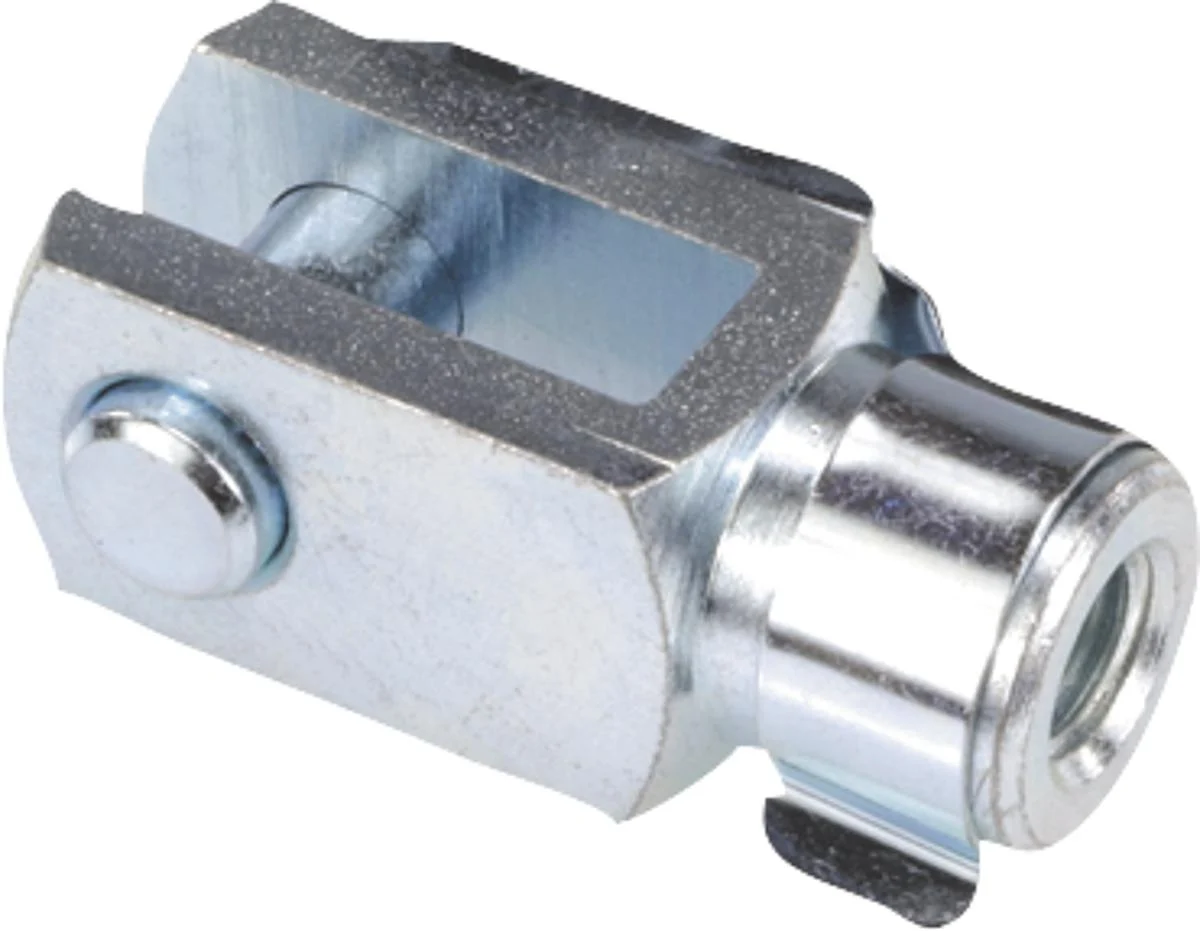
Rod Clevis

Rod Clevis · Norelem
Manufacturer illustration · NorelemPictured model: DIN 71752Original source
01 / INTRODUCTION

What is it?

A fork-shaped fitting that hinges a cylinder piston rod to a linkage.

02 / CONSTRUCTION

Construction & recognition

One end is a fork with a cross pin hole, the other takes the piston rod by internal thread; the version shown has a folding spring pin.

03 / APPLICATIONS

Common applications

Single-axis pivoting joints between a piston rod and a rocker arm or linkage.
Browse this category

Image copyright belongs to the manufacturers or original authors. Brands and models identify illustrations; consult official documentation when selecting parts.

ONLY ON MECHWIKI / SELECT · BUY · MAINTAIN

Before you use it: lifetime, selection, variants, sellers, uses

The notes below cover the “Fittings & accessories” category. MechWiki prepared these category notes from public standards and engineering references. Use the selected manufacturer’s catalog for ratings, life factors and dimensions.

04 / LIFETIME

Lifetime & replacement criteria

Push-in fitting seals and gripping claws wear with repeated insertion, and scratches on the tube end can cause leaks. Needle and check-valve seal wear can make speed drift. Oil deposits can block silencers and increase back pressure.

When to replace: Replace leaking fittings, fittings that no longer retain the tube, speed controllers that fail to adjust or hold speed, and clogged silencers that slow a cylinder. Cut back damaged tubing with a square cut before reinserting it.

05 / SELECTION

How to select

  1. Match fitting size to tube outside diameter and match the port thread form and size, such as R, G, NPT or M5.
  2. Choose a straight, elbow, tee or Y fitting for the space available. Check whether a swivel fitting is needed.
  3. Meter-out control at the cylinder port is the usual starting point. Meter-in control is used in some single-acting or low-volume applications.
  4. Size silencers for the port and airflow. Use a high-flow version if low back pressure is required.
  5. Choose engineering plastic, nickel-plated brass or stainless steel to suit the environment. For frequent disconnection, choose a quick coupler and the required shutoff arrangement.
TOOLS / CALCULATE

Related selection calculators

Use these calculators for a preliminary estimate, then verify the result against this entry, the manufacturer catalogue and installation limits. Results do not replace a specific model rating.

06 / VARIANTS

Common designations & derived parts

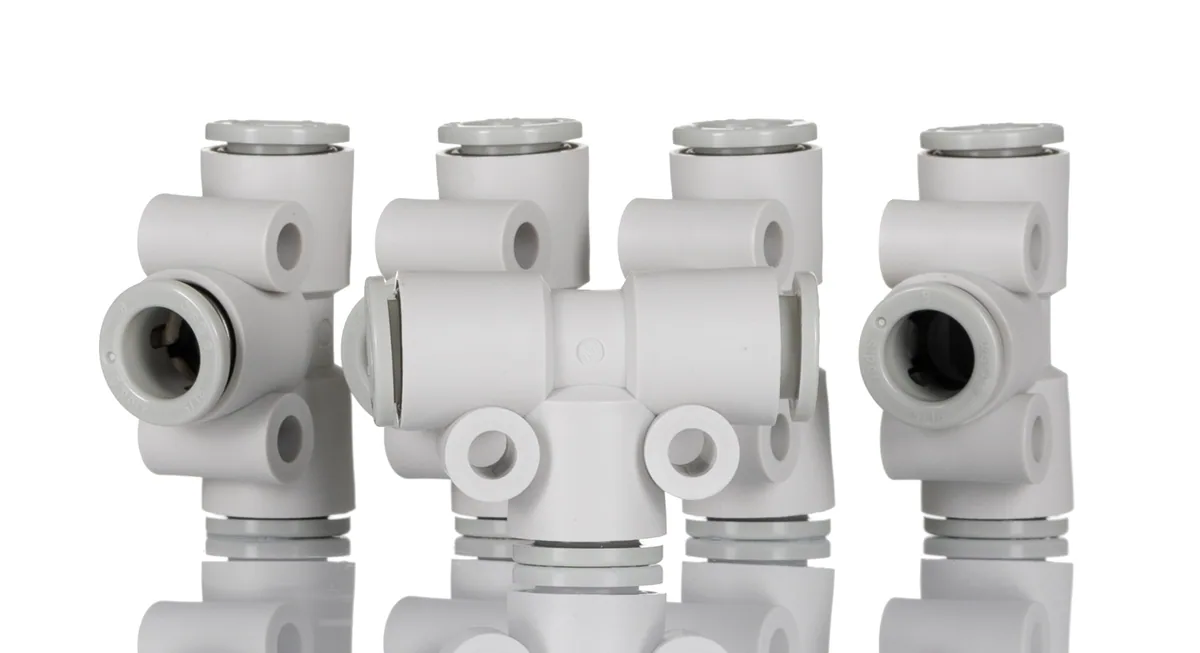
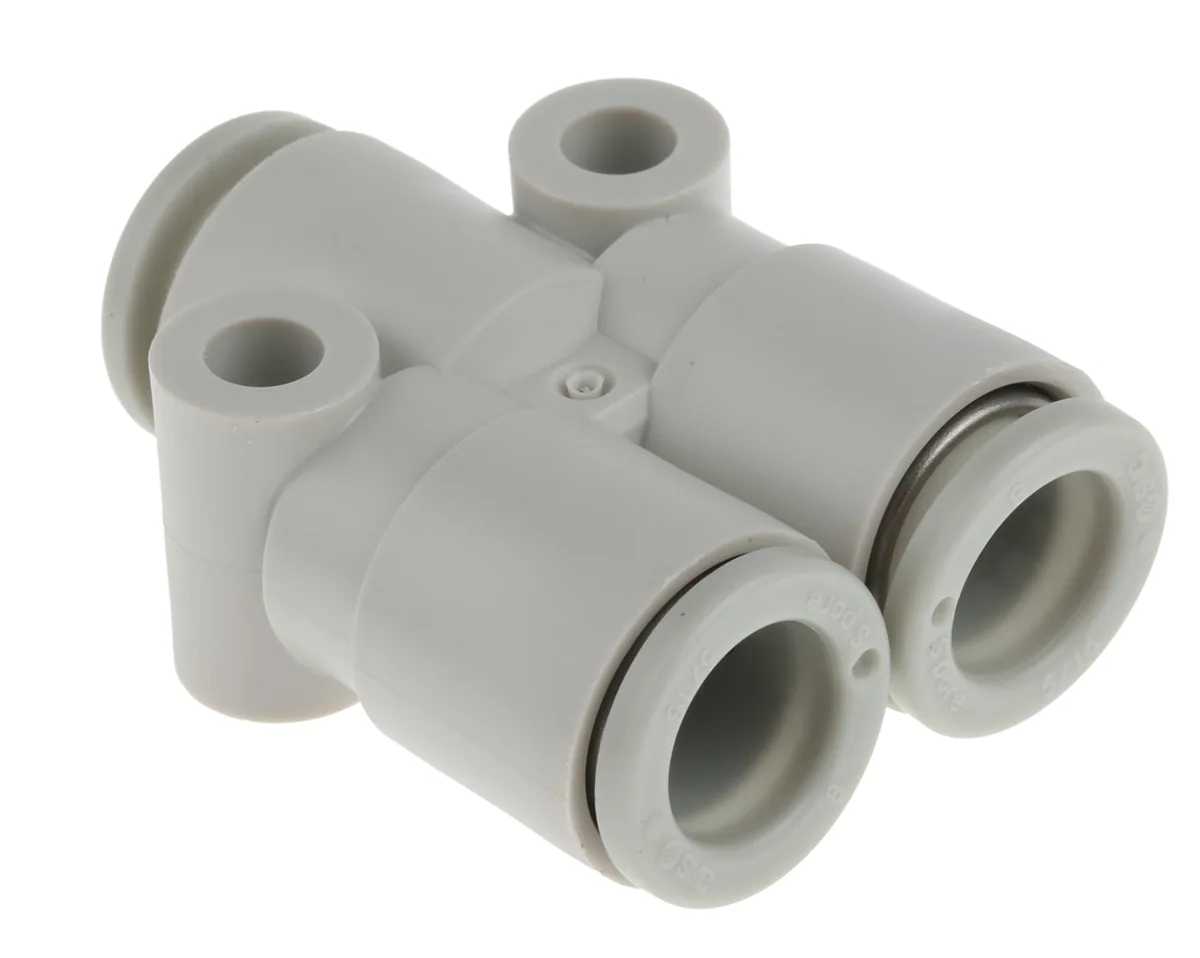
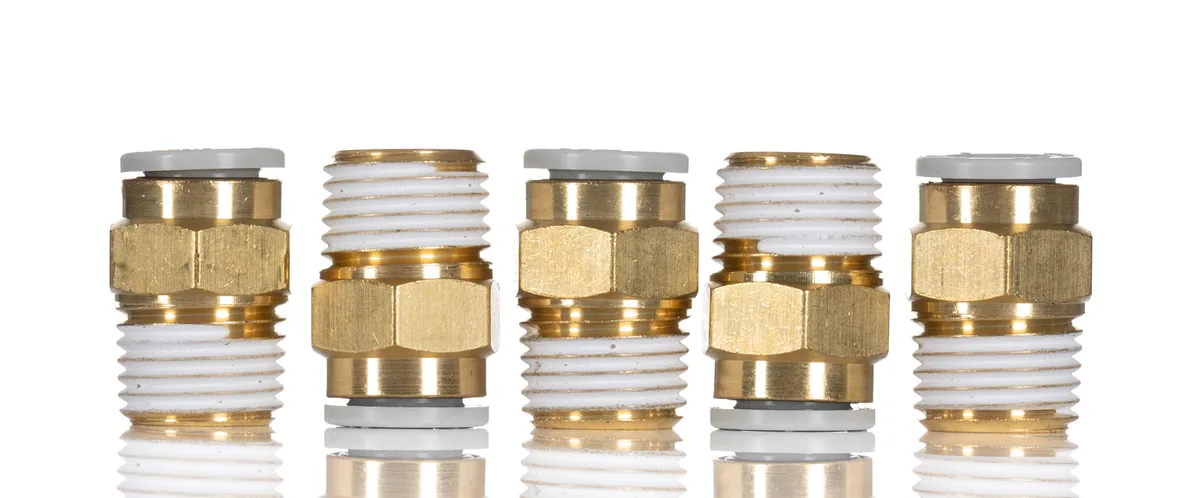
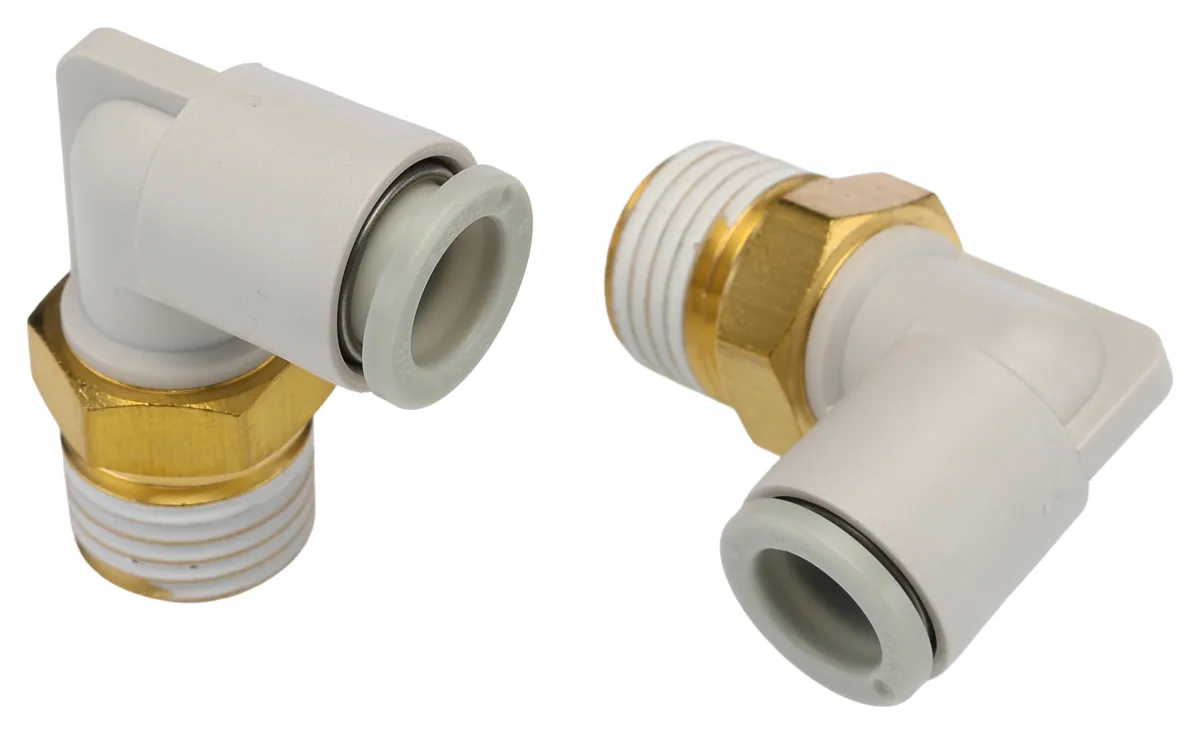
  • Push-in fittings include straight, elbow, tee, Y, bulkhead and reducing types.
  • Thread forms include tapered R, parallel G, M5 and NPT.
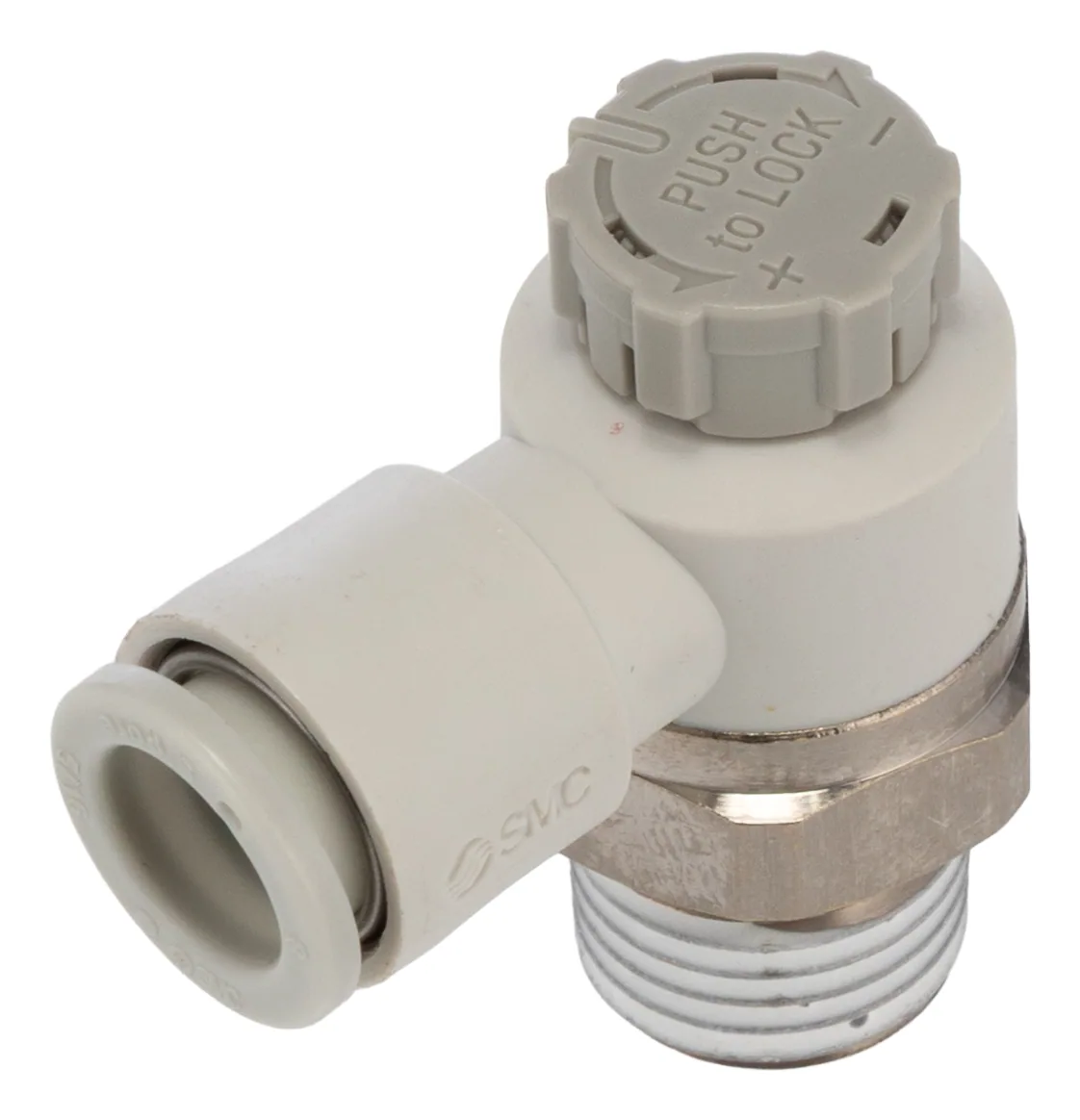
  • Speed controllers include meter-out, meter-in, bidirectional and load-holding types with a pilot-operated check valve.
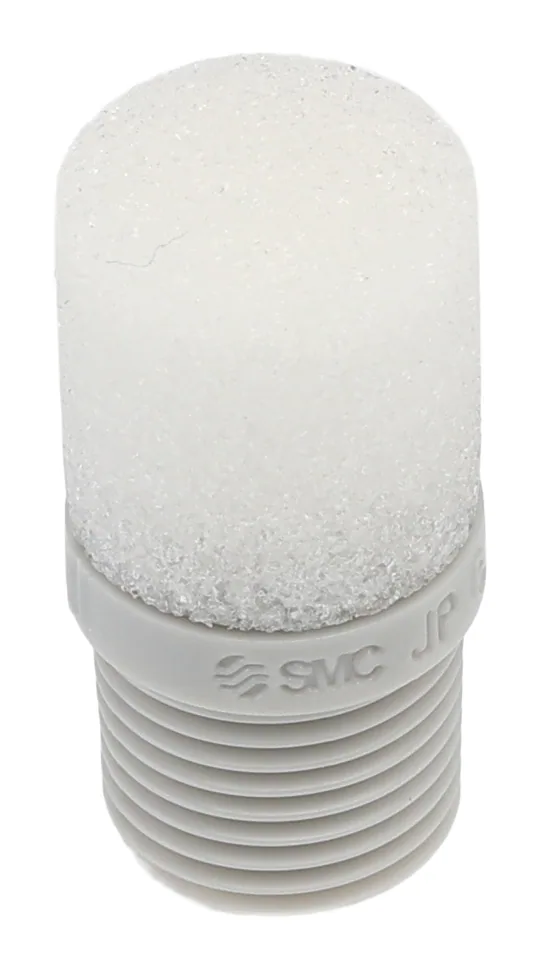
  • Sintered bronze, resin and flow-control silencers
  • Quick couplers with single shutoff, double shutoff or safety venting

Pictured models: Norelem DIN 71752

07 / SELLERS

Who sells it

The directory links to manufacturer selection and CAD resources and identifies the maker of the pictured example. Check stock and lead time with the supplier. Price comparison and ranking are not available yet.

08 / WHERE IT IS USED

Typical uses & where it sits in machines

Single-axis pivoting joints between a piston rod and a rocker arm or linkage.
Profile frameElectric linear moduleShock absorberGuided cylinderCylinder switchAir tubingRotary actuatorParallel gripperVacuum cupVacuum generatorVacuum switchValve islandFRL unitHere: Fittings & accessoriesSpeed controller
Pick-and-place unit (electric traverse, pneumatic lift and grip)Schematic, not to scaleArrow: Speed controller
Tubing between cylinders and valvesActuator speed controlNoise reduction at valve exhaust portsQuick connection of tools and fixtures