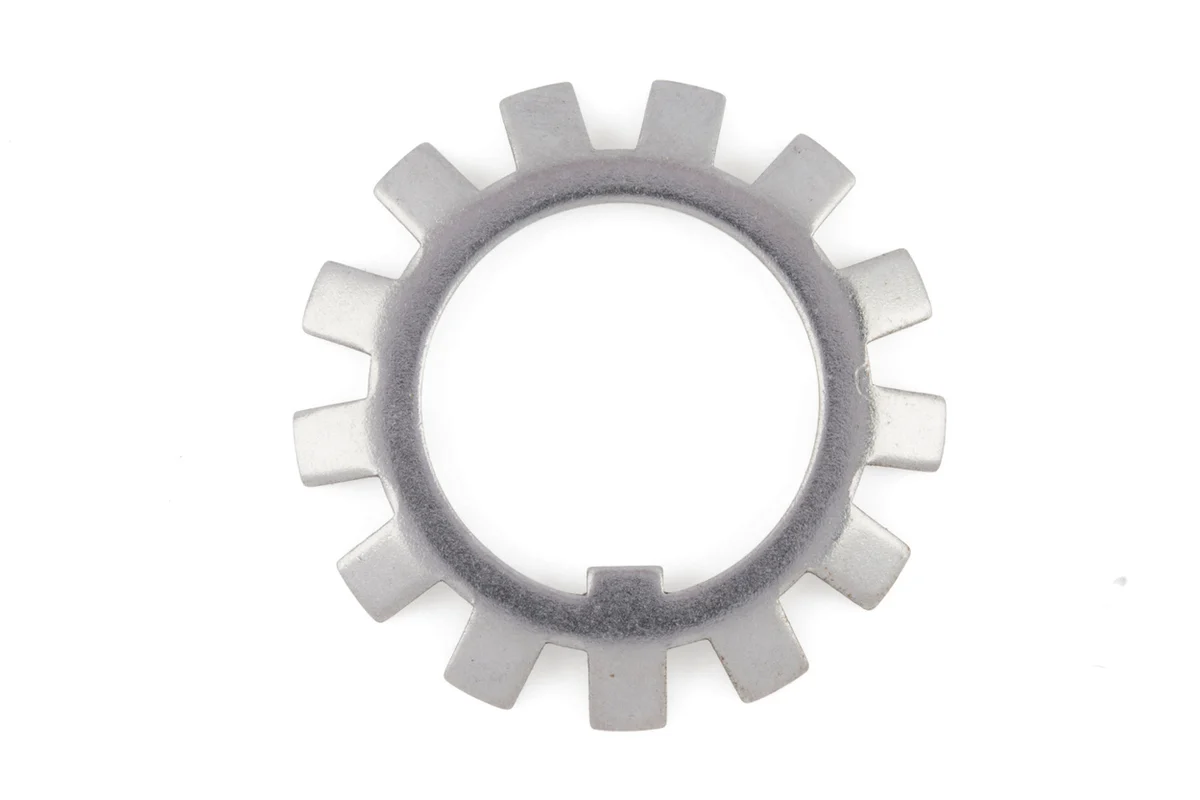
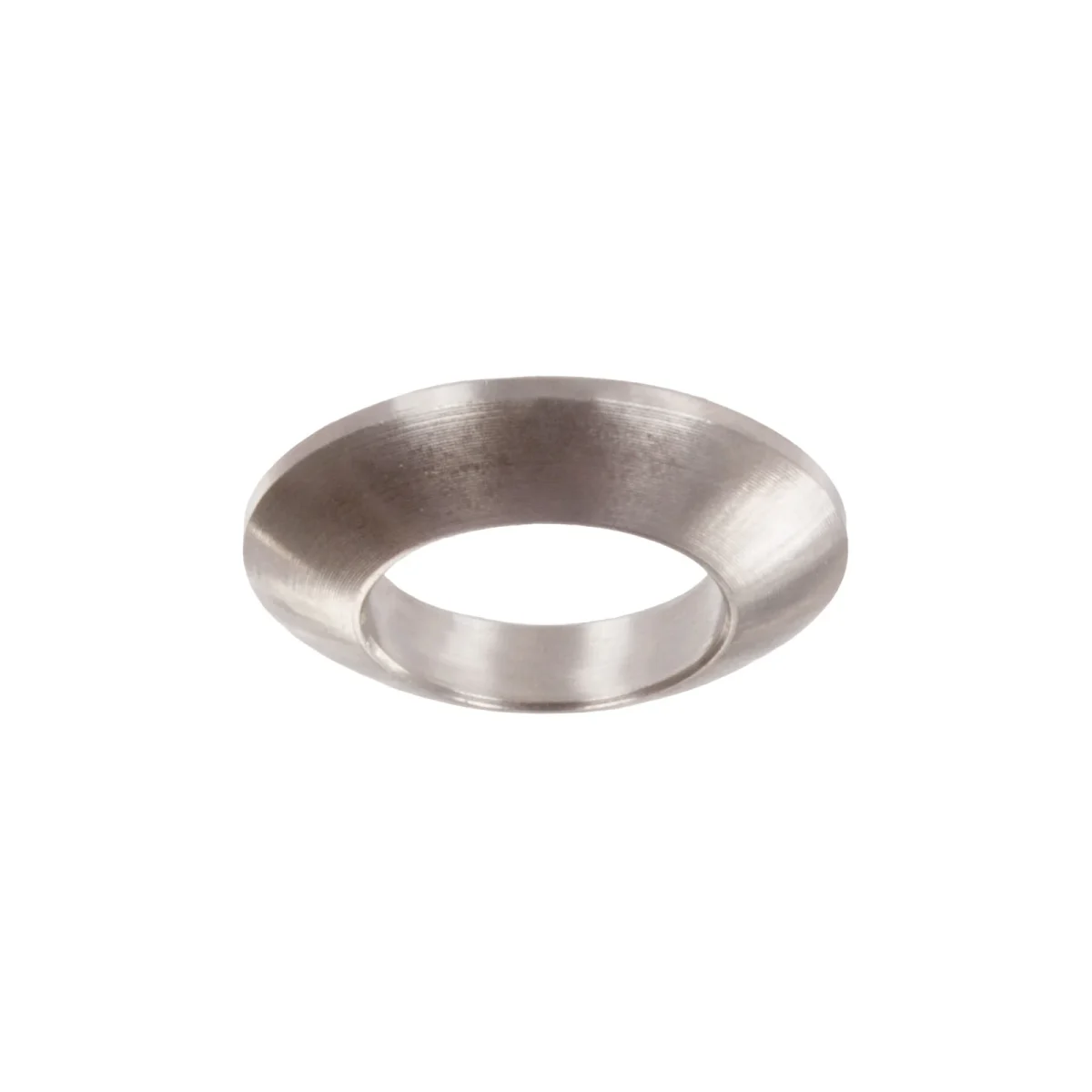
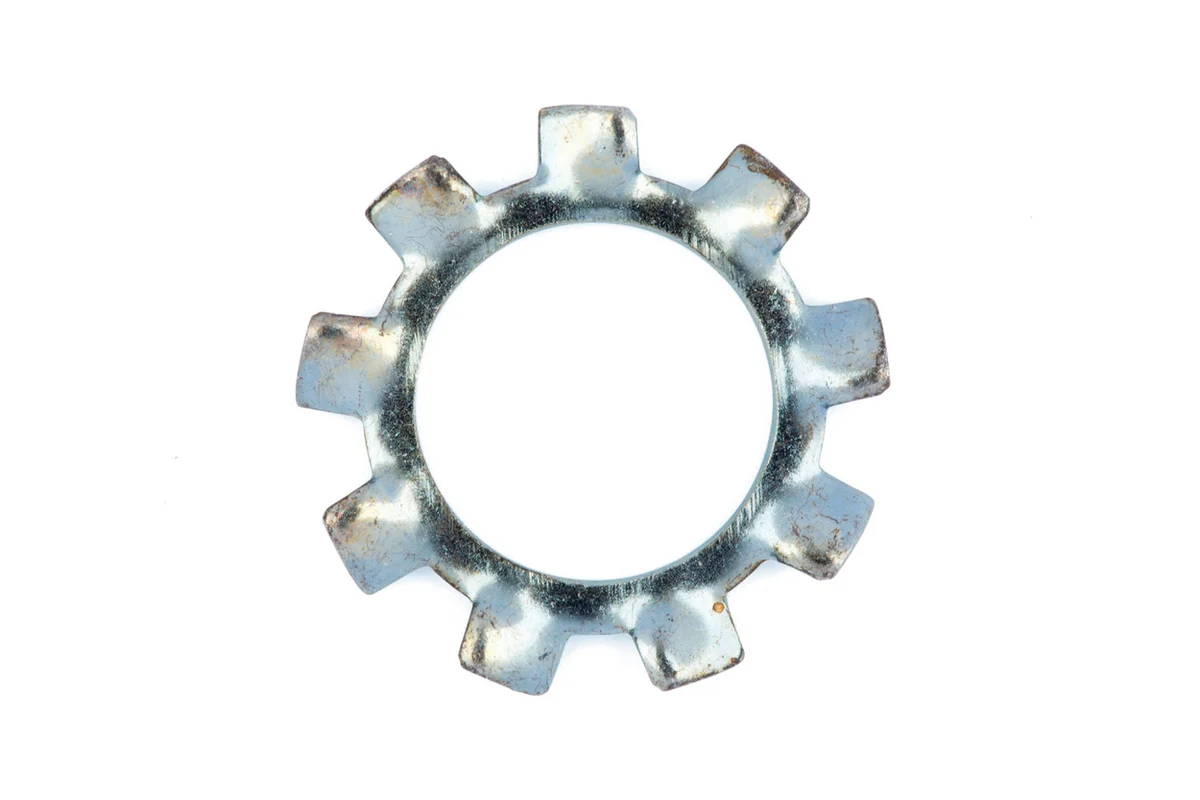
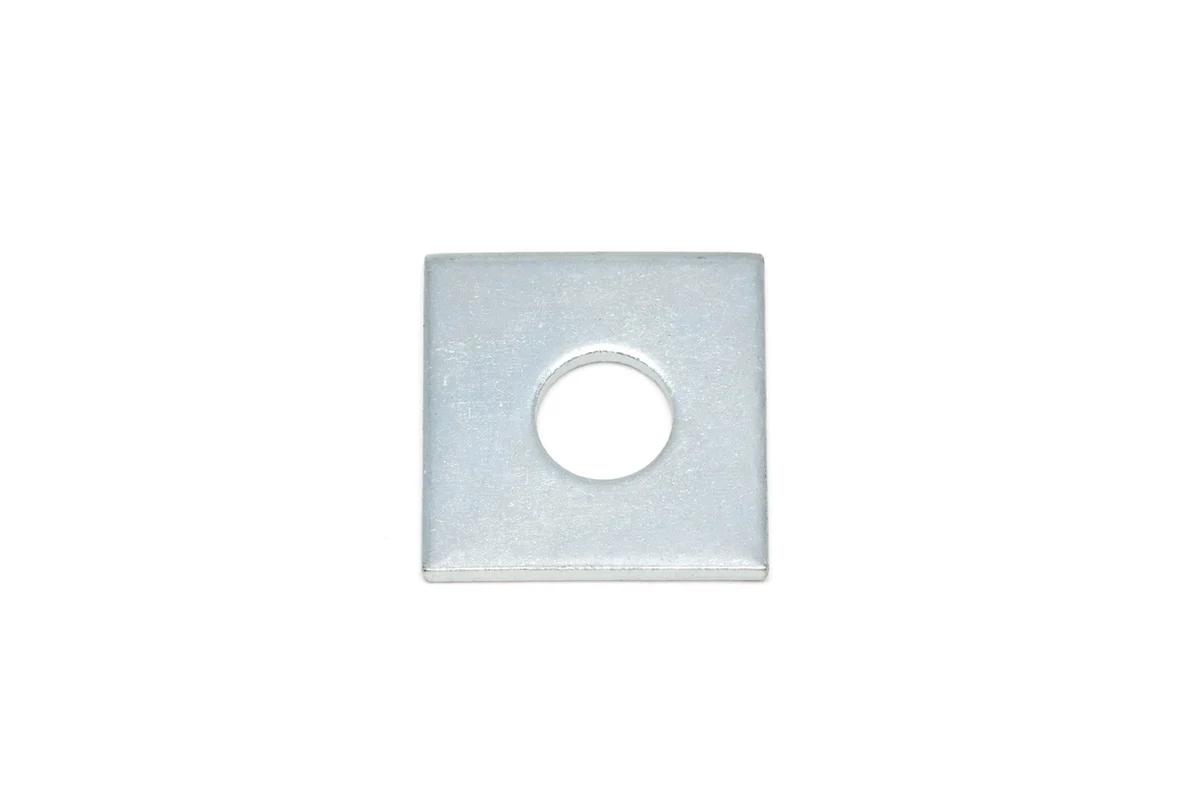
Image copyright belongs to the manufacturers or original authors. Brands and models identify illustrations; consult official documentation when selecting parts.
ENGINEERING GUIDE
Selection and design guide
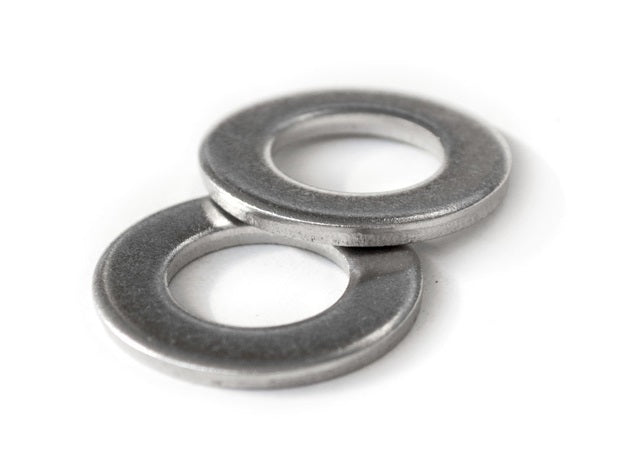
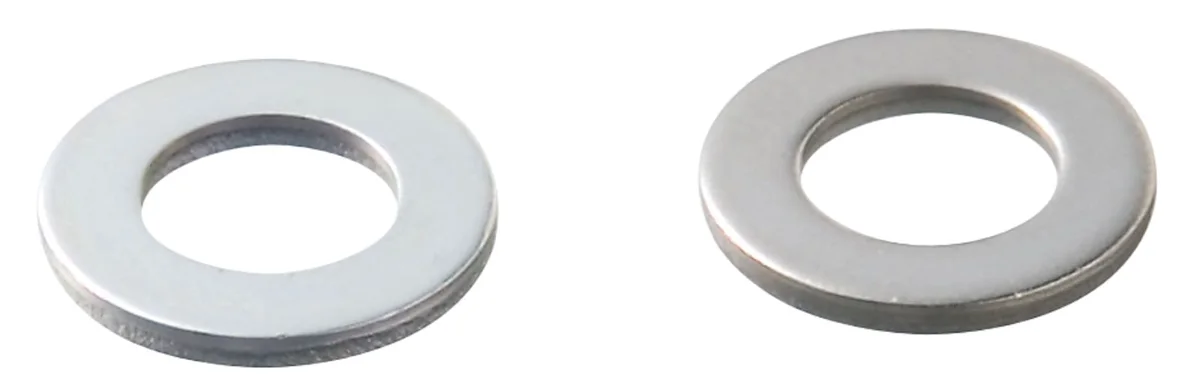
A thin ring placed under a bolt head or nut, used to enlarge the seating area, protect the part surface and cover large holes and slotted holes. It comes in small, standard, large and extra-large outside diameter series and in product grades A and C, and its hardness must match the bolt class; it does not lock the joint, and a soft washer under a high-strength bolt is dented and lets the preload decay.
01Construction and how it works
A plain washer is a stamped or turned steel ring. It sits between the bolt head (or nut) and the clamped part, spreading the pressure under the head over a larger area. The handbook states its purpose plainly: it is used mainly on metal parts, to increase the seating area, to cover larger holes and to prevent damage to the part surface; large washers are mostly used on wooden parts.
Spreading the pressure: on aluminium, plastic and sheet metal the pressure under the head can exceed what the material takes and dent the surface, and a dent costs preload. MISUMI lists the rule that the seating face of the bolt or nut must not dent the clamped part among its four tightening principles.
Protecting the surface: when a nut is tightened it is the nut that rotates, and the washer makes the friction take place on the washer instead of scratching the coating or the machined face.
Covering large holes and slots: on an adjusting slot or an oversize through hole, a head pressed straight on bears only on two sides.
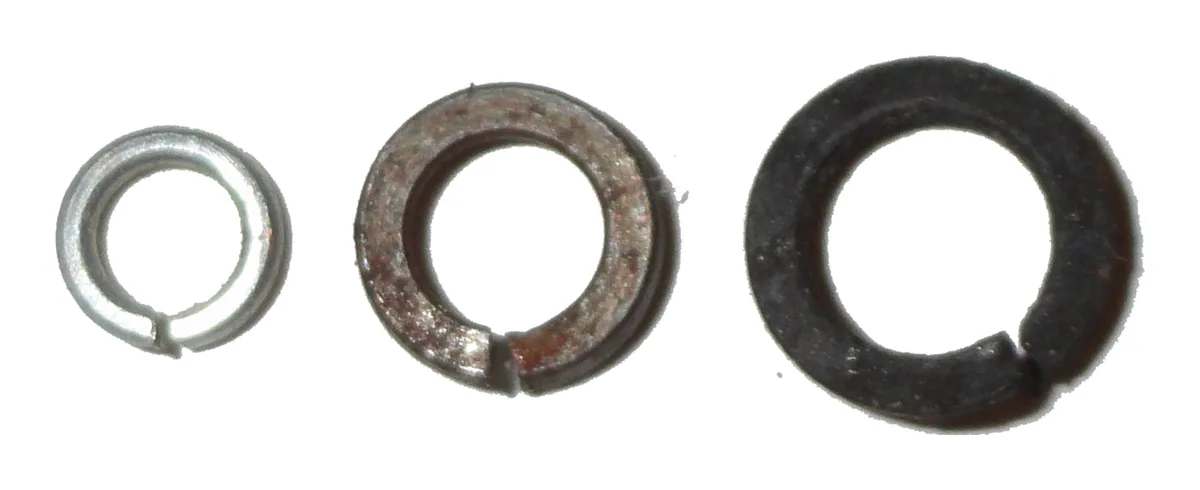
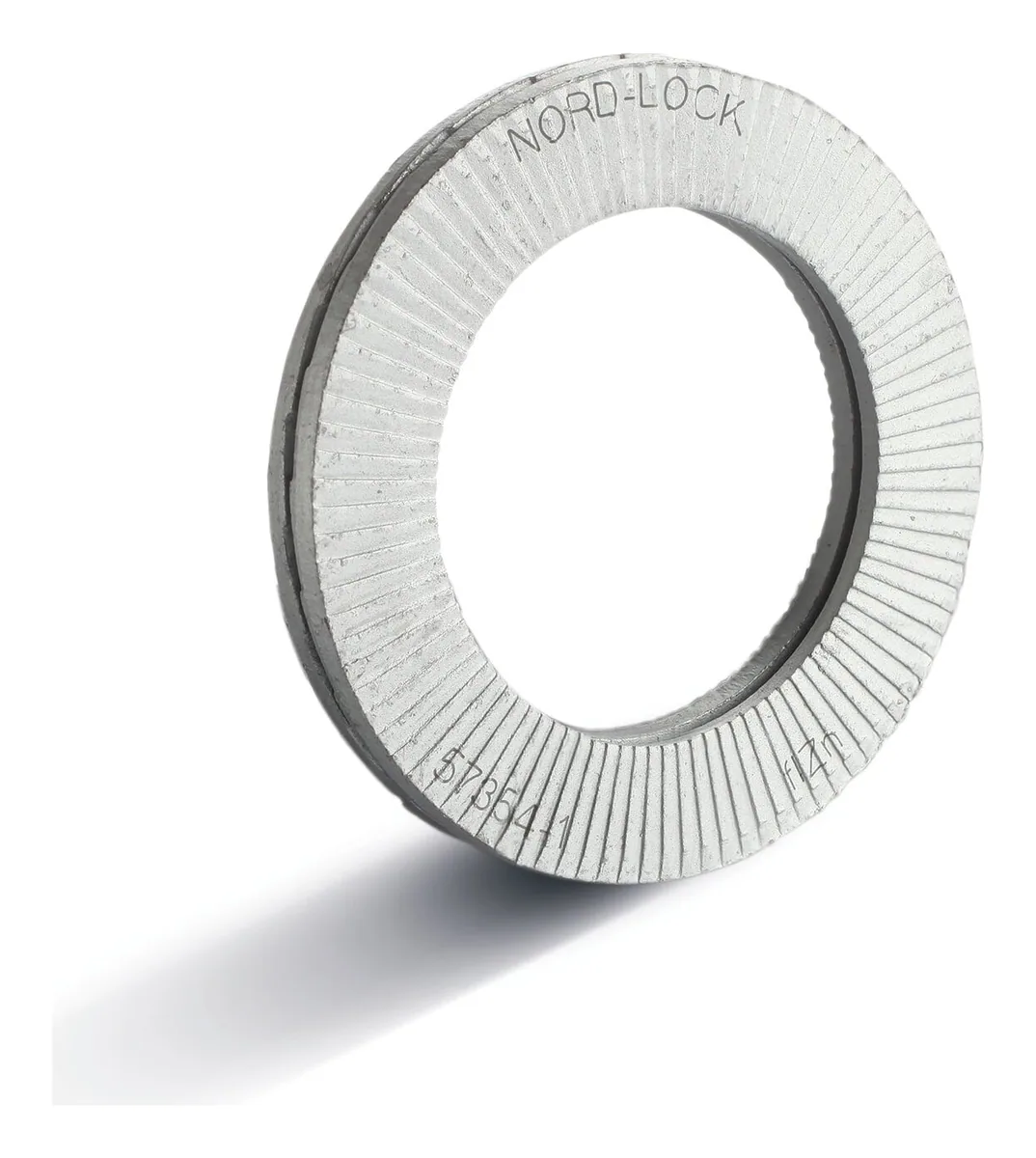
It does not lock: in the Nord-Lock classification, plain washers and disc springs are both products without a locking function, and their main purpose is to protect the mating surfaces.
Small outside diameter, for small heads or tight space
Large washer, product grades A and C
GB/T 96.1, 96.2—2002
3~36
Large outside diameter; covers big holes and slots and suits soft materials
Extra-large washer, product grade C
GB/T 5287—2002
5~36
Larger outside diameter still
Plain washer for clevis pins
GB/T 97.3—2000
3~100
Used with clevis pins and cotter pins
From the Machine Design Handbook, Table 6-1-156, washer summary (printed page 6-151), and Tables 6-1-157, 6-1-158 and 6-1-164; the current edition applies.
Product grades and hardness classes
Item
Value
Notes
Grade A
GB/T 97.1, 97.2, 96.1, 848
Smaller bore (6.4 at M6), used with grade A and B bolts
Grade C
GB/T 95, 96.2, 5287
Larger bore (6.6 at M6), rough parts
100HV
Hardness 100~200HV
Grade C washers
200HV
Hardness 200~300HV
Standard for steel grade A washers; stainless washers are also 200HV
300HV
Hardness 300~370HV
Quenched and tempered, used with high-strength bolts
From the technical conditions of Tables 6-1-157 and 6-1-158 in the Machine Design Handbook (printed pages 6-152~6-153). The handbook also requires quenched and tempered washers to be de-embrittled immediately after plating or phosphating, to avoid hydrogen embrittlement.
03Key parameters
Grade A plain washer dimensions: bore d1 / outside diameter d2 / thickness h (mm)
Size
Small washer GB/T 848
Standard GB/T 97.1
Large washer GB/T 96.1
Grade C GB/T 95 bore
M3
3.2 / 6 / 0.5
3.2 / 7 / 0.5
3.2 / 9 / 0.8
3.4
M4
4.3 / 8 / 0.5
4.3 / 9 / 0.8
4.3 / 12 / 1
4.5
M5
5.3 / 9 / 1
5.3 / 10 / 1
5.3 / 15 / 1
5.5
M6
6.4 / 11 / 1.6
6.4 / 12 / 1.6
6.4 / 18 / 1.6
6.6
M8
8.4 / 15 / 1.6
8.4 / 16 / 1.6
8.4 / 24 / 2
9
M10
10.5 / 18 / 1.6
10.5 / 20 / 2
10.5 / 30 / 2.5
11
M12
13 / 20 / 2
13 / 24 / 2.5
13 / 37 / 3
13.5
M16
17 / 28 / 2.5
17 / 30 / 3
17 / 50 / 3
17.5
M20
21 / 34 / 3
21 / 37 / 3
21 / 60 / 4
22
M24
25 / 39 / 4
25 / 44 / 4
25 / 72 / 5
26
From Tables 6-1-157 (GB/T 95, 97.1, 97.2) and 6-1-158 (GB/T 96.1, 848) in the Machine Design Handbook, printed pages 6-152~6-153. The outside diameter and thickness of GB/T 95 are the same as those of 97.1; GB/T 97.2 has the same dimensions as 97.1 and starts at M5.
Compare a few common sizes: the M6 socket head cap screw has a 10 mm head diameter and its counterbore is 11 mm; a standard washer of 12 mm outside diameter does not fit into that counterbore, while a small washer of 11 mm outside diameter is exactly the counterbore diameter. An M6 hex bolt has a 10 mm across-flats, and the 12 mm standard washer is just one size larger.
04Selection and calculation
Decide whether one is neededAdd one where the clamped part is aluminium, plastic or sheet metal, where there is a coating, or where the hole is large or slotted; a steel part, a machined face, a standard through hole or a tight counterbore can often do without.
Choose the outside diameter seriesUse a large washer to cover holes and slots and on soft materials; normally take the standard series; take the small washer where the head is small or space is tight.
Match the hardness to the bolt classClass 8.8 and below take 200HV; class 10.9 takes a 300HV quenched and tempered washer; the standard gives no washer requirement for class 12.9, so follow the supplier catalogue and use a hardened washer.
Check the seating pressureOn aluminium and soft steel, check the preload by the method in the socket head cap screw article and keep the seating pressure under control; if it is too high, go to a large washer or a hardened washer.
Keep the finish the same as the boltA quenched and tempered washer needs de-embrittlement after plating; a stainless bolt takes a stainless washer.
Washer hardness matched to bolt class
Bolt class
Washer hardness class
Notes
4.6~8.8
200HV
Standard parts to GB/T 97.1, 97.2, 96.1, 848
10.9
300HV (quenched and tempered)
A soft washer is dented
12.9
Not specified in the standard
Take a hardened washer from the supplier catalogue, or omit the washer and bear directly on the steel part
The matching follows the scope clause of ISO 7089 (the international standard behind GB/T 97.1): 200HV washers suit bolts of class 8.8 and below, and 300HV washers suit bolts of class 10.9 and below and nuts of class 10. This clause is quoted through a standards catalogue abstract and the original text was not consulted; check the standard before use.
Why a soft washer fails under a high-strength bolt: class 10.9 and 12.9 bolts carry a high preload, and a 200HV washer is dented (embedded) under the head pressure. The washer becomes slightly thinner, the bolt stretch becomes slightly shorter and the preload drops with it. This is exactly the case that the MISUMI rule against denting the seating face is meant to avoid.
Put the washer under the side that turns: under the nut when the nut is turned, under the head when the bolt head is turned.
The tightening torque includes the friction between washer and nut, so tighten under the conditions the torque table was compiled for; adding or omitting a washer, and whether the washer is zinc plated, both change the torque coefficient.
Be careful with washers in a counterbore: the counterbore for an M6 socket head is 11 mm, a standard washer of 12 mm outside diameter will not go in, and an 11 mm small washer only just fits; if a washer is needed, enlarge the counterbore and add the washer thickness to its depth.
Use a large washer on an adjusting slot, with an outside diameter that covers the slot width plus a margin all round.
Do not stack several washers to make up height: the layers embed and relax against each other, so use a machined spacer instead.
Change to a 300HV quenched and tempered washer or a hardened washer
Clamped surface dented
No washer, or too small a washer, on aluminium or plastic
Large washer or hardened large washer, to lower the seating pressure
Washer dished into a cup
Hole or slot too large, washer too thin
Large washer, thicker washer or a machined spacer
Hardened washer fractures
No de-embrittlement after plating, hydrogen embrittlement
De-embrittle immediately after plating, or use another corrosion protection
Joint still loosens after assembly
Plain washer treated as a locking device
Secure the preload as described in the socket head cap screw article, and add a locking device if needed
Compiled from the technical conditions of Tables 6-1-156 to 6-1-158 in the Machine Design Handbook, the MISUMI tightening principles and the Nord-Lock classification.
07Common design mistakes
A class 12.9 screw with an ordinary washer. The default plain washer in most web shops is 200HV, it is dented and the preload falls; state the hardness class on the BOM.
Assuming a washer locks the joint. A plain washer has no locking function; locking comes from preload and from a dedicated locking device.
Adding a washer to a socket head screw in a counterbore without thinking. The standard washer will not fit, so the shop either drops the washer or opens up the hole.
Mixing grade A and grade C. A grade C washer has a larger bore (9 against 8.4 at M8), so it centres poorly on a precision bolt and looks untidy.
Using a small washer, or none, on aluminium profile. The slot and the thin wall dent easily; use a large washer or a flanged nut.
Writing only Washer 8 on the drawing. Give the standard, the size and the hardness class, for example Washer GB/T 97.1 8 300HV.
08Standards and manufacturer ranges
Related standards
Standard
Subject
GB/T 97.1—2002
Plain washer, product grade A
GB/T 97.2—2002
Plain washer, chamfered, product grade A
GB/T 95—2002
Plain washer, product grade C
GB/T 96.1, 96.2—2002
Large washer, product grades A and C
GB/T 848—2002
Small washer, product grade A
GB/T 5287—2002
Extra-large washer, product grade C
GB/T 97.3—2000
Plain washer for clevis pins
ISO 7089
Plain washer, normal series, product grade A (corresponds to GB/T 97.1)
The GB numbers come from part 6, chapter 1 of the Machine Design Handbook, and the current edition applies. Designation example: a grade A plain washer of the standard series, size 8, steel, 200HV, without surface treatment is designated Washer GB/T 97.1 8.
Web shops for standard parts take orders by size, series (small, standard, large), hardness class and surface finish; hardened washers, spherical washers and conical washers (GB/T 849, 850, used for self-aligning seats) are separate part numbers.
—Sources
Nord-Lock, Bolt locking methods ↗Section Non-locking: plain washers and disc springs have no locking function, and their main purpose is to protect the mating surfaces
Machine Design Handbook, part 6 Connections and fastening, chapter 1 Threads and threaded jointsPrinted page 6-54 (Table 6-1-50, counterbores for socket head screws), 6-151 (Table 6-1-156, summary of washers and retaining rings), 6-152~6-153 (Tables 6-1-157 and 6-1-158, dimensions and technical conditions of plain, large and small washers)
ISO 7089:2000 Plain washers, Normal series, Product grade AScope clause on matching 200HV and 300HV washers to bolt property classes (quoted through a standards catalogue abstract, original not consulted)
Tables and formulas are rearranged from the sources above. Verify against the current standard and the manufacturer catalogue before finalising a design. Updated 2026-11-17
ONLY ON MECHWIKI / SELECT · BUY · MAINTAIN
Buying and using: calculators, sellers, uses
The notes below cover the “Washers” category. MechWiki prepared these category notes from public standards and engineering references. Use the selected manufacturer’s catalog for ratings, life factors and dimensions.
TOOLS / CALCULATE
Related selection calculators
Use these calculators for a preliminary estimate, then verify the result against this entry, the manufacturer catalogue and installation limits. Results do not replace a specific model rating.
The directory links to manufacturer selection and CAD resources and identifies the maker of the pictured example. Check stock and lead time with the supplier. Price comparison and ranking are not available yet.
MISUMIFactory automation and tooling components with selection and CAD resources.