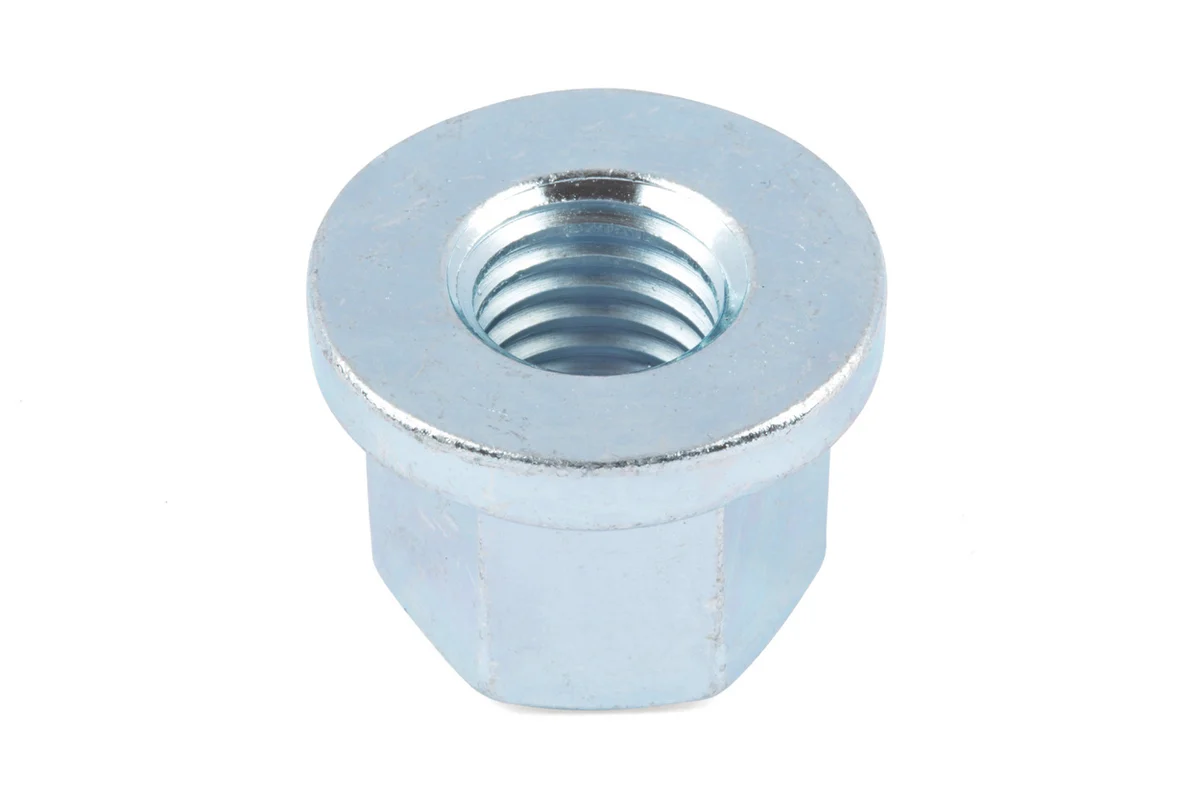
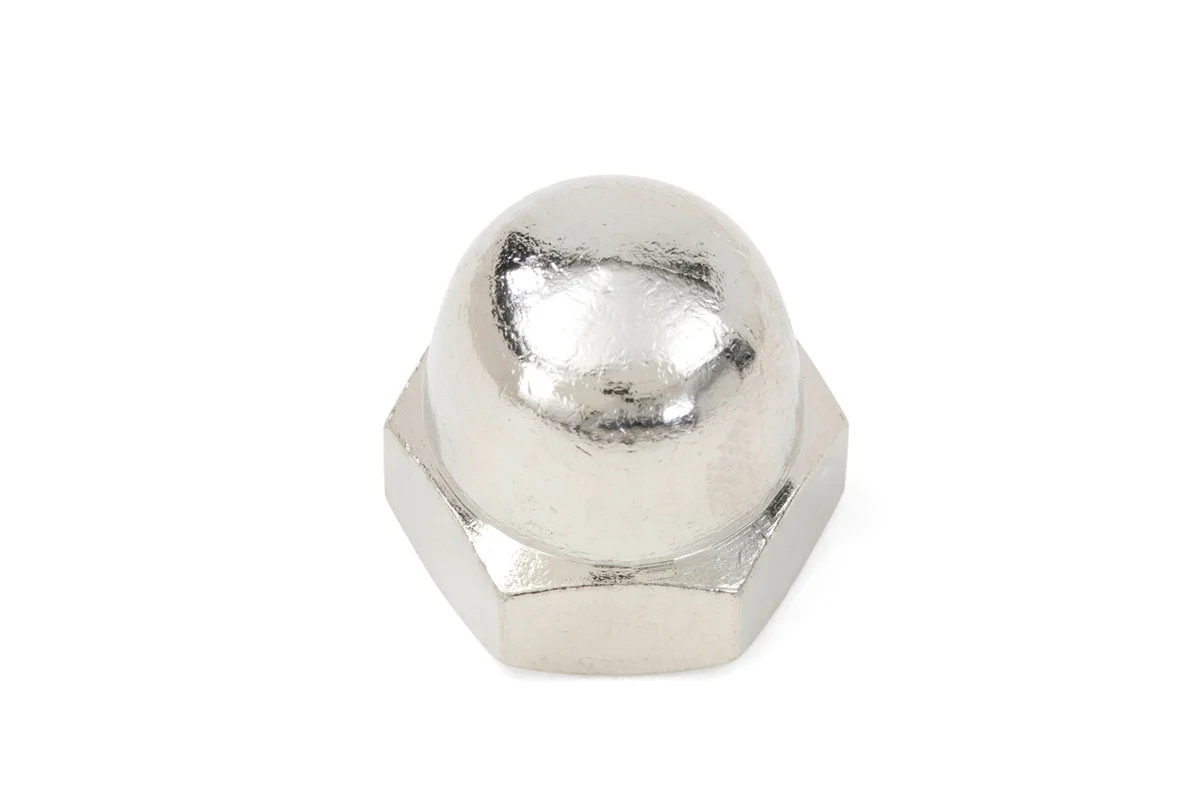
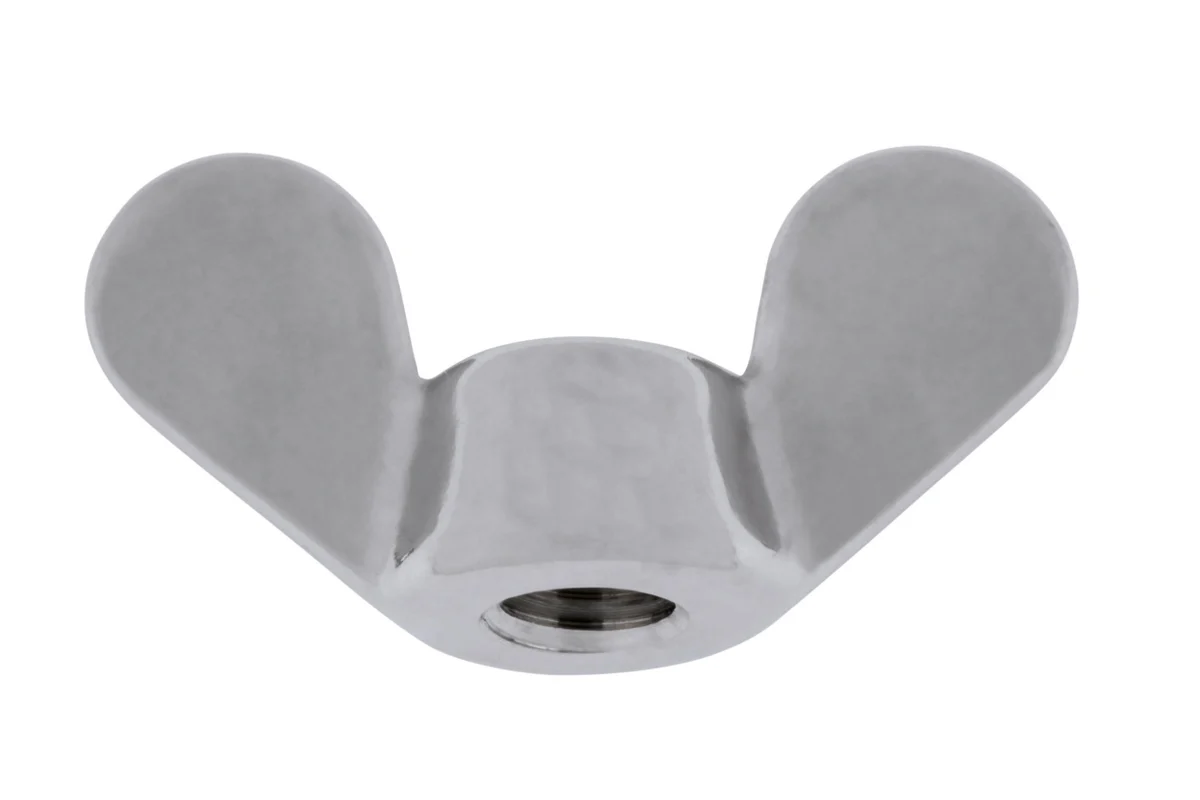
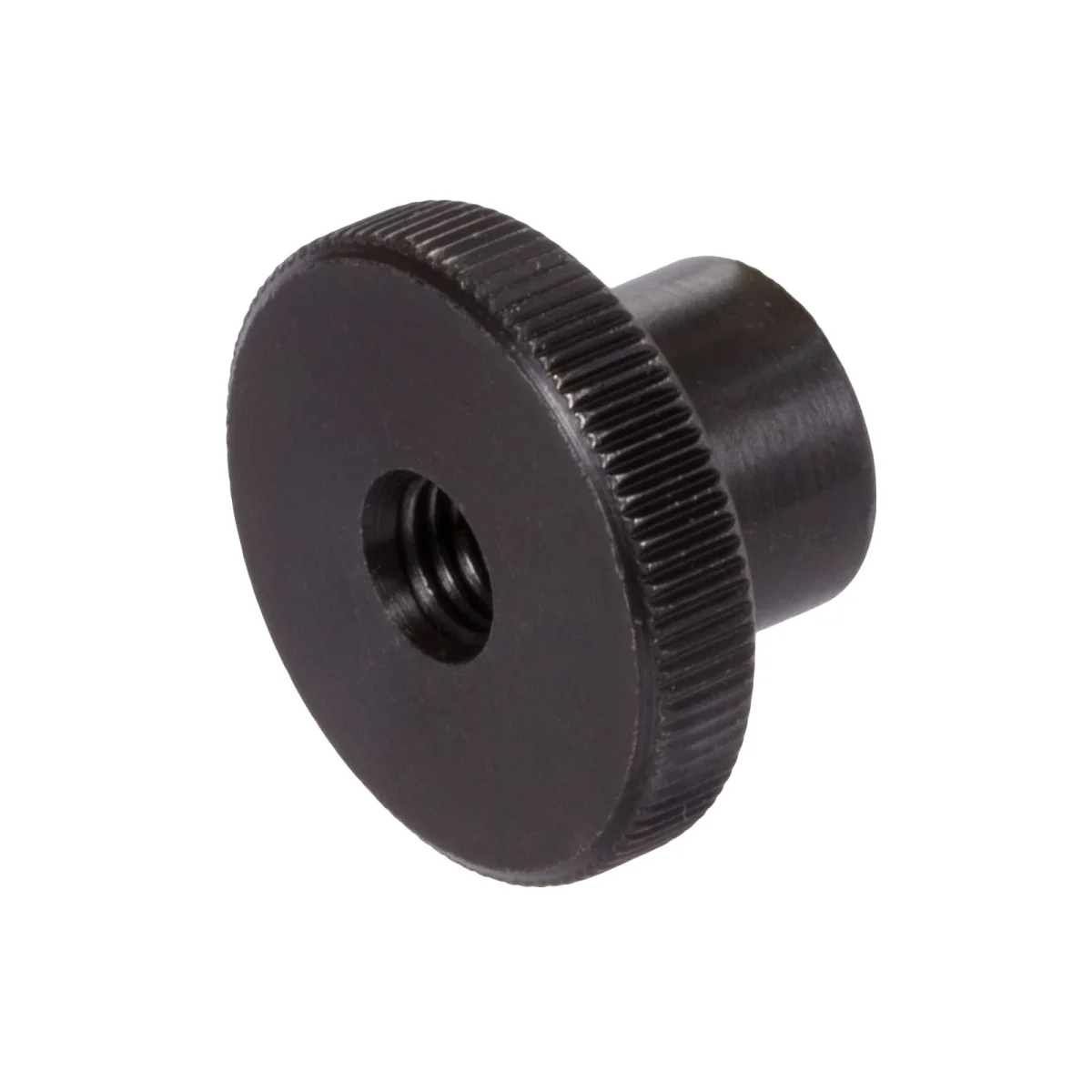
Image copyright belongs to the manufacturers or original authors. Brands and models identify illustrations; consult official documentation when selecting parts.
ENGINEERING GUIDE
Selection and design guide
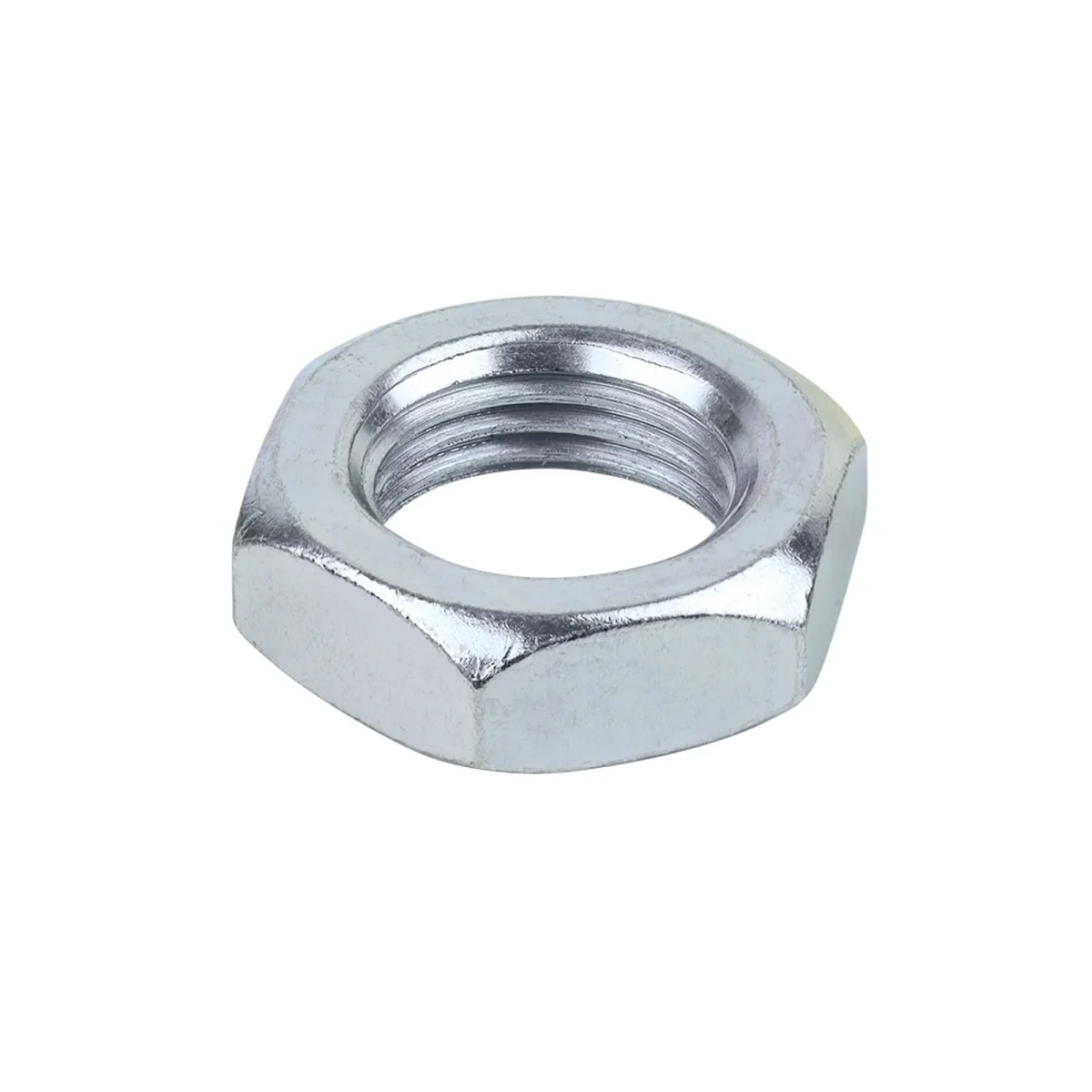
An internally threaded part used with hex head bolts and studs. Height divides the family into style 1, style 2 and the thin nut, and strength into classes 5, 6, 8, 10 and 12. Selection turns on matching the property class to the bolt and having enough height, so that the bolt fails before the thread strips.
01Construction and how it works
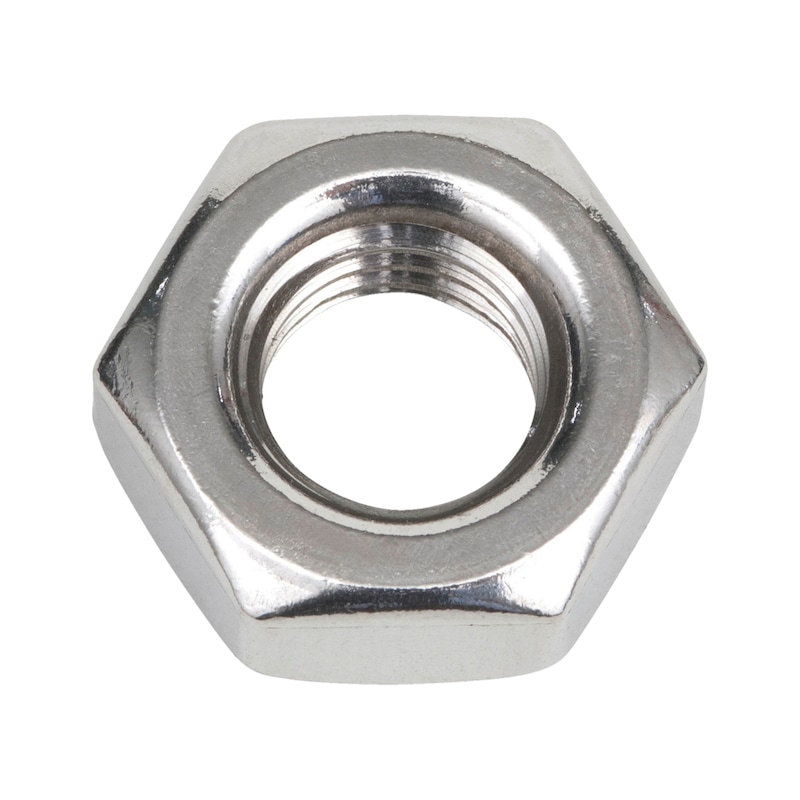
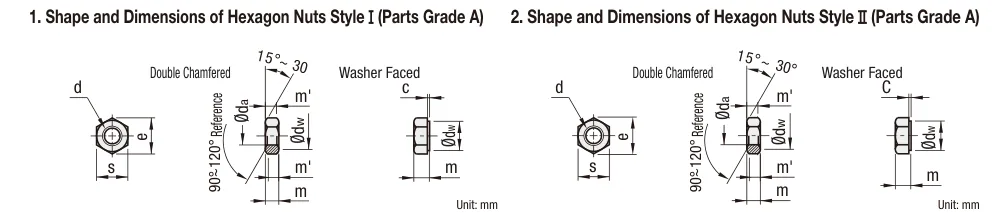
A hex nut is a hexagon block with an internal thread, chamfered at both ends (double chamfered), and it can also be made with a washer face at one end. When tightened, the bolt tension passes through the engaged thread turns into the nut and then through the nut bearing face into the clamped parts. The load is not shared evenly along the engagement; the first turn carries the most. Nut height and material strength must therefore ensure that the bolt breaks before the thread strips under overload: a broken bolt is visible at a glance, while a stripped thread often shows up only after assembly.
Shape and dimension designations of hex nut style 1 (left half, Style I) and style 2 (right half, Style II), product grade A. In each group: d is the thread size, s the across-flats width and e the corner width. For the double chamfered type the chamfer is 15°~30° and the bore mouth chamfer 90°~120° (reference), da is the chamfer diameter, dw the bearing face diameter, m the nut height and m′ the wrenching height. For the washer faced type, c is the washer face thicknessSource: MISUMI technical data, Hexagon Nuts (FA mechanical parts catalogue technical data, English edition)
The MISUMI data (an extract of JIS B 1181) states that unless otherwise specified the nut is made double chamfered, and the washer faced form is specified by the buyer. Strength, preload and tightening torque are covered in the socket head cap screw article.
Height about 0.5D, classes 04 and 05, only for locking or very lightly loaded positions
Thin hex nut, unchamfered
GB/T 6174-2000
M1.6~M10
Marked by hardness
Hex nut, product grade C
GB/T 41-2000
Per the standard
Rough, classes 4 and 5, steel structures and anchor bolts
From the nut summary table (printed page 6-128) and tables 6-1-135 and 6-1-138 (printed pages 6-128~6-137) of the Mechanical Design Handbook; current editions apply.
Nut marking by height
Nominal height
Property class marking
Meaning
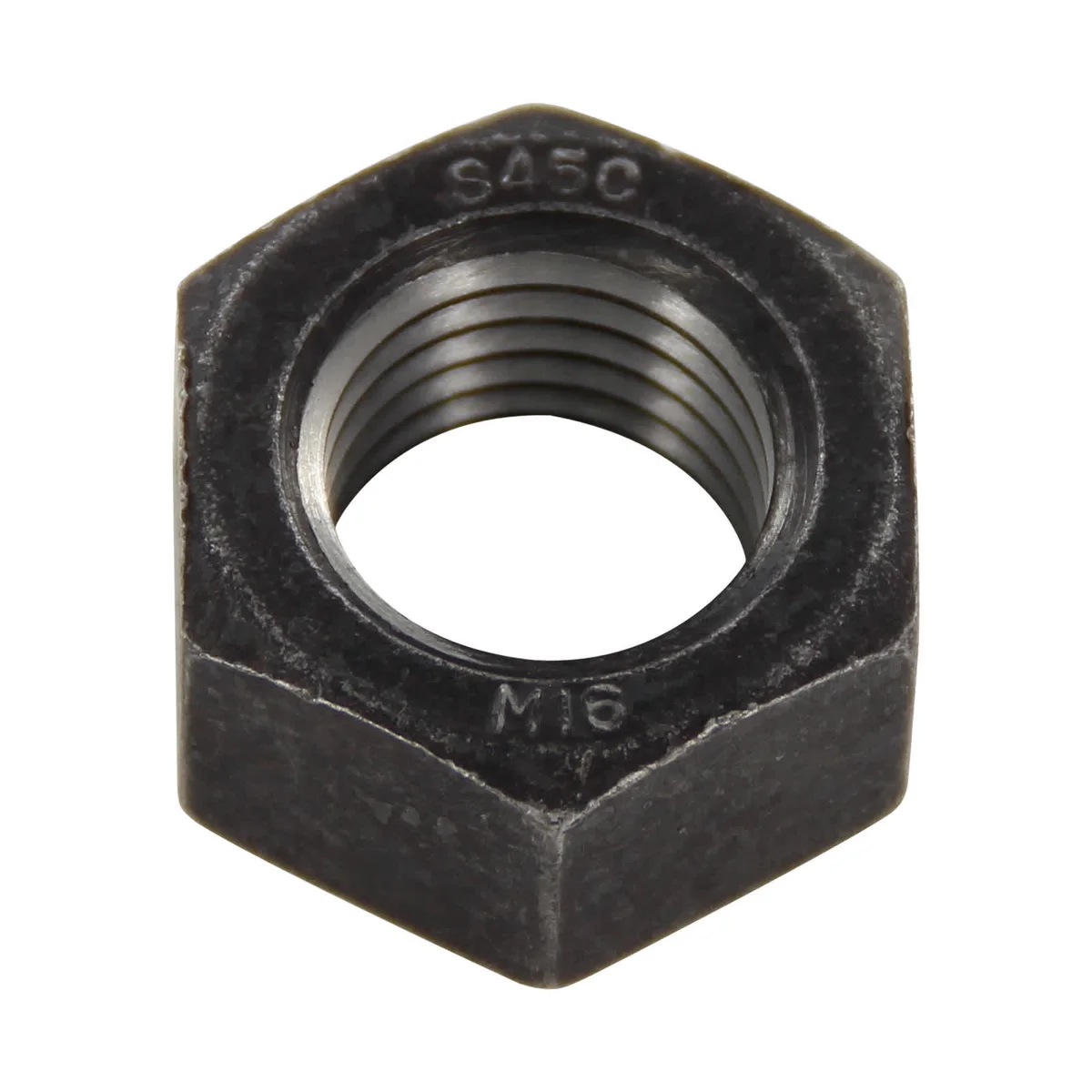
≥ 0.8D (style 1, style 2)
4, 5, 6, 8, 9, 10, 12
The number is the first digit of the highest bolt class the nut can be used with, so a class 8 nut matches a class 8.8 bolt
≥ 0.5D and < 0.8D (thin nut)
04, 05
The leading 0 marks reduced load capacity; the second digit × 100 gives the proof stress in MPa, 400 MPa for 04 and 500 MPa for 05
From GB/T 3098.2 and GB/T 3098.4 (note to table 6-1-73, printed page 6-78, Mechanical Design Handbook).
The s, e and dw values and the style 1 and style 2 heights for M3~M16 come from the MISUMI Hexagon Nuts data (an extract of JIS B 1181); M20 and M24 and the thin nuts come from tables 6-1-135 (GB/T 6170, GB/T 6172.1) and 6-1-138 (GB/T 6175) of the Mechanical Design Handbook. The two sources agree for M3~M16. The MISUMI data notes that some M10 and M12 nuts in circulation still follow the older JIS across-flats and differ from the table.
Product grade: grade A of GB/T 6170 applies to D ≤ M16 and grade B to D > M16; the thread tolerance is 6H. Steel style 1 nuts are commonly class 6, 8 or 10 (M3~M39), and style 2 nuts class 9 or 12.
04Selection and calculation
Match size and pitch to the boltCoarse thread with coarse thread and fine with fine (GB/T 6171 and 6176).
Match the nut class to the bolt classThe nut class number is not lower than the first digit of the bolt class; a higher class nut may replace a lower one, but not the reverse.
Choose the nut styleUse style 1 for loaded joints and style 2 for class 12.9 bolts above M16 or where higher thread strength is wanted. A thin nut serves only as the second nut in double-nut locking, or where the load is very small.
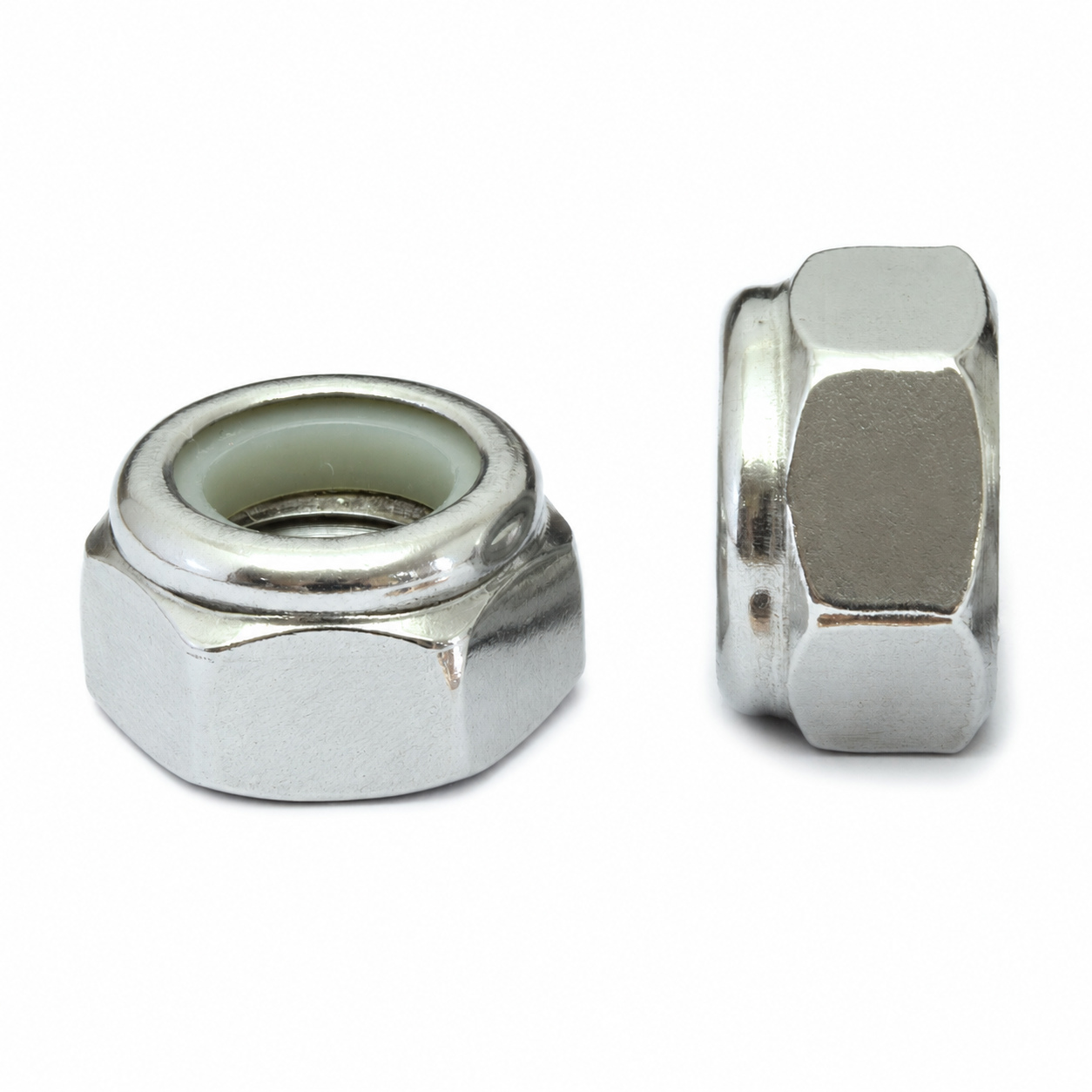
Set the finish and the locking methodKeep the finish the same as the bolt; on vibrating equipment use a nylon insert locknut, double nuts or another locking method.
Matching bolt and nut classes
Bolt class
Nut class
Notes
4.6, 4.8
4 (> M16), 5 (≤ M16)
Style 1
5.6, 5.8
5
≤ M39
6.8
6
≤ M39
8.8
8
Style 1 up to M39; class 8 style 1 nuts above M16 must be quenched and tempered
9.8
9
≤ M16
10.9
10
Style 1 up to M39
12.9
12
Style 1 up to M16; larger sizes use style 2
Compiled from the table in GB/T 3098.2 (table 6-1-73, printed page 6-78, Mechanical Design Handbook). The table OCR is noisy, so take size ranges from the standard text itself. Handbook note: a nut of higher property class can generally replace one of lower class.
F bolt proof = As × Sp bolt < F nut proof = As × Sp nut
As
Thread stress area, mm²
Sp bolt
Bolt proof stress: 580 for class 8.8 (≤ M16), 830 for class 10.9 and 970 MPa for class 12.9
Sp nut
Nut proof stress, from the table for the nut class and size
With the correct match the nut proof load is well above the bolt proof load, so the bolt yields first under overload. Bolt proof stresses are from GB/T 3098.1-2010 (handbook table 6-1-69).
Style 1 nut proof load against the matching bolt proof load (N)
Size
Class 8 nut
Class 8.8 bolt
Class 10 nut
Class 10.9 bolt
Class 12 nut
Class 12.9 bolt
M6
17200
11660
20900
16680
22900
19500
M8
31800
21230
38100
30380
41700
35500
M10
50500
33640
60300
48140
66100
56260
M12
74200
48890
88500
69970
98600
81770
Nut proof loads are from GB/T 3098.2-2000 (table 6-1-74, printed page 6-78, Mechanical Design Handbook); bolt proof loads are calculated as As × Sp (As of 20.1, 36.6, 58.0 and 84.3 mm²) and may differ by a few tens of newtons from the rounded values in handbook table 6-1-70.
05Installation and use
Tighten the nut, using the torque table in the socket head cap screw article; that table is given for turning the nut.
The bolt must protrude from the nut, at least over the full chamfer, and must not engage only half the nut.
Turn the washer face toward the clamped part; the double chamfered type can go either way.
Double-nut locking: first tighten a thin nut to part of the specified torque, then add a style 1 nut and lock it back against the first; the outer style 1 nut carries the load.
Nuts on aluminium and extrusions: add plain washers on both sides to prevent dishing and loss of preload.
Nut class below the bolt, only partly engaged, or a thin nut used
Match the classes; keep full-length engagement; no thin nuts on loaded joints
Nut works loose
Vibration, insufficient preload
Tighten to torque; nylon insert locknut or double nuts
Corners rounded
Wrong wrench size (old and new across-flats mixed at M10 and M12)
Use a socket or ring spanner of the matching across-flats
Dished bearing face
Soft clamped part, no washer
Add a plain or hardened washer
Seizing on dismantling
Stainless nut on a stainless bolt, assembled dry
Apply anti-seize on assembly, or change the nut material
07Common design mistakes
Pairing class 10.9 or 12.9 bolts with whatever plain nut is at hand. Web shops default to class 6 or 8, so state the class in the BOM.
Using a thin nut as a load-bearing nut. Classes 04 and 05 have proof stress of only 400 and 500 MPa, far below a style 1 nut.
Mixing old and new JIS across-flats on one machine. Some M10 nuts take a 16 mm wrench and others 17 mm, which makes assembly and repair awkward, so fix the standard at purchase.
Assuming a spring washer prevents loosening. Real locking comes from adequate preload; where vibration is severe, use a nylon insert locknut or double nuts.
Fitting a coarse thread nut to a fine thread bolt. M10×1.25 and M10 jam after one or two turns, so write the full pitch in the BOM.
08Standards and manufacturer ranges
Related standards
Standard
Subject
GB/T 6170-2000
Style 1 hex nut
GB/T 6171-2000
Style 1 hex nut, fine thread
GB/T 6172.1-2000
Thin hex nut
GB/T 6175-2000
Style 2 hex nut
GB/T 41-2000
Hex nut, product grade C
GB/T 3098.2-2000
Mechanical properties of nuts, coarse thread
GB/T 3098.4-2000
Mechanical properties of nuts, fine thread
JIS B 1181
Hex nuts (the MISUMI data cites the 1995 edition)
The GB numbers and editions are from part 6, chapter 1 of the Mechanical Design Handbook; current editions apply.
Standard part shops are ordered by size, form (style 1, style 2, thin, fine thread), class and material (black oxide steel, zinc plated, stainless steel).
—Sources
MISUMI technical data, Hexagon Nuts ↗FA mechanical parts catalogue technical data, catalogue pages 3553~3554 (English edition): an extract of JIS B 1181, with shape drawings and dimension tables for style I and style II hex nuts
Mechanical Design Handbook, part 6 Connections and fastening, chapter 1 Threads and threaded connectionsPrinted pages 6-73~6-78 (bolt proof stress to GB/T 3098.1, table 6-1-73 nut marking and matching, table 6-1-74 nut proof load) and 6-128~6-137 (nut summary table, table 6-1-135 GB/T 6170 and 6172.1, table 6-1-138 GB/T 6175)
Tables and formulas are rearranged from the sources above. Verify against the current standard and the manufacturer catalogue before finalising a design. Updated 2026-11-17
ONLY ON MECHWIKI / SELECT · BUY · MAINTAIN
Buying and using: calculators, sellers, uses
The notes below cover the “Nuts” category. MechWiki prepared these category notes from public standards and engineering references. Use the selected manufacturer’s catalog for ratings, life factors and dimensions.
TOOLS / CALCULATE
Related selection calculators
Use these calculators for a preliminary estimate, then verify the result against this entry, the manufacturer catalogue and installation limits. Results do not replace a specific model rating.
The directory links to manufacturer selection and CAD resources and identifies the maker of the pictured example. Check stock and lead time with the supplier. Price comparison and ranking are not available yet.
MISUMIFactory automation and tooling components with selection and CAD resources.