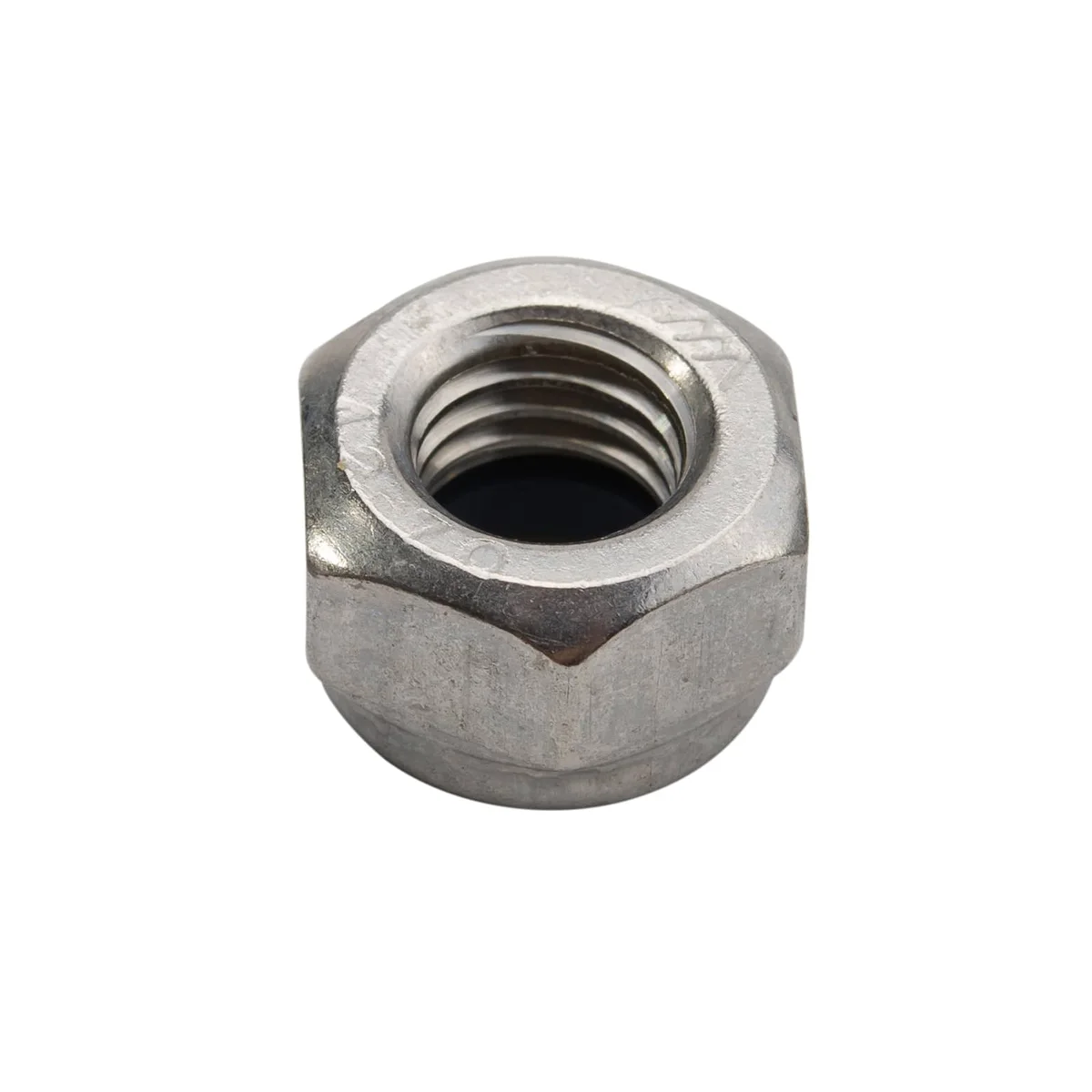
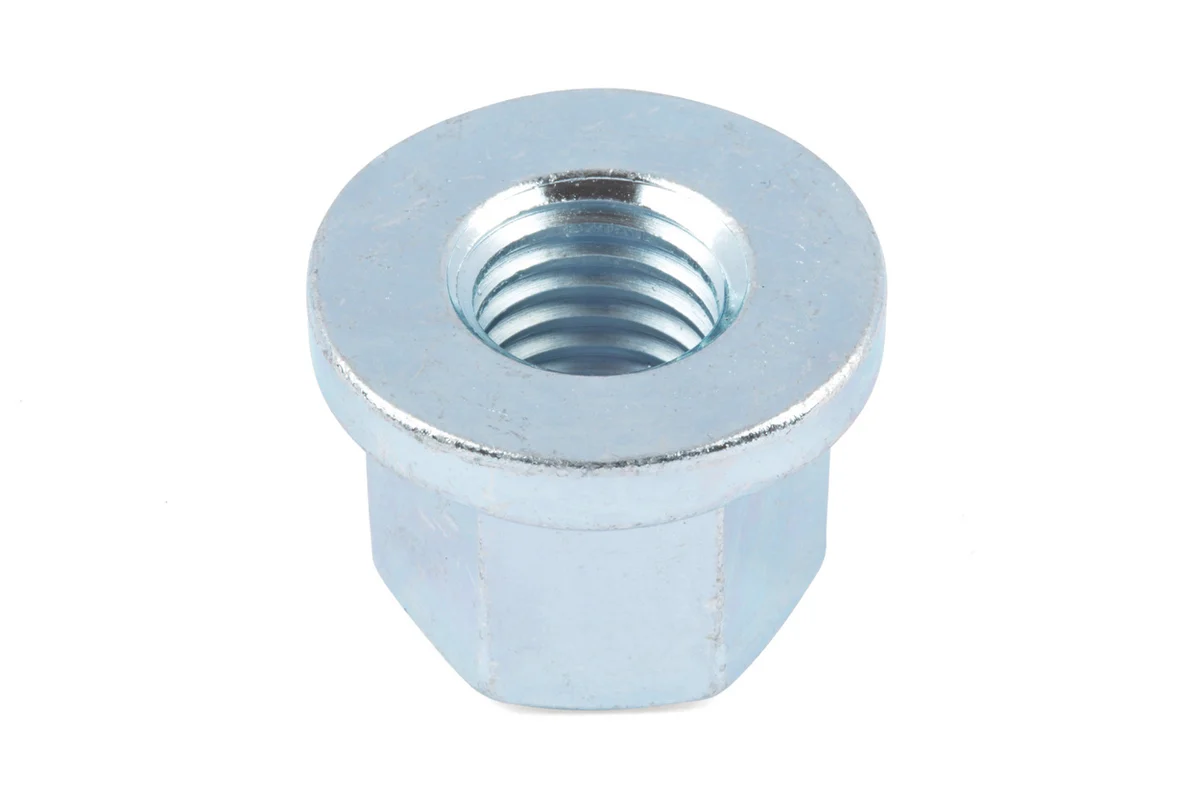
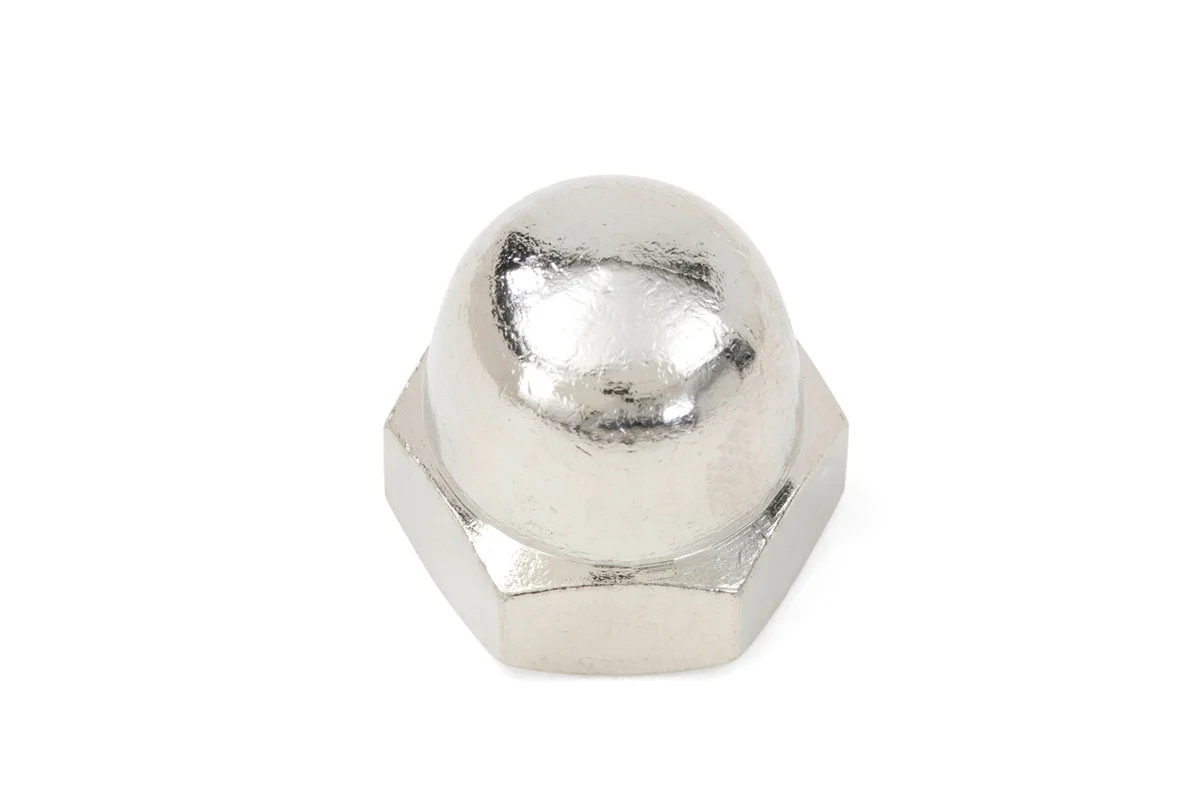
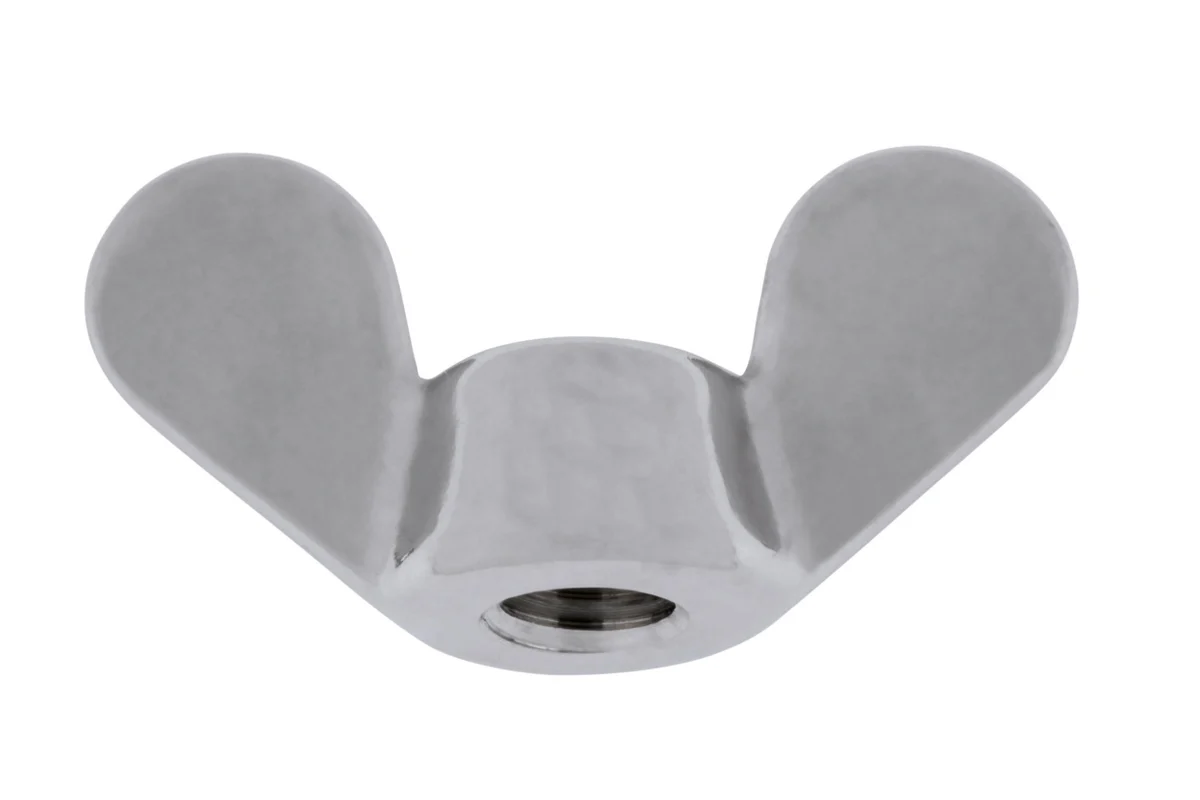
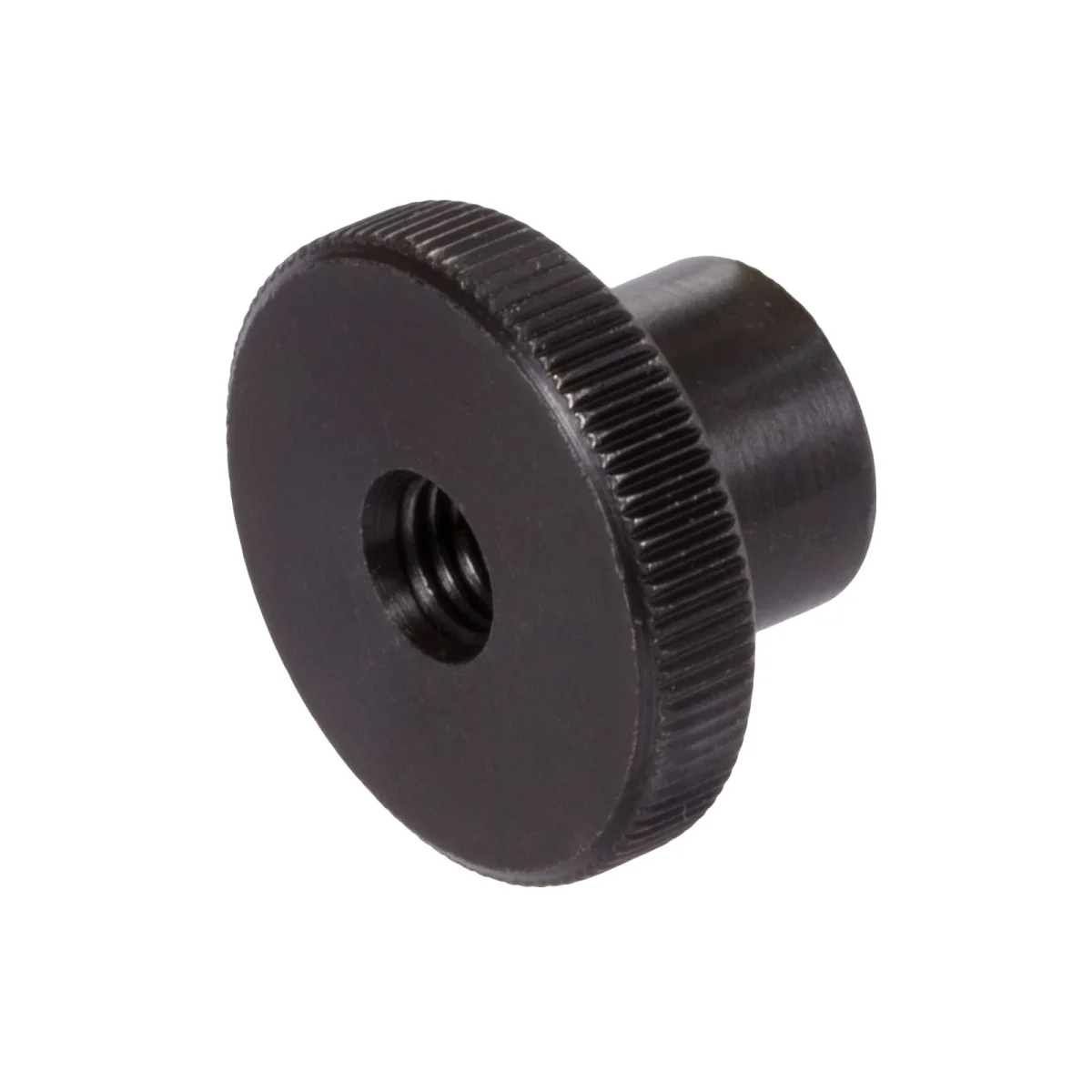
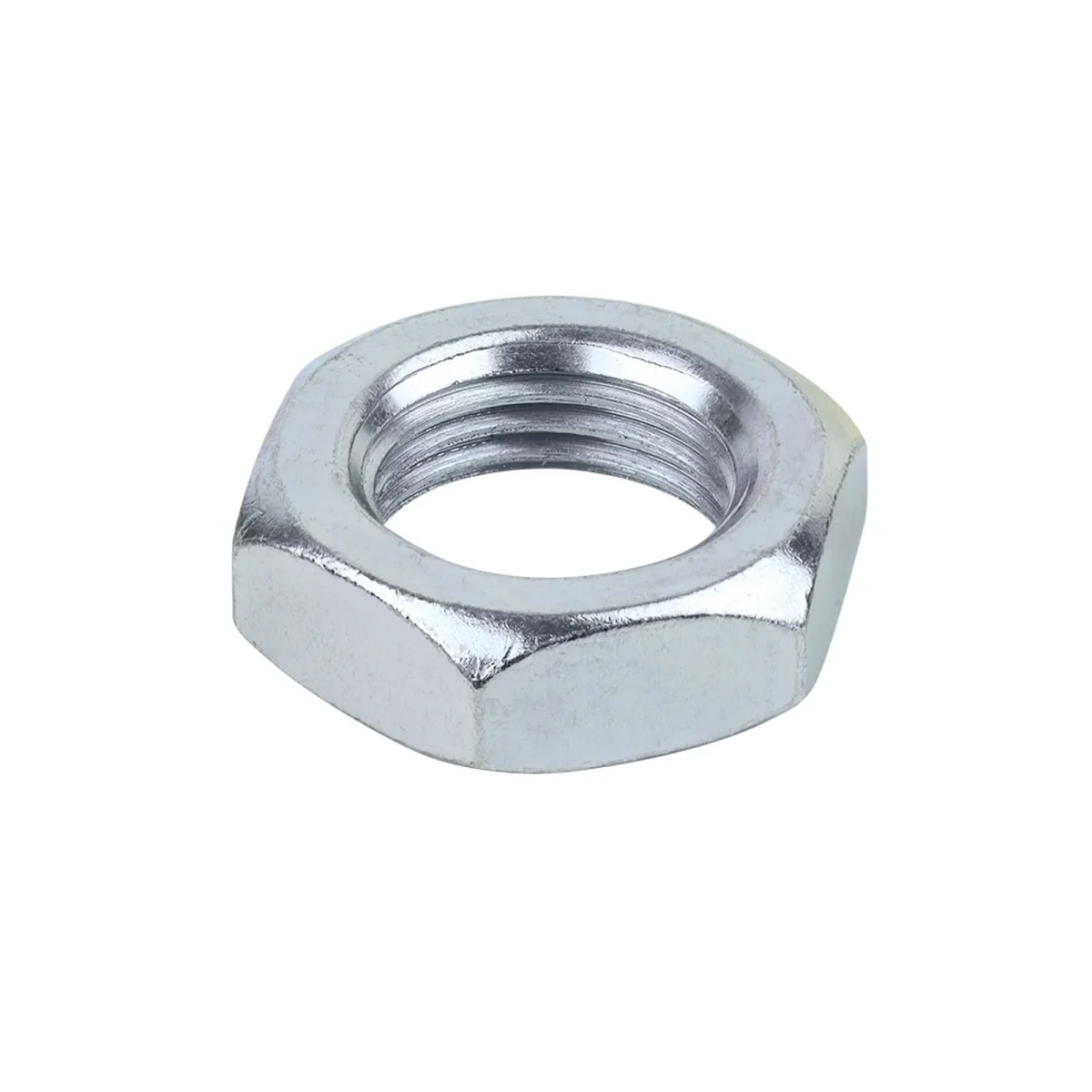
Manufacturer illustration 2 · MISUMINylon insert lock nut from above: metal thread with the nylon ring insideOriginal source
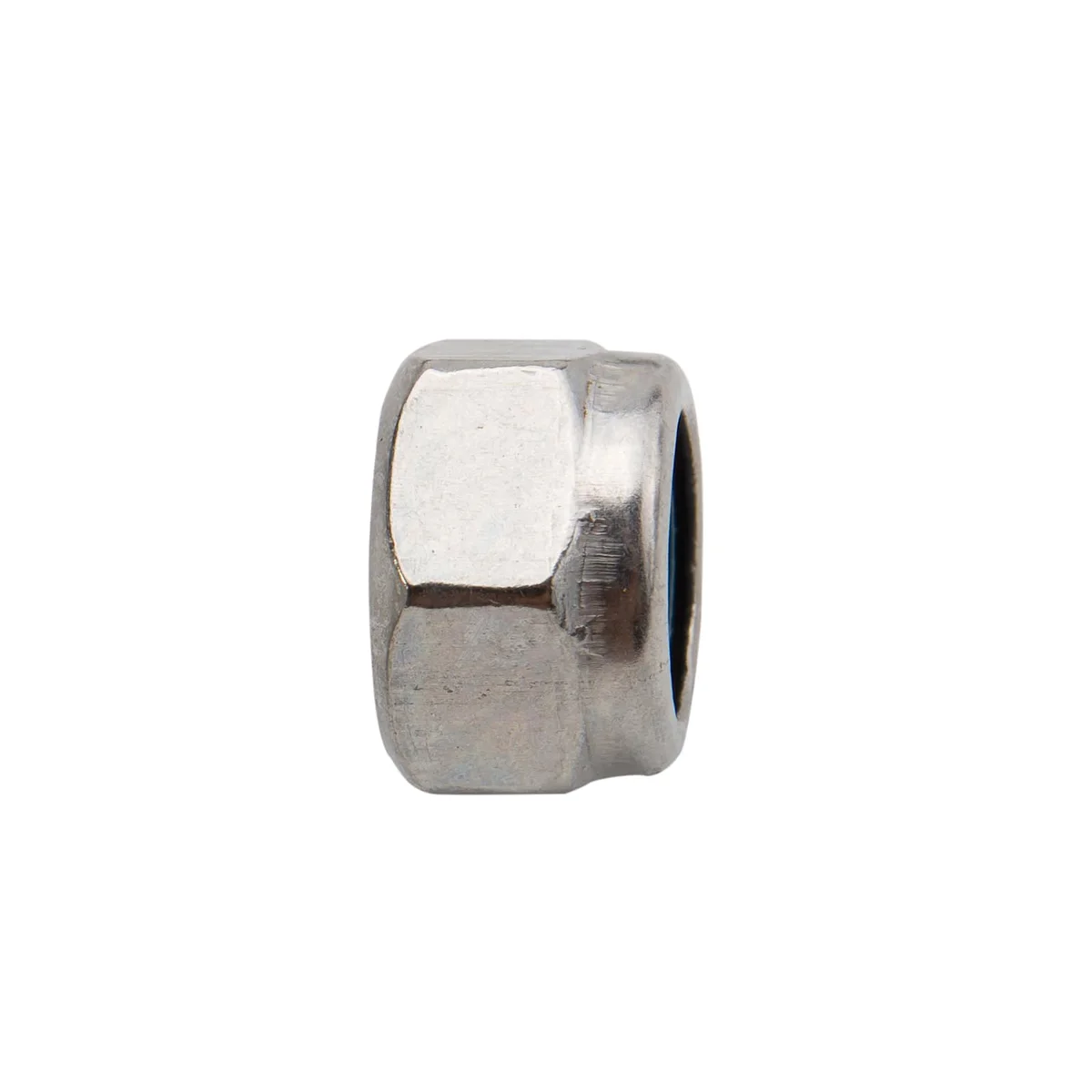
Manufacturer illustration 3 · MISUMINylon insert lock nut from the side: hex flats, end face, blue nylon ringOriginal source
01 / INTRODUCTION
What is it?
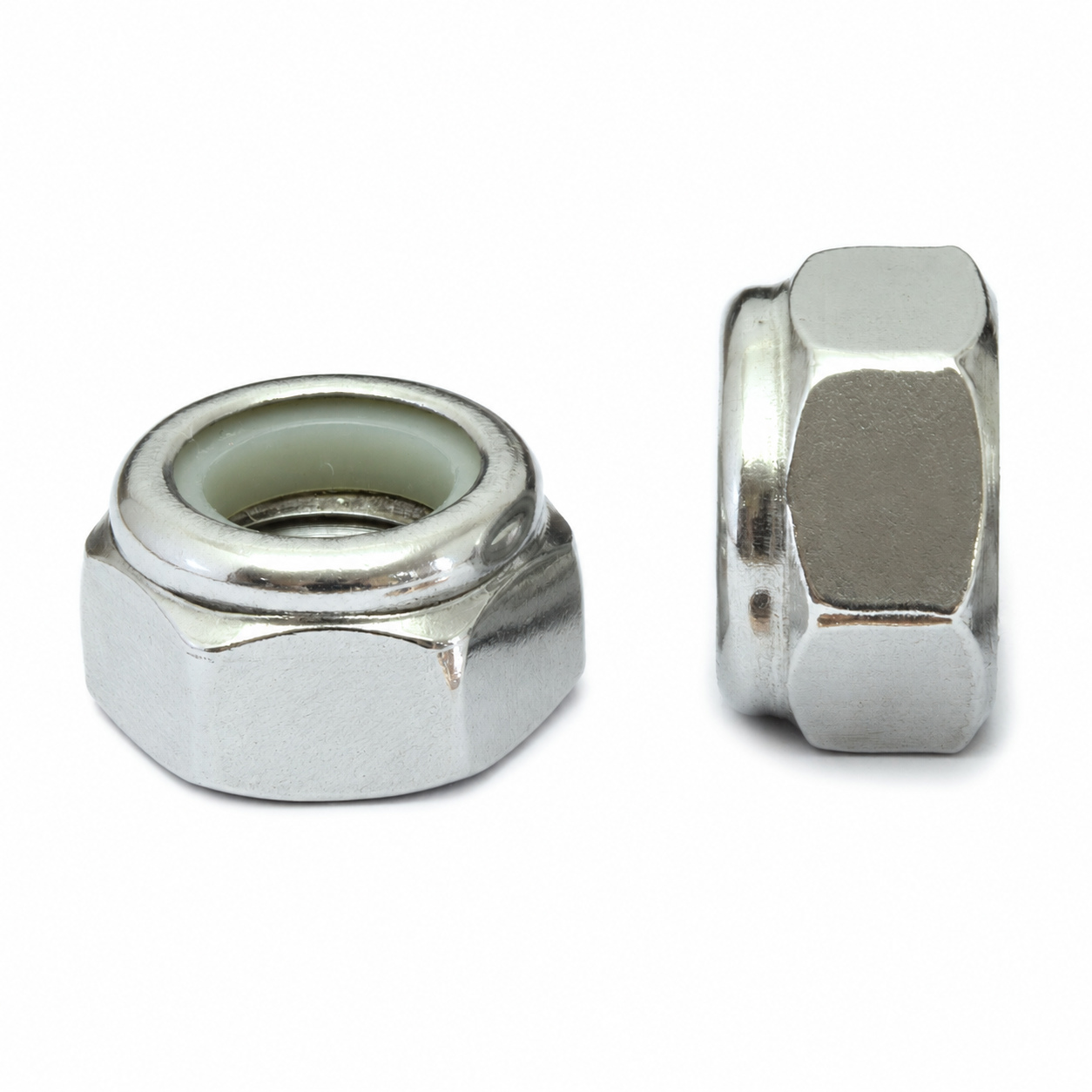
A nut with a nylon insert that provides additional frictional resistance to loosening.
02 / CONSTRUCTION
Construction & recognition
The insert contacts the thread. Environment and repeated removal affect locking behavior; its temperature suitability cannot be determined from appearance alone.
03 / APPLICATIONS
Common applications
Mechanical joints subject to vibration or requiring retention of their assembled condition.
Image copyright belongs to the manufacturers or original authors. Brands and models identify illustrations; consult official documentation when selecting parts.
ENGINEERING GUIDE
Selection and design guide
A nut with a ring of nylon set into its top: when the bolt is turned in, the nylon is forced to form a thread and grips the bolt, producing a prevailing torque that resists rotation. The construction is simple and the nut is easy to buy anywhere, but the service temperature usually stops at 120 °C, reuse is not recommended, and the bolt must pass through the nylon ring and then protrude 2 to 3 pitches.
01Construction and how it works
A nylon insert locknut (the national standard calls it a hexagon lock nut with non-metallic insert) is an ordinary hex nut with an extra length at the top, into which a ring of nylon (nylon 66 is recommended) is crimped. The bore of the nylon ring is smaller than the thread major diameter, so the bolt forms its own thread in the nylon as it is turned in, and the nylon springs back onto the thread flanks to create friction. The handbook's assessment is that the insert is threaded by the tightening action, which gives good locking performance and good resilience.
That friction appears as prevailing torque (also called locking torque): the torque needed to turn the nut while it is still clear of the part and carrying no preload at all. Its purpose is to leave a resistance that stops the nut turning itself loose when vibration has reduced or removed the preload. Note that it is a friction-type locking device: Nord-Lock groups the nylon insert locknut with the spring washer, the toothed washer and the double nut, all of which resist loosening by adding friction in the thread or under the bearing face rather than by locking on geometry.
Coarse thread classes 8, 9 and 10, with a flanged bearing face
Style 1 all-metal hexagon lock nut
GB/T 6184-2000
M5~M36
Classes 5, 8 and 10, prevailing torque from deformation of the nut
Style 2 all-metal hexagon lock nut
GB/T 6185.1, 6185.2-2000
M5~M36, M8×1~M36×3
—
All-metal hexagon flange lock nut
GB/T 6187.1, 6187.2-2000
M5~M20
Coarse thread classes 8, 9, 10 and 12
From the nut summary table and tables 6-1-143 to 6-1-145 (printed pages 6-128 and 6-141 to 6-142) of the Mechanical Design Manual; current editions apply. The handbook does not include the style 1 hexagon lock nut with non-metallic insert (GB/T 889.1), so its dimensions come from the standard text or a supplier catalogue; the common DIN 985 (shorter) and DIN 982 (taller) nylon nuts also follow the catalogue.
Main dimensions of style 2 hexagon lock nuts with non-metallic insert (GB/T 6182, mm)
Size
Across flats s
Corner e min.
Overall height h max.
Wrenching height m min.
M5
8
8.79
7.2
4.8
M6
10
11.05
8.5
5.4
M8
13
14.38
10.2
7.14
M10
16
17.77
12.8
8.94
M12
18
20.03
16.1
11.57
M16
24
26.75
20.7
15.7
M20
30
32.95
25.1
19
M24
36
39.55
29.5
22.6
From table 6-1-143 of the Mechanical Design Manual (GB/T 6182-2010, printed page 6-141; the handbook prints the title as GB/T 6128 in error). The overall height h includes the nylon insert section, so the nut is taller than a style 1 hex nut of the same size (M10: 12.8 against 8.4).
03Key parameters
Key parameters of the nylon insert locknut
Parameter
Value
Effect on the design
Service temperature
−50 to +120 °C (the usual range given in ISO 2320)
Performance falls as the temperature rises; do not use near motor housings, ovens or welding stations
First-insertion prevailing torque, upper limit
M6 3 N·m, M8 6 N·m, M10 10.5 N·m, M12 15.5 N·m (see the table below)
Add it to the tightening torque, or the preload falls short
Reuse
Not recommended
Replace a nut that has been removed; where frequent dismantling is needed, use another locking method
Property class
GB/T 6182: classes 9 and 12; DIN 985 is commonly class 8
Matched to the bolt class by the same rule as a plain nut
Lubrication
Not recommended
It is a friction locking device, and lubrication changes both the prevailing torque and the preload
Temperature range, reuse and lubrication advice from the Nord-Lock paper Comparing solutions for bolt securing: Nord-Lock vs nylon insert nuts (Nord-Lock makes wedge-locking washers, so this is a competitor comparison and its evaluative wording is not adopted); prevailing torque from the Hobson technical data (citing ISO 2320); classes from table 6-1-143 of the Mechanical Design Manual.
DIN 985 nylon insert locknuts (class 8): prevailing torque and installation torque (Hobson data example)
Size
Across flats AF mm
Height H mm
First-insertion prevailing torque upper limit N·m
Clamp force kN
Installation torque, zinc plated, N·m
M5
8
5
1.6
5.35
5
M6
10
6
3.0
7.58
9
M8
13
8
6.0
13.80
21
M10
16
10
10.5
21.87
41
M12
18
12
15.5
31.78
69
M16
24
16
32.0
59.19
165
M20
30
20
54.0
95.55
322
M24
36
24
80.0
137.67
543
From Hobson Engineering technical data Metric Nyloc Nuts — Basic Dimensions & Tightening Torque — DIN985 Property Class 8. Original notes: prevailing torque values come from ISO 2320 and are 50% lower than the DIN 267-15 values; clamp force is taken at 65% of the proof stress of a class 8.8 bolt; the nut factor for zinc-plated parts is k = 0.14; torques are a guide and apply to a single first tightening.
04Selection and calculation
Check the temperature and the dismantling frequency firstDo not choose a nylon insert locknut where the working temperature is above 120 °C or the joint is taken apart often.
Fix the size and class from the boltMatch coarse or fine thread and the class to the bolt, by the same rule as a plain hex nut.
Fix the bolt lengthThe bolt must pass through the whole nut, insert included, and then protrude 2 to 3 pitches; calculate the length from the overall nut height h.
Fix the tightening torqueAdd the prevailing torque to the plain nut torque and write the result on the assembly drawing.
Where vibration is severe, compare other methodsSee the comparison table below; adequate preload is still the first condition for any locking method.
The torque table in the Hobson data is calculated this way and can be checked against it: at M10, 0.14 × 21.87 × 10 ≈ 30.6 N·m plus Tpr 10.5 N·m gives 41 N·m, matching the table; at M12, 0.14 × 31.78 × 12 ≈ 53.4 N·m plus 15.5 N·m gives 69 N·m. When the first term is calculated with the MISUMI torque method, the prevailing torque must likewise be added.
Several locking methods compared
Method
Principle
Advantages
Limits
Source
Nylon insert locknut
Friction (nylon grips the thread)
Simple, cheap, no extra parts
≤ 120 °C; reuse not recommended; lubrication not recommended
Nord-Lock, handbook
All-metal lock nut
Friction (deformed nut section)
No nylon temperature limit
High prevailing torque, prone to thread galling; temperature limit per the catalogue
Handbook
Double nut
Friction (two nuts locked against each other)
Standard parts, widely available
Must be tightened in sequence, and the torque is hard to control
Nord-Lock, hex nut article
Spring washer
Friction and spring force
Cheap
Uneven spring force and poor reliability, for unimportant joints only; not allowed where the surface must not be scored or where the joint is taken apart often
Handbook table 6-1-57
Thread locker
Adhesion
Not limited by size
Changes the relation between torque and preload, so preload is hard to control; chemical contact risk
Nord-Lock
Tab washer, lockwire
Mechanical anti-rotation
Stops the nut coming off completely
Still loses some preload under dynamic load
Nord-Lock
Wedge-locking washer
Geometry (wedge action on inclined faces)
The maker claims good clamp force retention under vibration and reuse
High unit price; a maker's own claim, so third-party tests are worth checking
Nord-Lock
Classification of principles from the Nord-Lock paper Bolt locking methods (2019); the conclusion on spring washers from table 6-1-57 (printed page 6-61) of the Mechanical Design Manual: conventional spring washers to GB/T 93 and similar have uneven spring force and lower reliability, are mostly used on unimportant joints, and are not allowed on parts that must not be scored or on joints taken apart often. Nord-Lock also lists plain washers and disc springs as products with no locking function.
Bolt protrusion of 2~3 pitches. The general assembly specification requires the bolt end to stand 2~3 pitches beyond the nut face after tightening; on a nylon nut this also ensures that the full length of the nylon ring sits on full thread. If the bolt reaches only half way into the ring, only part of the locking torque is developed.
Nylon end outward; on the flanged type the flange face goes against the part.
Turn it in with a wrench all the way. Resistance starts as soon as the bolt meets the nylon, so it is normal that hand turning will not do; a power tool heats the nylon at high speed, so keep the speed low.
No lubricant and no thread locker. It is a friction locking device, and lubrication widens the scatter of preload.
Replace after removal. The nylon ring of a removed nut has already been threaded and has relaxed, so its prevailing torque is no longer reliable.
Checking the prevailing torque: the wrench reading should be clearly above zero during insertion; if the wrench meets almost no resistance as the bolt leaves the nylon section, the insert has failed or the nut is the wrong size.
Plain washer under aluminium parts and slotted holesPlain Washer →
06Failure modes and maintenance
Common failures, causes and actions
Symptom
Main cause
Action
Loosens after vibration
Preload itself too low (prevailing torque not added to the torque), or the nylon section not fully engaged
Add Tpr to the torque; bolt protrusion 2~3 pitches
No locking at high temperature
Above 120 °C the nylon softens
Change to an all-metal lock nut or a mechanical anti-rotation device
No lock after repeated assembly
The nylon ring has relaxed
Replace on removal; use another locking method where the joint comes apart often
Thread galling or seizure when tightening
High power tool speed heats the nylon or the thread; stainless bolt with a stainless nut
Tighten at low speed; treat stainless parts as the catalogue advises
Wide scatter in preload
Lubricated and unlubricated joints mixed; the prevailing torque is included in the wrench reading
Keep the joint unlubricated throughout; set the torque by the method in the data
Compiled from the Nord-Lock comparison paper, the Hobson technical data and part 6 of the Mechanical Design Manual.
07Common design mistakes
Treating the nylon nut as a substitute for adequate preload. It only holds the joint after preload has fallen; the first condition for locking is still enough preload, as set out in the socket head cap screw article.
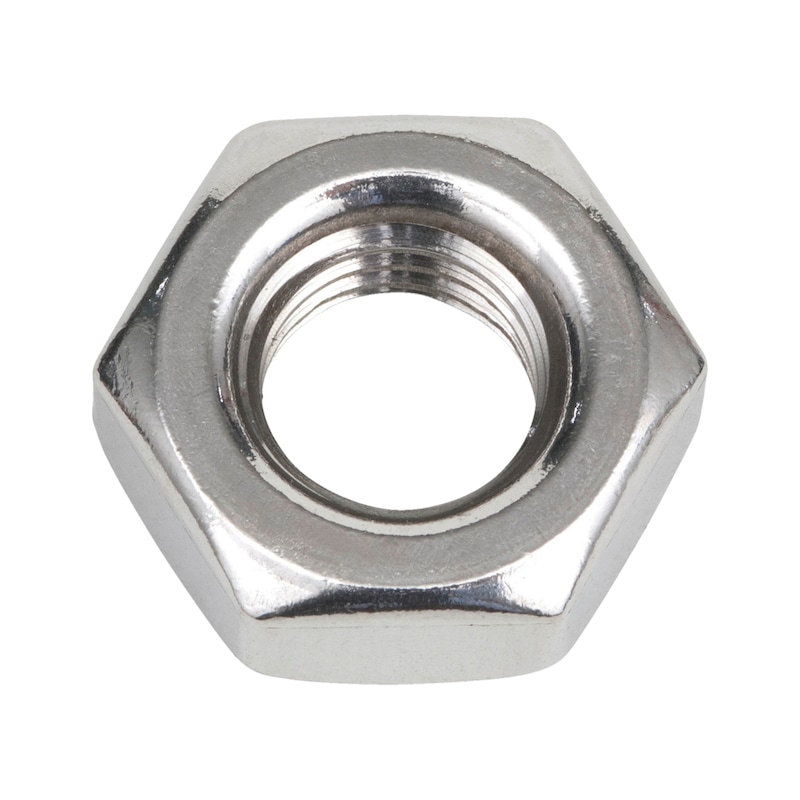
Sizing the bolt for a plain nut. A nylon nut is taller than a style 1 nut (M10: 12.8 against 8.4 mm), so the usual length leaves the bolt just reaching into the nylon ring, where it cannot lock.
Using it near a heat source. On motor housings, hot plates and in drying tunnels the temperature exceeds 120 °C and the softened nylon leaves an ordinary nut.
Refitting a removed nylon nut during repair. State replace after removal on the drawing or in the maintenance manual.
Using it on an adjustment that is taken apart often. Replacing a nut at every adjustment is not practical, so use double nuts, a tab washer or an adjusting arrangement with its own lock.
Assuming a spring washer makes it safer. The handbook lists the conventional spring washer as less reliable and fit only for unimportant joints, so adding one to a nylon nut gains nothing.
08Standards and manufacturer ranges
Related standards
Standard
Subject
GB/T 6182-2010
Style 2 hexagon lock nut with non-metallic insert
GB/T 6172.2-2000
Thin hexagon lock nut with non-metallic insert
GB/T 6183.1, 6183.2-2000
Hexagon flange lock nut with non-metallic insert
GB/T 6184-2000, GB/T 6185-2000
All-metal hexagon lock nuts
GB/T 93-1987
Standard spring lock washer
ISO 2320
Prevailing torque steel nuts, mechanical and functional properties (cited by the Hobson and Nord-Lock data)
DIN 985, DIN 982
Nylon insert locknuts (common in the trade)
GB numbers from part 6, chapter 1 of the Mechanical Design Manual; current editions apply. GB/T 889.1 is not included in the handbook. ISO and DIN numbers come from maker data and were not checked against the original texts.
Domestic standard part makers and shops supply by size, class (8 and 10) and finish (zinc plated, black oxide, stainless steel); prevailing torque, temperature limit and dimensions follow the catalogue.
Nord-Lock, Bolt locking methods ↗Classification of locking methods: friction, mechanical, adhesive and geometric types, and products with no locking function
Mechanical Design Manual, part 6 Connections and fastening, chapter 1 Threads and threaded connectionsPrinted page 6-61 (table 6-1-57, locking methods), 6-128 (nut summary table) and 6-141 to 6-142 (tables 6-1-143 to 6-1-145, non-metallic insert and all-metal lock nuts)
Mechanical Design Manual, part 1, general assembly specifications (from JB/T 5000.10-2007)Printed page 1-683: after tightening, the bolt protrudes 2~3 pitches beyond the nut
Tables and formulas are rearranged from the sources above. Verify against the current standard and the manufacturer catalogue before finalising a design. Updated 2026-11-17
ONLY ON MECHWIKI / SELECT · BUY · MAINTAIN
Buying and using: calculators, sellers, uses
The notes below cover the “Nuts” category. MechWiki prepared these category notes from public standards and engineering references. Use the selected manufacturer’s catalog for ratings, life factors and dimensions.
TOOLS / CALCULATE
Related selection calculators
Use these calculators for a preliminary estimate, then verify the result against this entry, the manufacturer catalogue and installation limits. Results do not replace a specific model rating.
The directory links to manufacturer selection and CAD resources and identifies the maker of the pictured example. Check stock and lead time with the supplier. Price comparison and ranking are not available yet.
MISUMIFactory automation and tooling components with selection and CAD resources.