What is it?
An industrial camera whose sensor has only one row of pixels, or a few rows on colour or dual-line types. The workpiece or the camera moves at constant speed and the camera captures row by row at a line rate, and the rows are assembled into one continuous image, which suits wide or very long workpieces or unwrapping a cylindrical surface.
Construction & recognition
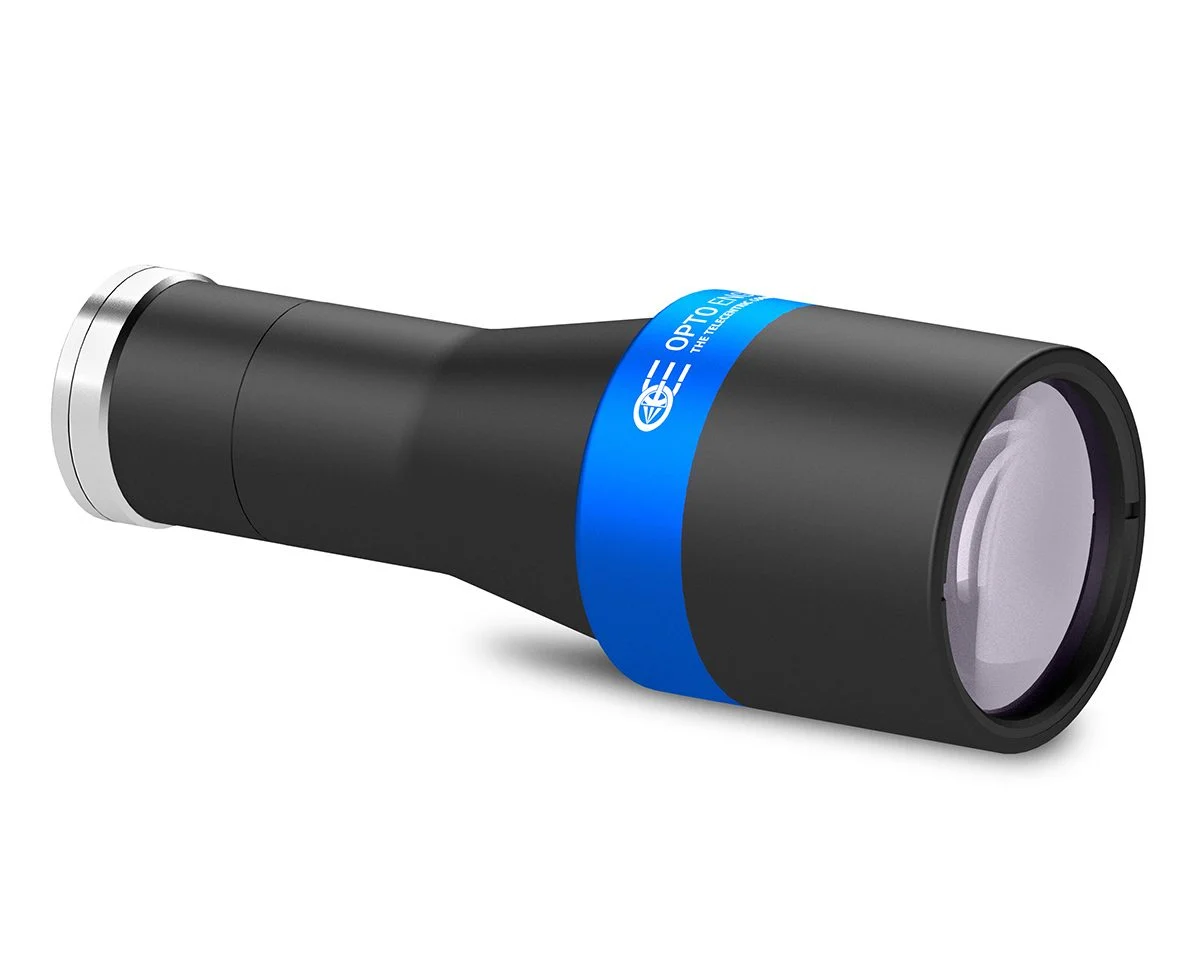
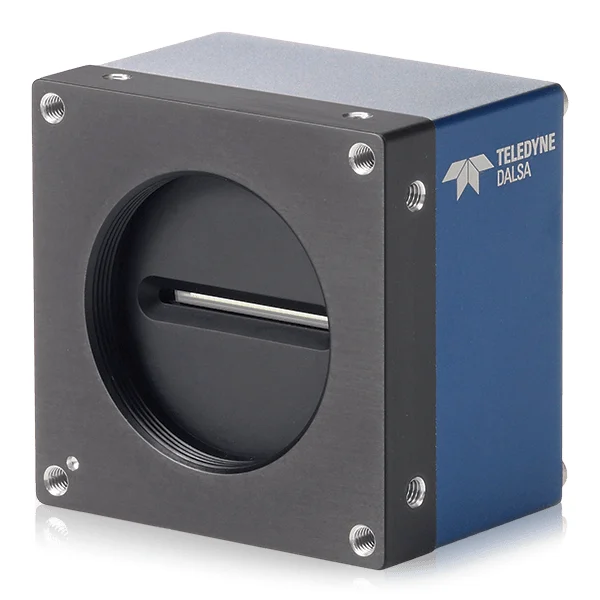
Made up of a line scan CMOS sensor, processing circuits, a lens mount and a data interface. The Teledyne DALSA Linea series covers 2k to 16k resolution; the GigE models are 2k and 4k single-line with 7.04 µm × 7.04 µm pixels. The manufacturer states that with its TurboDrive technology the GigE models reach a line rate of 80 kHz, and Camera Link and Camera Link HS interfaces and dual-line colour models are also available. With many pixels and a long sensor, high-resolution models often use large mounts such as M42 and M72 and need a dedicated line scan lens. Selection first fixes the pixel count from inspection width and cross-direction accuracy, then the line rate from motion speed and longitudinal accuracy (line rate is speed divided by longitudinal pixel size); triggering usually comes from an encoder so that pixels stay square when speed changes. Exposure per row is very short, so a high-brightness line light is required.
Common applications
Surface inspection of webs, films, paper, nonwovens, lithium battery electrode sheets, printed matter, glass and steel plate, inspection of rollers and cylindrical parts unwrapped over one revolution, and scanning of parcels in logistics.