What is it?
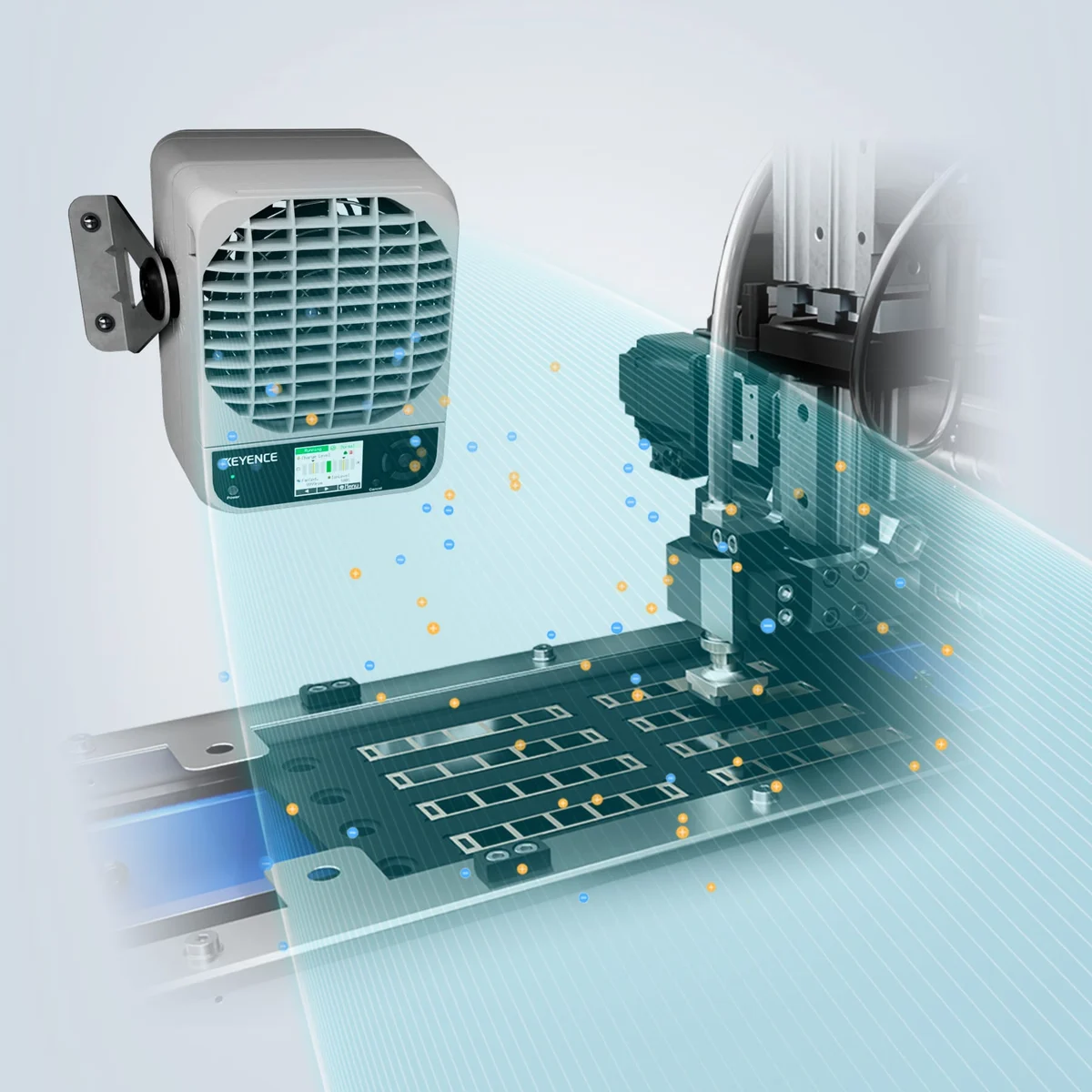
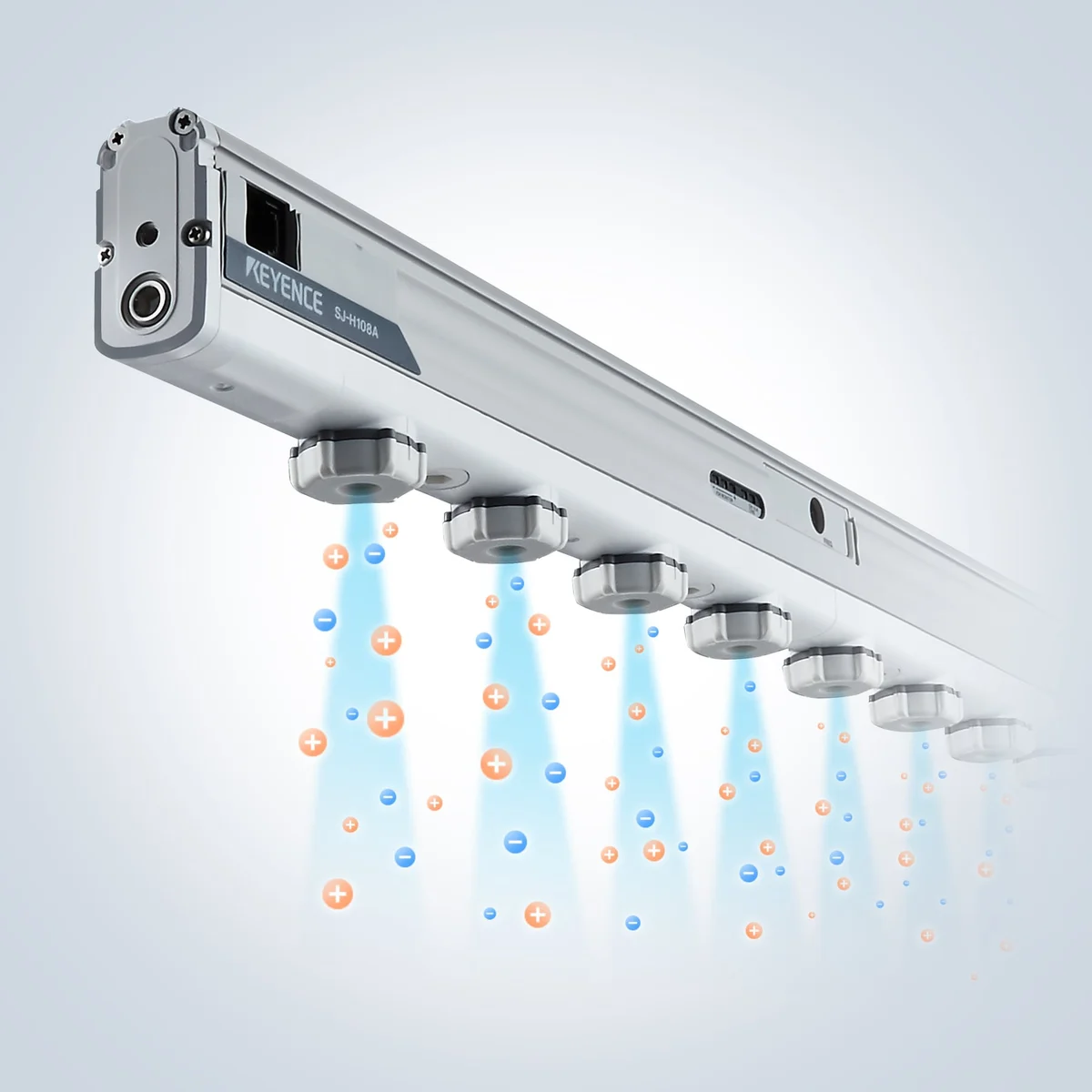
A long bar-shaped static eliminator. A row of discharge needles along the bar ionizes air into positive and negative ions by high-voltage corona discharge, and the ions reaching a charged workpiece surface neutralize the static charge.
Construction & recognition
Inside the bar are the high-voltage power supply, external on some models, and the discharge needles arranged along its length; AC, pulsed AC and DC supply versions are available. Models with an air path blow compressed air out near the needle tips to carry the ions farther and faster, while versions without air rely on natural ion diffusion and suit short distances only. Some models include an ion balance feedback sensor that adjusts the positive-to-negative ion ratio automatically so the workpiece is not charged in reverse. The needles collect dust and wear, so they need periodic cleaning or replacement. Selection covers effective length (coverage width), mounting distance, decay time, ion balance (offset voltage) and whether an air supply is needed.
Common applications
Slitting, laminating and winding of films, webs and sheets, ejection of molded parts, electronics assembly, handling of LCD panels and semiconductors, and printing and packaging lines; used to remove electrostatic dust attraction, material sticking and ESD damage.