COMPONENT / SIDE-CLAMP

Side Clamp

Side Clamp · Norelem
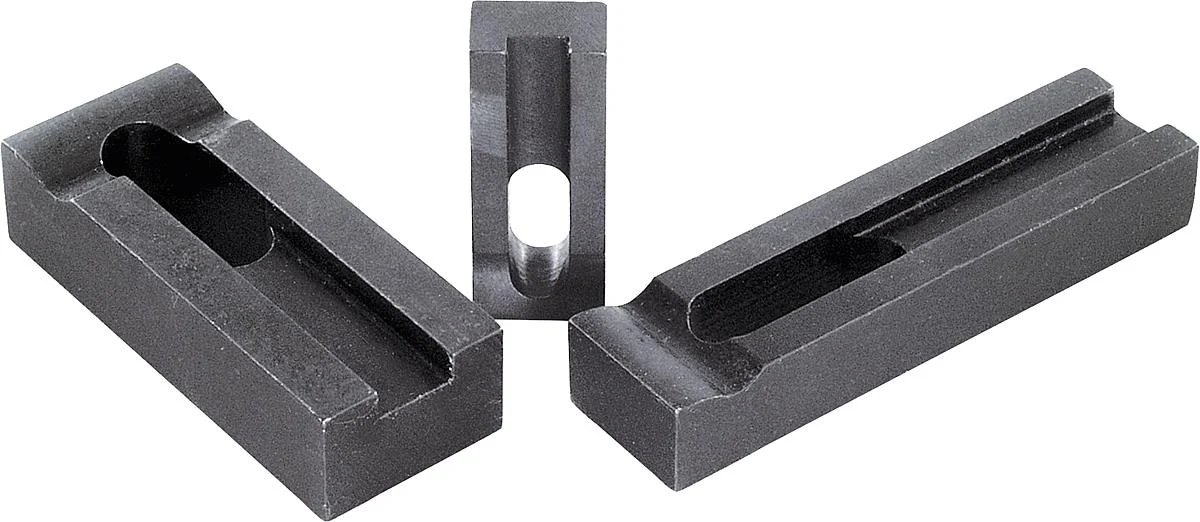
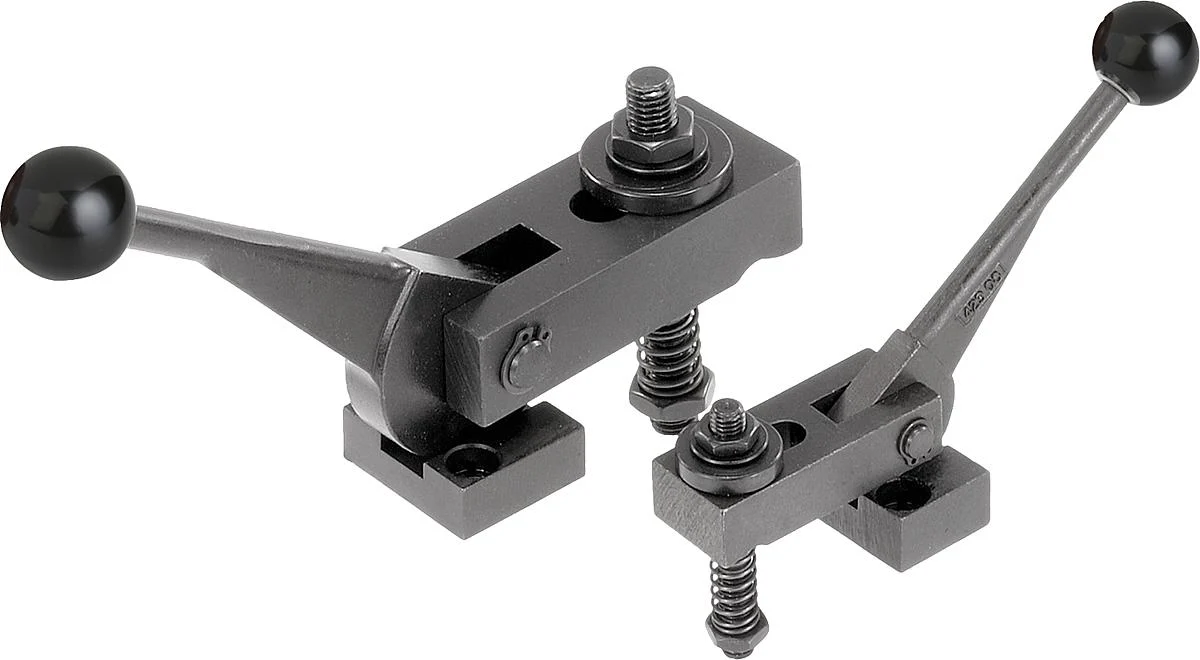
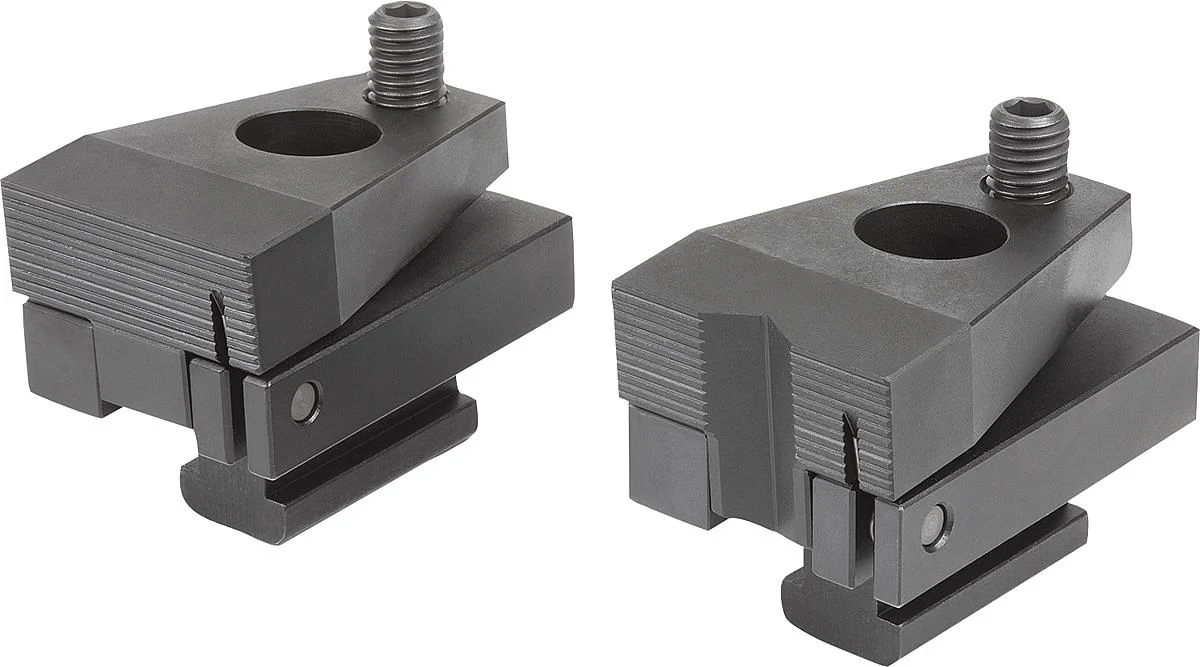
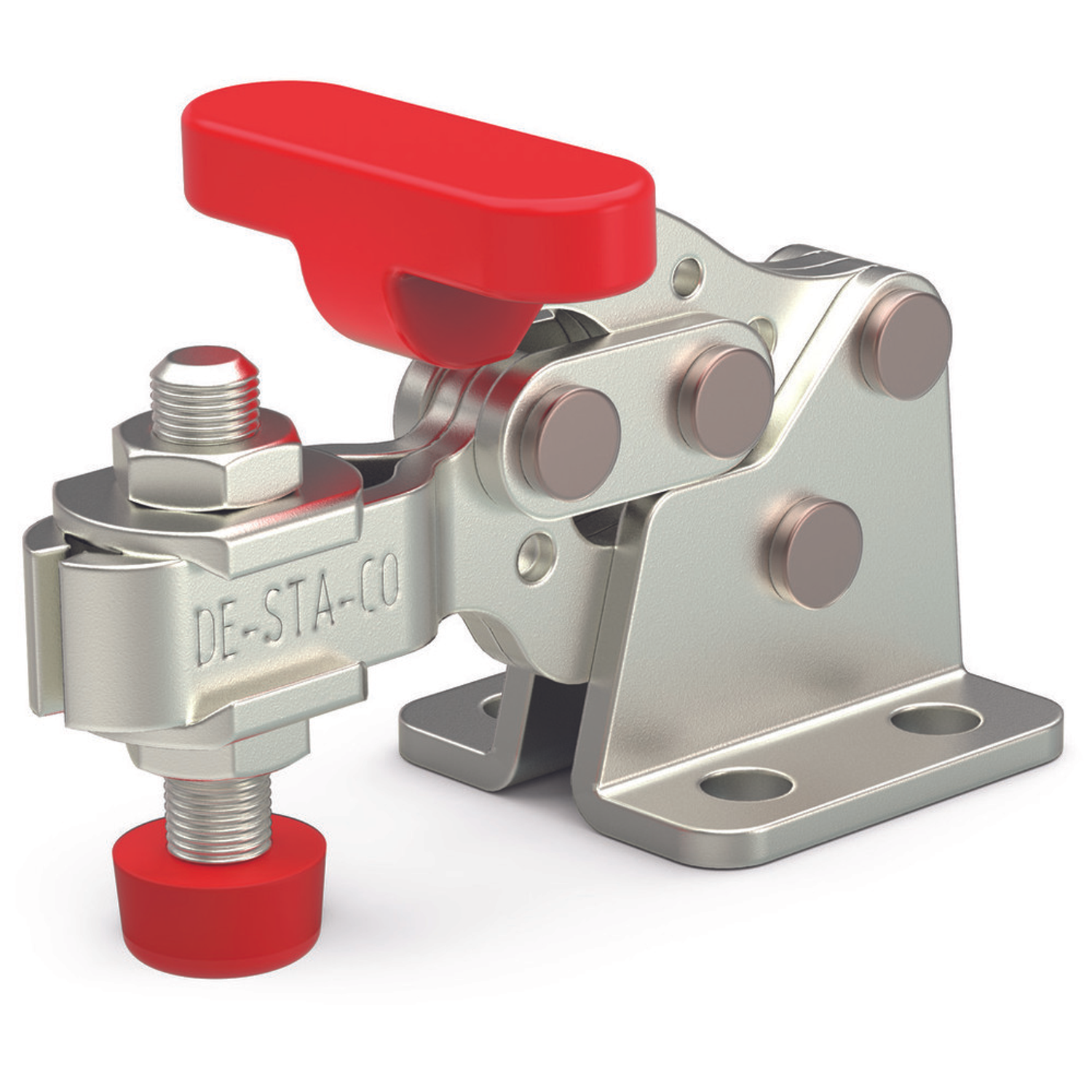
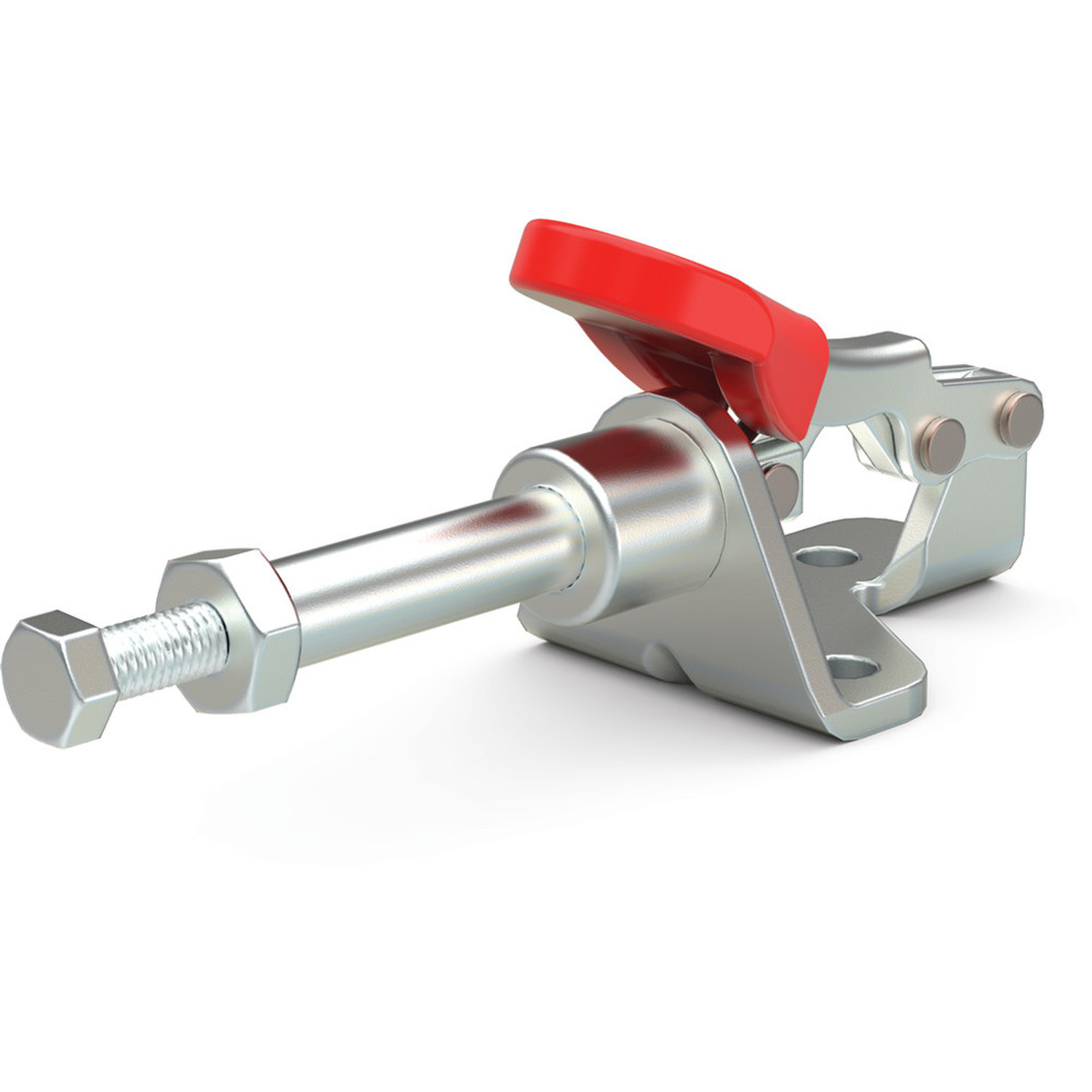
Manufacturer illustration · NorelemPictured model: 04460Original source
01 / INTRODUCTION

What is it?

A compact clamping element that pushes the workpiece toward a locating face from the side; the version shown is a wedge type side clamp for T-slot mounting.

02 / CONSTRUCTION

Construction & recognition

Turning the screw moves the clamping jaw along a guide face, and the base connects to the T-slot in the table.

03 / APPLICATIONS

Common applications

For setups that must leave clearance above for cutting; the clamping point and the opposing support should match workpiece stiffness.
Browse this category

Image copyright belongs to the manufacturers or original authors. Brands and models identify illustrations; consult official documentation when selecting parts.

ONLY ON MECHWIKI / SELECT · BUY · MAINTAIN

Before you use it: lifetime, selection, variants, sellers, uses

The notes below cover the “Toggle clamps” category. MechWiki prepared these category notes from public standards and engineering references. Use the selected manufacturer’s catalog for ratings, life factors and dimensions.

04 / LIFETIME

Lifetime & replacement criteria

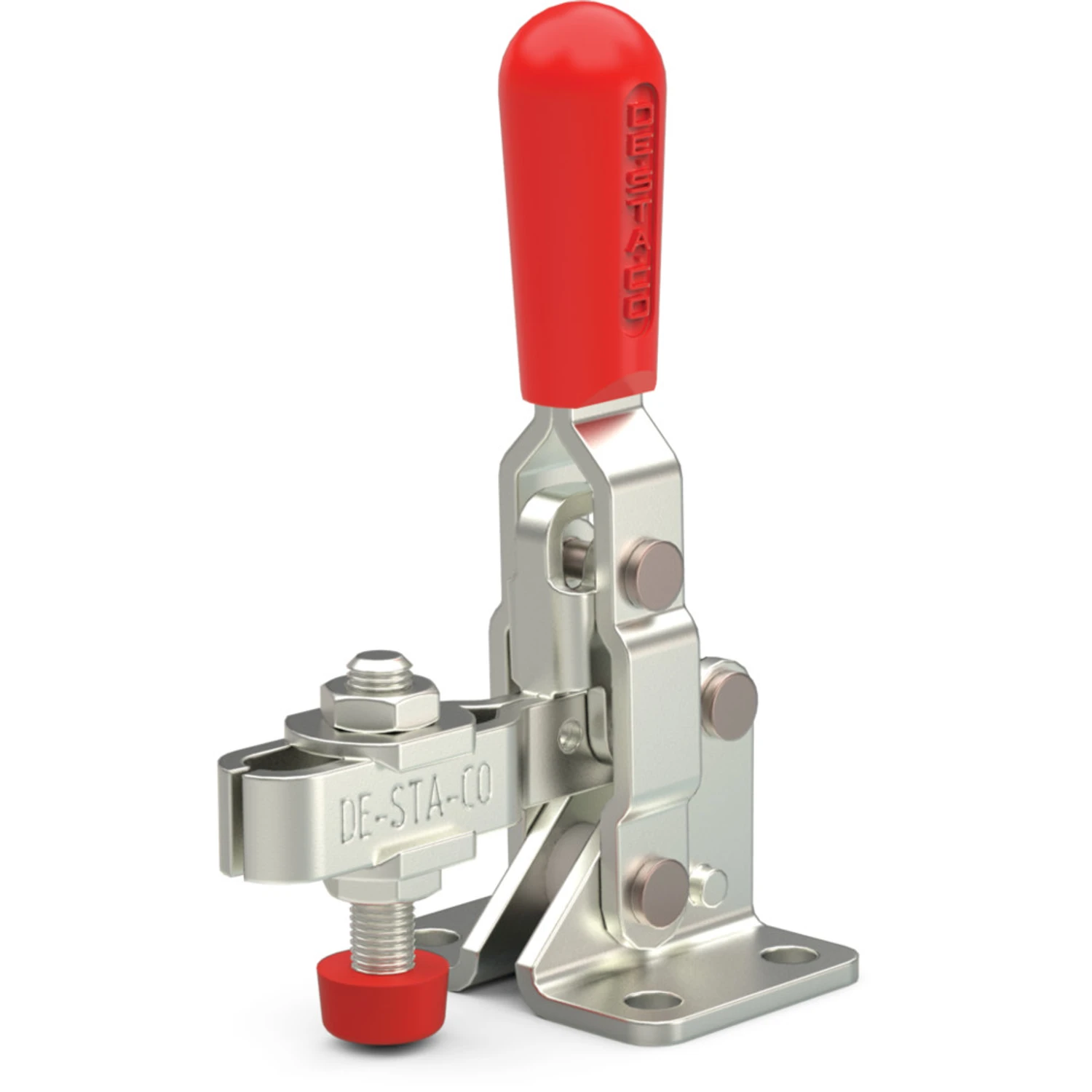
A toggle linkage locks after passing over center. Wear at the pivot pins and bushings changes the amount of over-center travel and reduces clamping force. Rubber pads also wear and age.

When to replace: Replace the clamp if the pins are loose, the handle will not stay locked or springs open, clamping force drops noticeably, the pad comes off or the clamp arm deforms.

05 / SELECTION

How to select

  1. Size the clamp for the required holding capacity, the external force it can resist when locked. Clamping force is the separate force applied by operating the handle.
  2. Select for the direction of force and the available space. Vertical handles need clearance above, horizontal handles need width and push-pull clamps apply force along the axis.
  3. Check the arm reach and the adjustment range of the pressure pad.
  4. Select a flange or straight base to suit the mounting. Use a spatter-resistant version for welding fixtures.
  5. Place the clamping point above a support. Consider a pneumatic clamp for repetitive automated operation.
TOOLS / CALCULATE

Related selection calculators

Use these calculators for a preliminary estimate, then verify the result against this entry, the manufacturer catalogue and installation limits. Results do not replace a specific model rating.

06 / VARIANTS

Common designations & derived parts

  • Vertical, horizontal, push-pull and pull-latch types
  • Flange or straight base
  • Safety-latch and stainless-steel versions
  • Rubber pads, nylon pads and adjustable spindles
  • Related types include pneumatic toggle clamps and swing-clamp cylinders

Pictured models: Norelem 04460

07 / SELLERS

Who sells it

The directory links to manufacturer selection and CAD resources and identifies the maker of the pictured example. Check stock and lead time with the supplier. Price comparison and ranking are not available yet.

08 / WHERE IT IS USED

Typical uses & where it sits in machines

For setups that must leave clearance above for cutting; the clamping point and the opposing support should match workpiece stiffness.
Machine tableZero-point modulesBase plateWorkpieceLocating pinsCompression springStrap clampWasherNutSwing clamp cylinderIndex plungerHere: Toggle clampsToggle clamp
Fixture stationSchematic, not to scaleArrow: Toggle clamp
Welding and assembly fixturesInspection fixtures and drill jigsQuick locking for dies and coversWoodworking and small-batch machining fixtures