
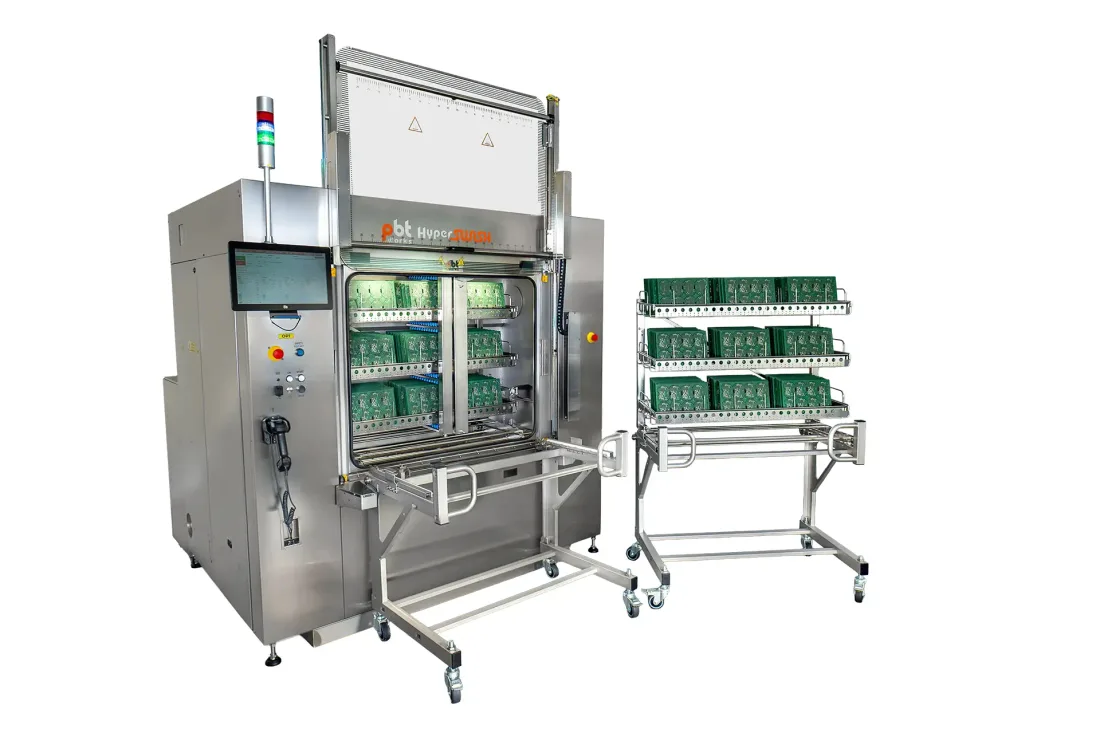

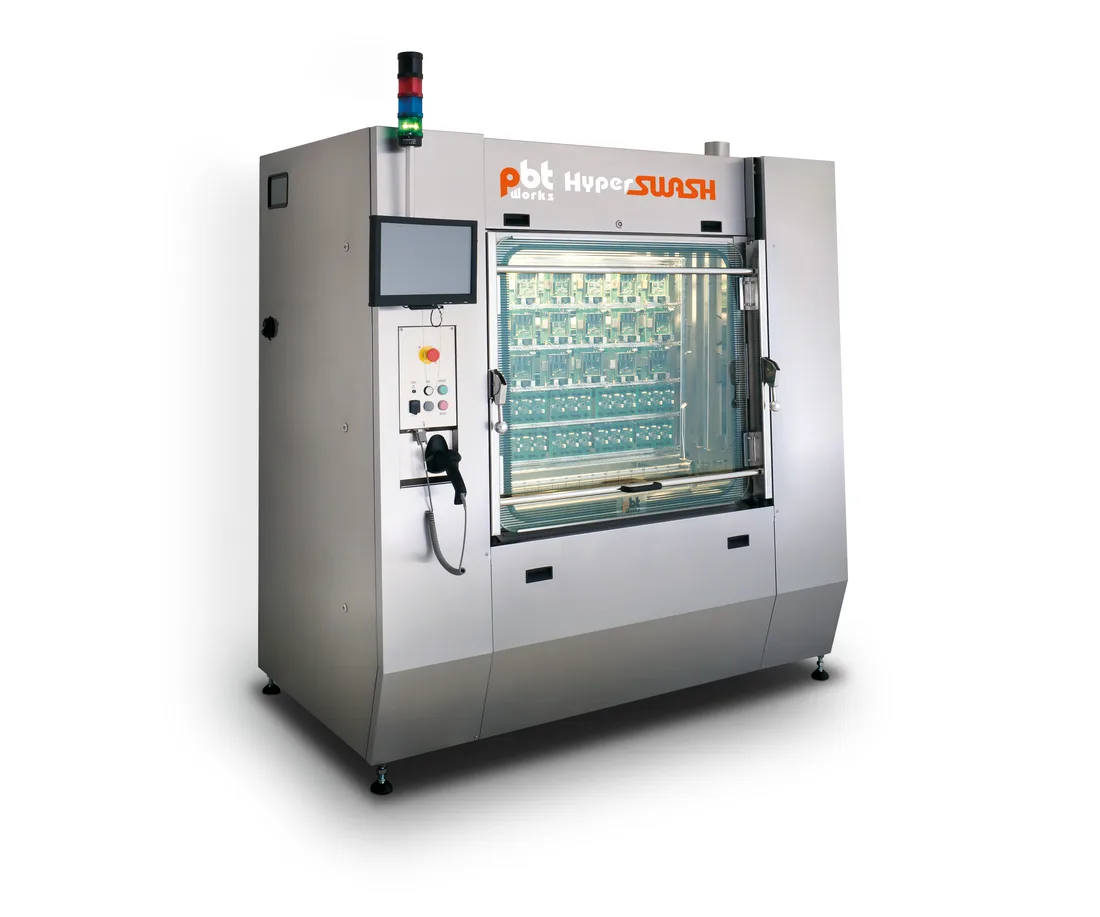
What it does
Removes flux and other manufacturing residue according to the assembly and contamination, then rinses and dries.
How it works
Taking an inline spray machine as an example, the conveyor carries boards through wash, rinse and dry zones, and the chemistry and flow of the medium together carry residue away. Batch machines switch media in stages in one chamber; getting liquid in and out under low-standoff components is critical.
Process sequence
- Confirm the assembly can be cleaned
- Load and wash
- Rinse off residue
- Drain and dry
- Check cleanliness and material condition
Key inputs
- Flux residue type and cleaning medium
- Component resistance to fluid, seals, coatings and standoff
- Temperature, concentration, time, rinse water and drying conditions
Common problems
- Residue hard to flush from low standoffs
- Insufficient rinsing leaving secondary residue
- Fluid entering sensitive parts or incomplete drying
Limits of application
- Spray, ultrasonic and vacuum solvent cleaning are different mechanisms
- Materials sold as no-clean still need assessment against later coating and reliability requirements
Functional modules
Wash fluid supply
Keeps the medium in suitable condition
Spray conveying
Brings liquid to boards and under components
Rinse and isolation
Removes wash fluid and dissolved residue
Draining and drying
Removes water from gaps and outputs assemblies
Manufacturer & technical sources
Continue with manufacturer product pages, operating principles and technical information for this equipment type.