
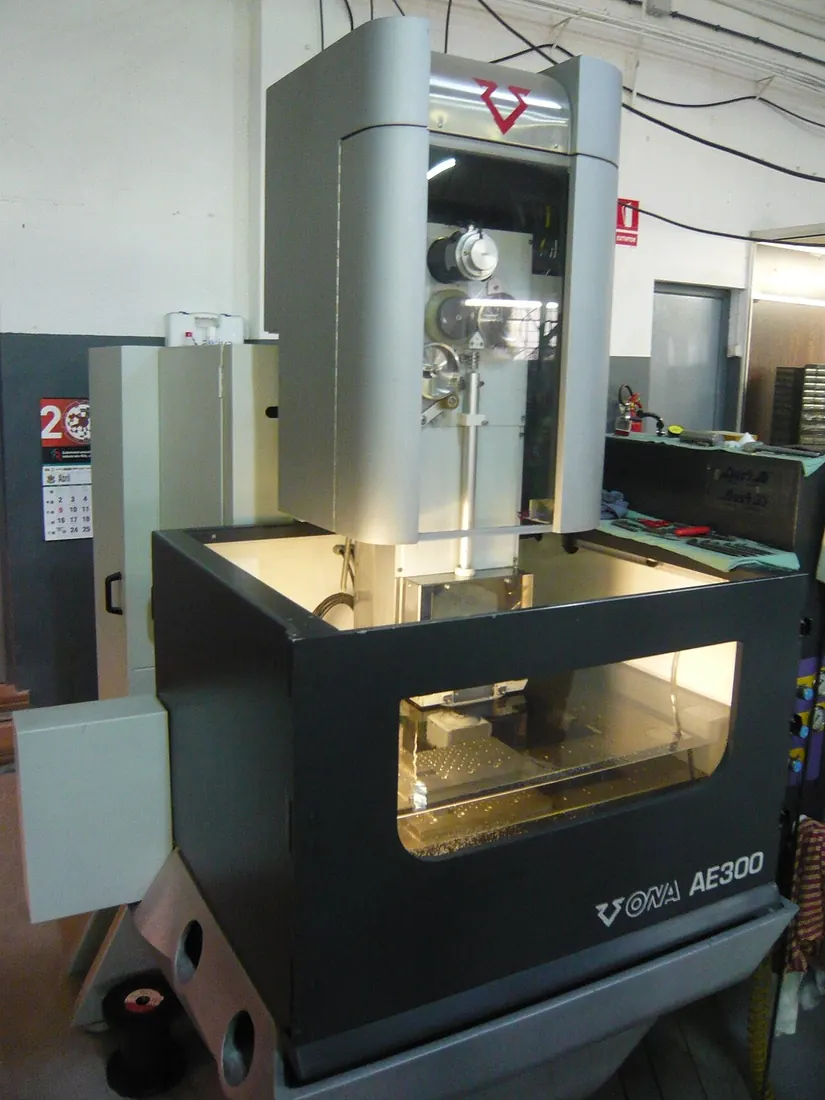

What it does
Cuts outlines in conductive work by electrical discharge using a fine metal wire as the electrode, following the program.
How it works
The wire runs through the guide system and discharges across the gap to the work to erode material, and X/Y relative motion generates the plane contour. Machines with taper axes change wire direction by moving the upper and lower guides relative to each other; single-pass and reciprocating wire machines supply wire differently.
Process sequence
- Plan contour and threading path
- Fixture and align
- Thread the wire and establish dielectric
- Cut by program with trim passes as needed
- Support separated parts
- Inspect and unload
Key inputs
- Conductive material and thickness
- Inner and outer contours and threading conditions
- Straight or taper requirements
- Wire, wire transport and dielectric configuration
Common problems
- Wire breaks or tension changes affecting stability
- Loose slugs affecting the final cut
- Insufficient dielectric and flushing causing abnormal discharges
Limits of application
- The general discharge principle on this page applies to wire electrodes; single-pass and reciprocating wire machines are configured differently
- Settings from one single-pass machine cannot represent medium-speed wire machines
Functional modules
Wire electrode and wire transport
Supply the machining electrode continuously
Guides and tension
Steady the wire position
Pulse generator and CNC axes
Produce discharges and the path
Dielectric treatment
Remove debris and keep machining conditions
Manufacturer & technical sources
Continue with manufacturer product pages, operating principles and technical information for this equipment type.