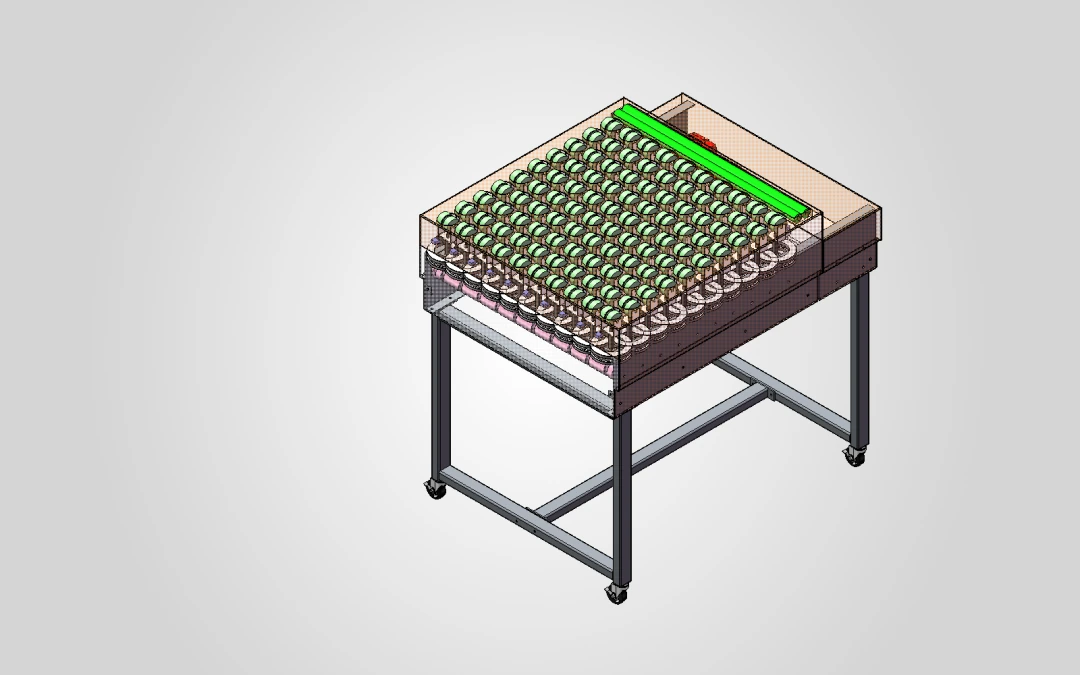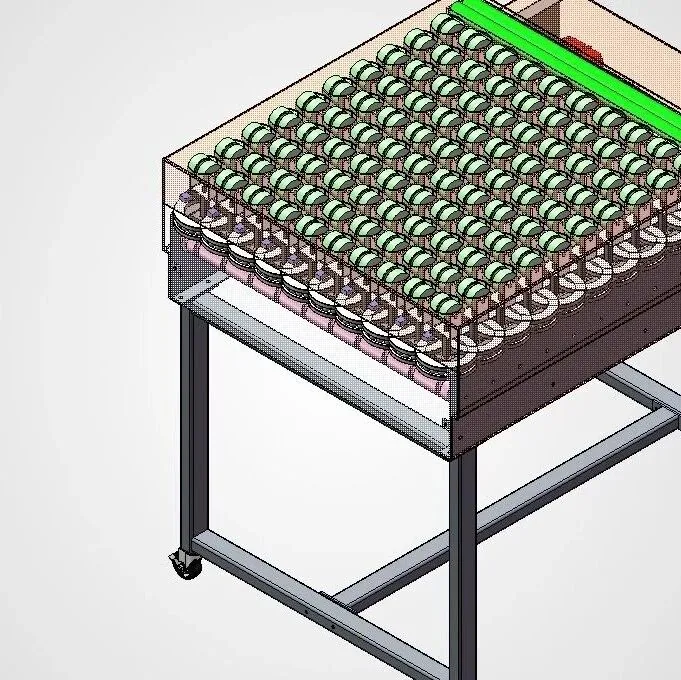

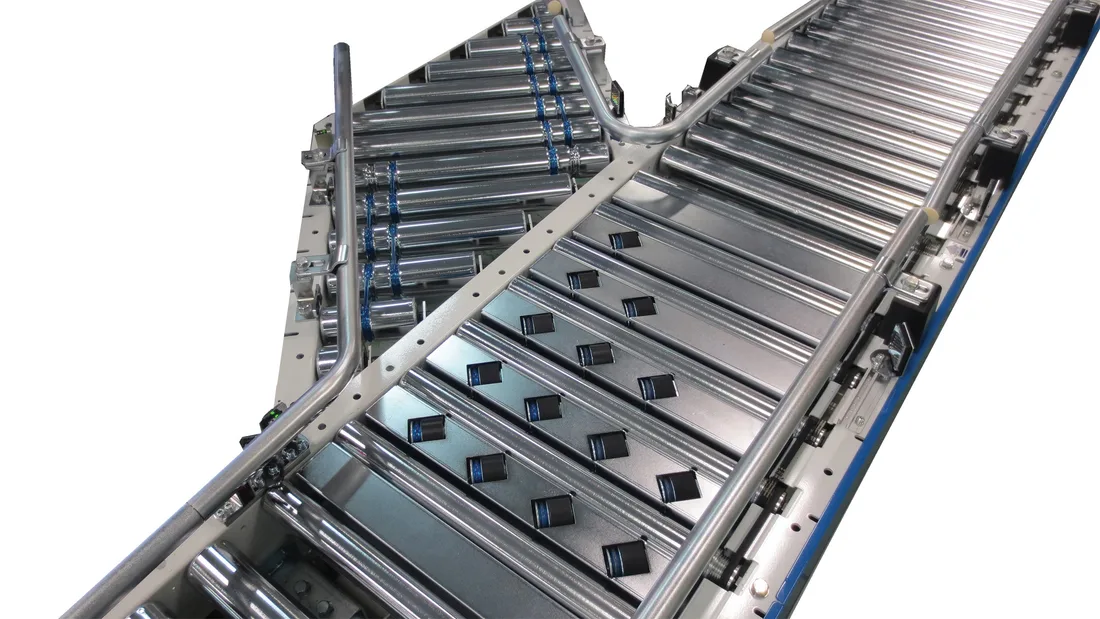
What it does
Diverts conveyed items to branch lines by changing the direction of the support wheels.
How it works
As an item enters the wheel set, the turning wheels provide forward contact force; to divert, the wheels pivot on command so the conveying speed gains a sideways component that carries the item into the branch. Induction belt, wheel set and branch must provide continuous support with enough spacing for identification and switching.
Process sequence
- Identify items and keep spacing
- Item approaches the wheel set
- Set wheel angle by destination
- Wheels divert the item or let it pass straight
- Branch takes it away
- Return or switch direction for the next item
Key inputs
- Item base stiffness and size
- Wheel contact and divert angle
- Induction speed and spacing
- Branch height and jam detection
Common problems
- Poor contact with soft bags or small items
- Wheel switching not matching item position
- Base slipping
- Gaps at branch transfers trapping items
Limits of application
- This page uses a pivoting wheel diverter as the example
- Pop-up wheels, fixed skewed wheels and pivoting wheels are built differently
- Base condition and centre of gravity affect diverting; parcel weight alone does not decide it
Functional modules
Induction belt
Sets position and spacing
Steerable wheel sets
Change item travel direction
Steering and drive
Control wheel angle and speed
Sensing, outlets and control
Track and take items away
Manufacturer & technical sources
Continue with manufacturer product pages, operating principles and technical information for this equipment type.