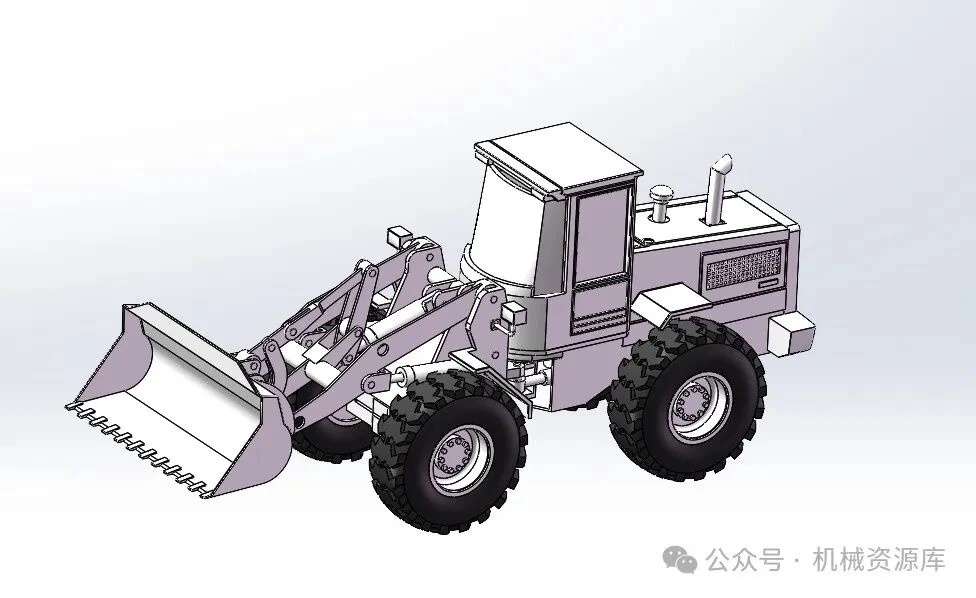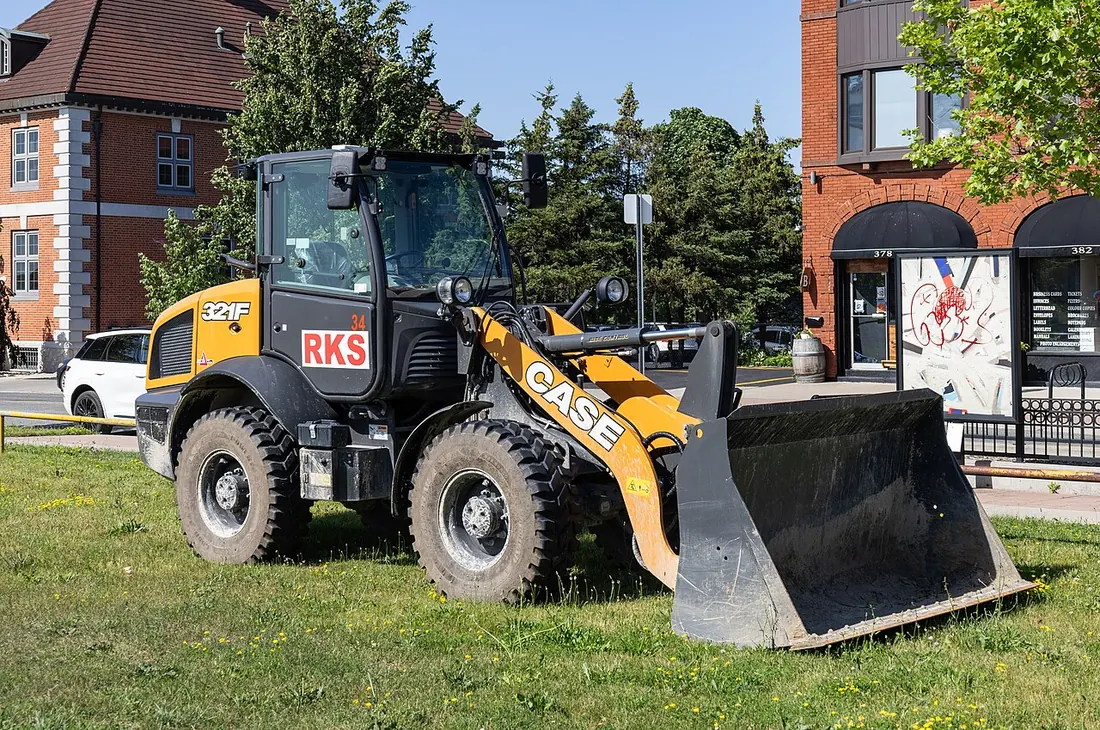

What it does
Loads loose material with a front bucket, carries it short distances and lifts and dumps it into trucks, hoppers or stockpiles.
How it works
Travel traction drives the bucket into the pile, and lift cylinders and tilt linkage fill, hold and dump it. On articulated machines, front and rear frames turn relative to each other to steer; lift, tilt and speed must work together to reduce wheel slip and spillage.
Process sequence
- Approach the pile with the bucket flat
- Fill with traction, lift and tilt together
- Reverse and turn
- Lift at the dump point
- Dump
- Lower the bucket and return
Key inputs
- Material looseness, density and bucket type
- Dump height, travel route and ground
- Lift and tilt capacity, tyres and machine stability
Common problems
- Wheel slip or bouncing when digging into the pile
- Wrong bucket attitude spilling material
- Lifting while turning reducing stability or wearing linkage
Limits of application
- Bucket volume alone does not set the permitted load
- Z-bar and other linkages move differently, and pallet forks and quick couplers must be used within their own ratings
Functional modules
Wheeled drive and steering
Handle digging into the pile and carrying
Lift linkage
Changes bucket height
Tilt linkage
Controls bucket attitude and dumping
Hydraulic control
Distributes lift, tilt and steering
Manufacturer & technical sources
Continue with manufacturer product pages, operating principles and technical information for this equipment type.