
What changed
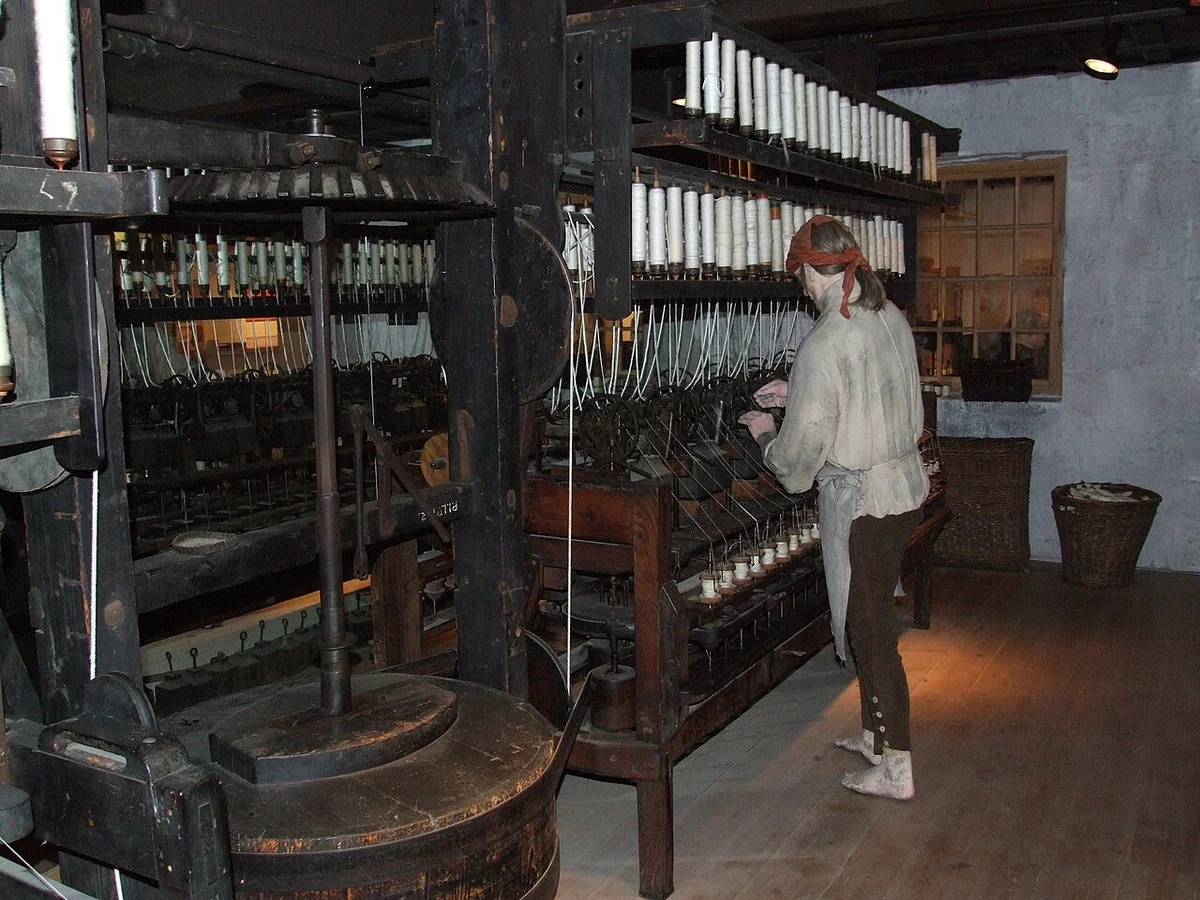
The water frame combined a power source, drafting rollers and many spindles, helping move spinning into factories.
Core mechanism
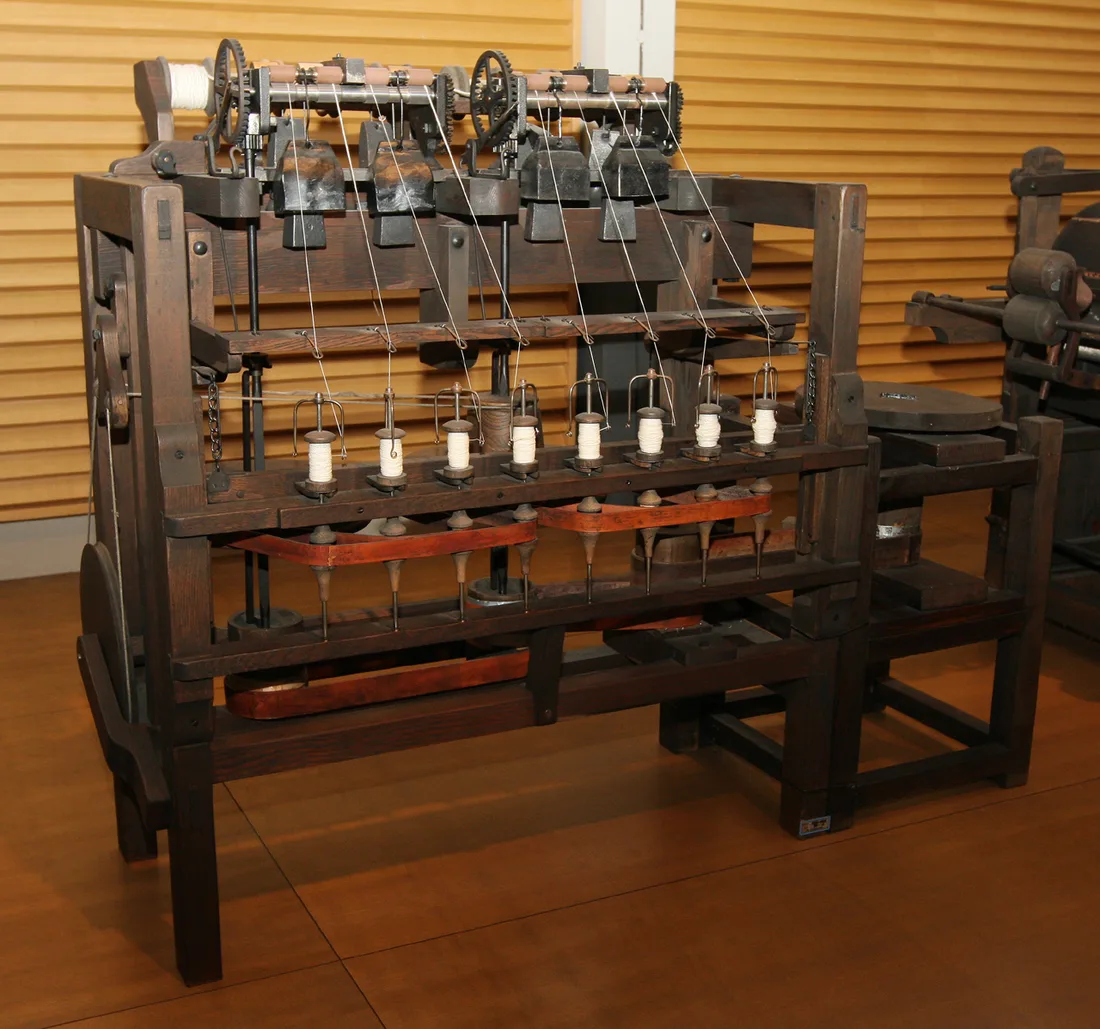
A water wheel supplies mechanical power, moving rollers draft cotton fibres thinner, and rotating spindles twist them into yarn. The spinning machine turns fibre into yarn; it does not interlace warp and weft.
What to look for
- Identify the drafting direction of the rollers
- See how many spindles share power
- Separate spinning from weaving
Legacy
Central power with many parallel work positions became an important basis for later factory organization; drafting and twisting remain key steps in spinning
Reading limits
- This entry describes Arkwright's water frame
- Do not treat the water frame, spinning jenny and power loom as the same kind of machine
Key elements
Water power and transmission
Distribute power to the working parts
Drafting rollers
Gradually thin the fibre strand
Spindles
Twist the drafted fibres
Museum & technical references
Explore this technology through museum and technical references.