
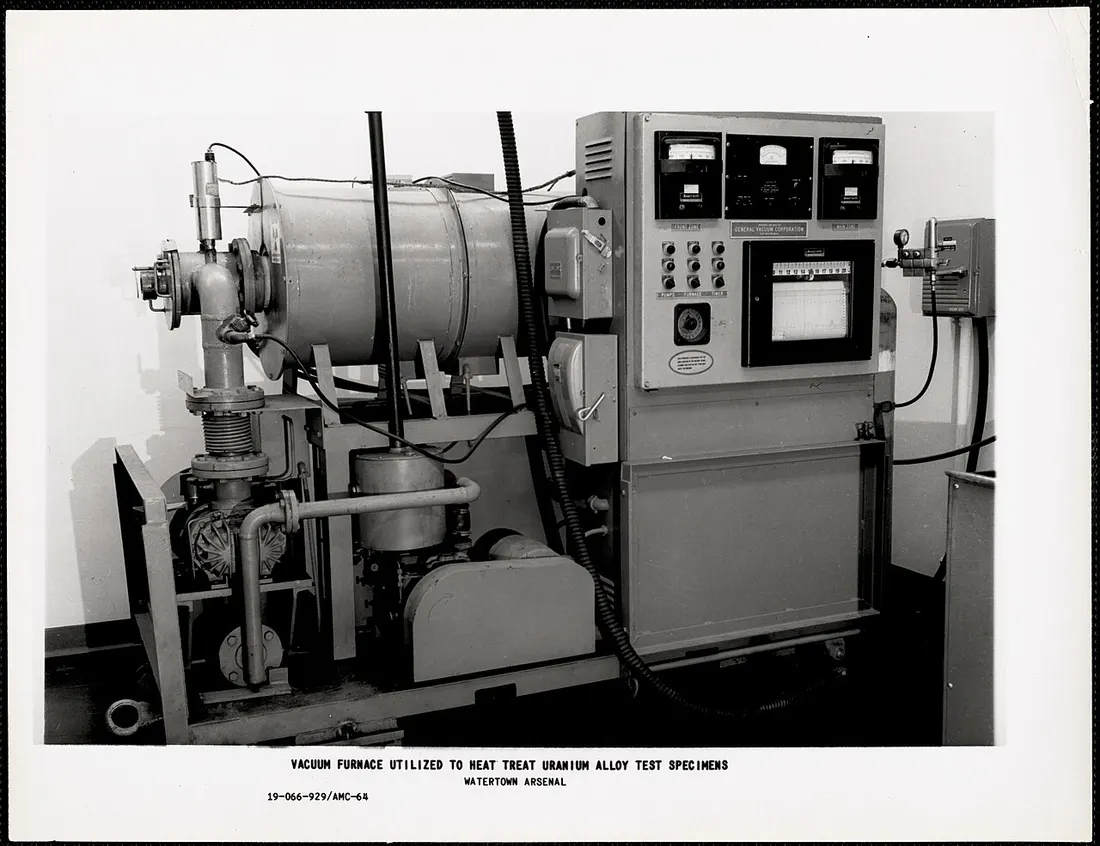

What it does
Heats parts in a controlled low-pressure environment, reducing unwanted gas reactions, and organizes the cooling that follows.
How it works
The vacuum pumps first remove air from the furnace, and in the hot vacuum stage heat moves mainly by radiation; depending on equipment and process, controlled gas can be introduced to aid convection or gas quenching. Vacuum is a way of controlling the environment and does not mean every step stays at the same vacuum level.
Process sequence
- Load and seal
- Pump out air
- Heat and soak under control
- Adjust pressure or gas cool per process
- Confirm cooling and vent
- Unload and inspect
Key inputs
- Material and target process
- Hot zone and load envelope
- Vacuum and process gas requirements
- Cooling rate and records
Common problems
- Leaks or outgassing changing the environment
- Load shadowing affecting radiation
- Uneven gas flow changing cooling
- Temperature and pressure records needing to match the actual parts
Limits of application
- Vacuum annealing, hardening, sintering and brazing are different processes
- Cooling capability must be verified for the load and material
- Vacuum does not remove distortion automatically
Functional modules
Chamber and hot zone
Hold and heat the load
Vacuum pumps and valves
Evacuate and regulate pressure
Gas supply and cooling
Backfill and exchange heat per process
Temperature measurement and control
Coordinate temperature, pressure and time
Manufacturer & technical sources
Continue with manufacturer product pages, operating principles and technical information for this equipment type.