
EQUIPMENT / PRINCIPLE / DESIGN

Ultrasonic clean station

Removes contamination from part surfaces and wettable areas using ultrasonic cavitation in liquid and the cleaning agent.

Equipment principle & structureRequest design help ↗
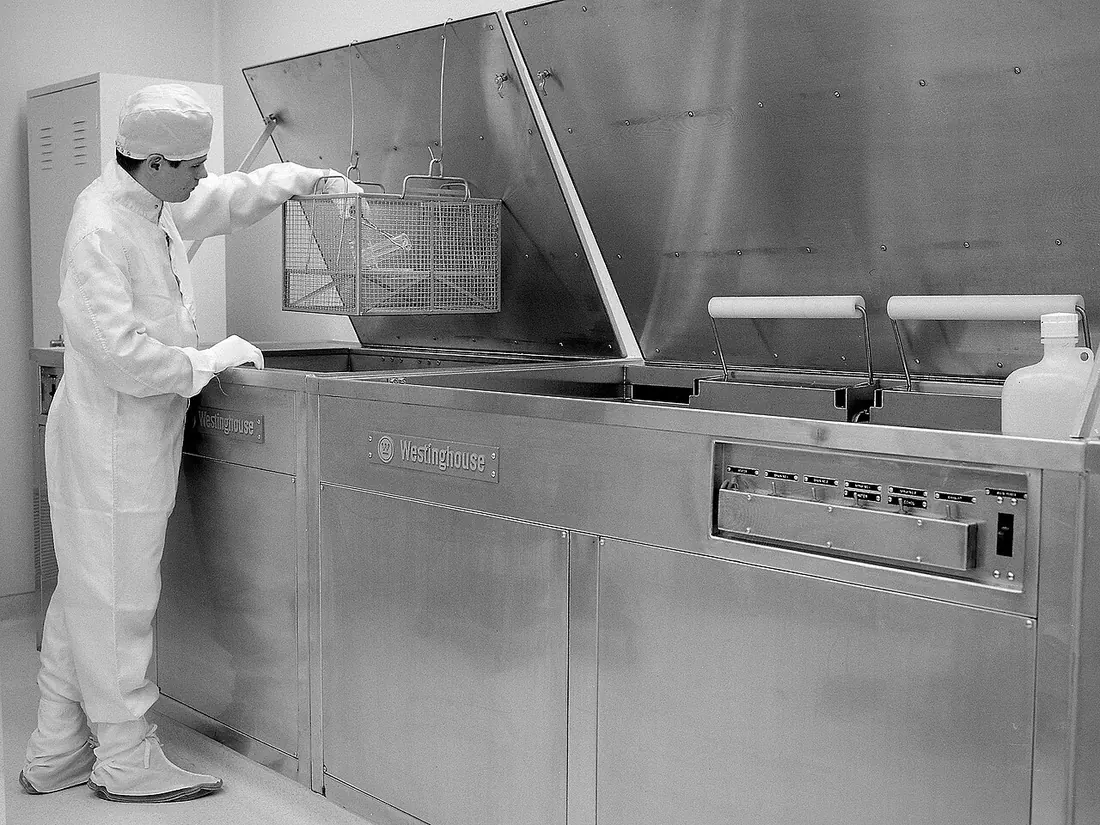
Ultrasonic clean station · Similar machine example
Ultrasonic clean station · Similar machine example · Source: Wikimedia Commons ↗ · by NASA Glenn Research Center · Public domain · Resized and converted to WebP
Ultrasonic clean station · original schematic, not to scale; shows the working principle and modules
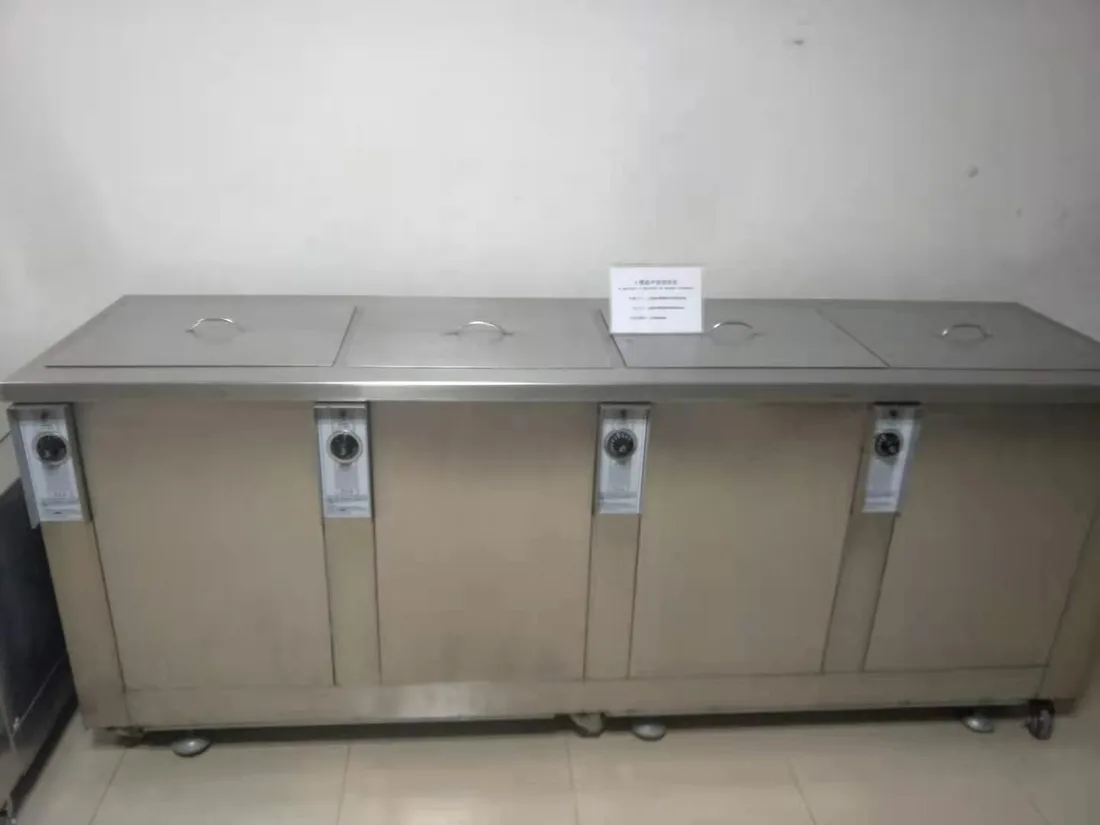
Kexiao three-tank ultrasonic cleaner: tanks side by side, a panel on each
Kexiao three-tank ultrasonic cleaner: tanks side by side, a panel on each · Source: Keqiao Ultrasonic Equipment website ↗ · © the manufacturer, quoted for reference · Resized proportionally and converted to WebP
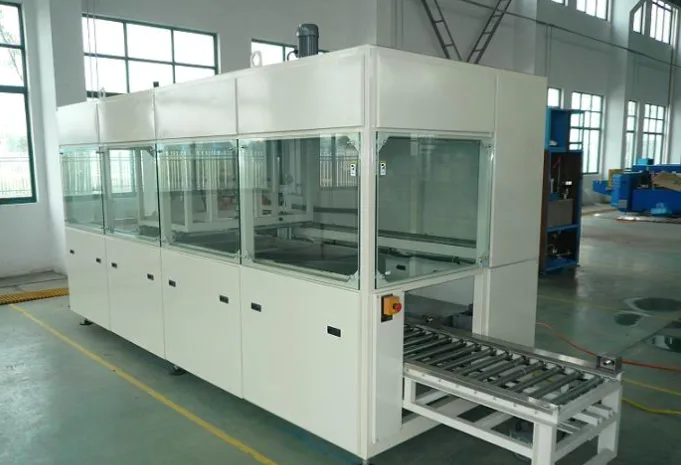
Kexiao enclosed conveyor ultrasonic cleaning line with drum outfeed
Kexiao enclosed conveyor ultrasonic cleaning line with drum outfeed · Source: Keqiao Ultrasonic Equipment website ↗ · © the manufacturer, quoted for reference · Resized proportionally and converted to WebP

What it does

Removes contamination from part surfaces and wettable areas using ultrasonic cavitation in liquid and the cleaning agent.

How it works

The generator drives transducers to vibrate, sound pressure alternates in the bath liquid, and cavitation bubbles form and are driven; bubble oscillation, collapse and local flow help detach contamination. Wetting and chemical action of the cleaning agent, basket position and sound field distribution together decide the result.

Process sequence

  1. Mix the bath and degas as needed
  2. Load the basket, immerse and release trapped air
  3. Run ultrasound to suit the material
  4. Remove and rinse
  5. Dry
  6. Check cleanliness

Key inputs

  1. Material and surface layers
  2. Contamination, cleaning agent and temperature
  3. Load shadowing, sound field and cleanliness standard

Common problems

  1. Air trapped in blind cavities or stacked parts shadowing
  2. Saturated bath redepositing dirt
  3. Excessive cavitation damaging sensitive surfaces

Limits of application

  1. Ultrasonic cleaning is not sterilization and does not remove all burrs
  2. Fragile platings, bonded parts and parts unsuitable for immersion need separate assessment

Functional modules

Generator and transducers

Set up the ultrasonic field

Cleaning tank liquid

Provides cavitation and chemistry

Basket loading

Brings target faces into contact with liquid

Temperature control and post-treatment

Control the process, rinse and dry

Manufacturer & technical sources

Continue with manufacturer product pages, operating principles and technical information for this equipment type.

ONLY ON MECHWIKI / AGGREGATED

Aggregated references: models, makers, patents & videos

References scattered across model articles, vendor sites and patent databases, gathered under this machine. Checked items are listed; the rest are offered as ready-to-open searches.

Patents: how others built it

Patents are useful for drawings and mechanism ideas. None has been vetted for this entry yet, so here are searches pre-filled with the machine name.

Videos: see it run

No licensed video is hosted for this machine yet; these searches are pre-filled with its name.

3D MODELS

3D models and download information

Explore structure and assembly with models. Download methods, file formats and terms are provided by the original article or mini program.

Find more in the model library →