
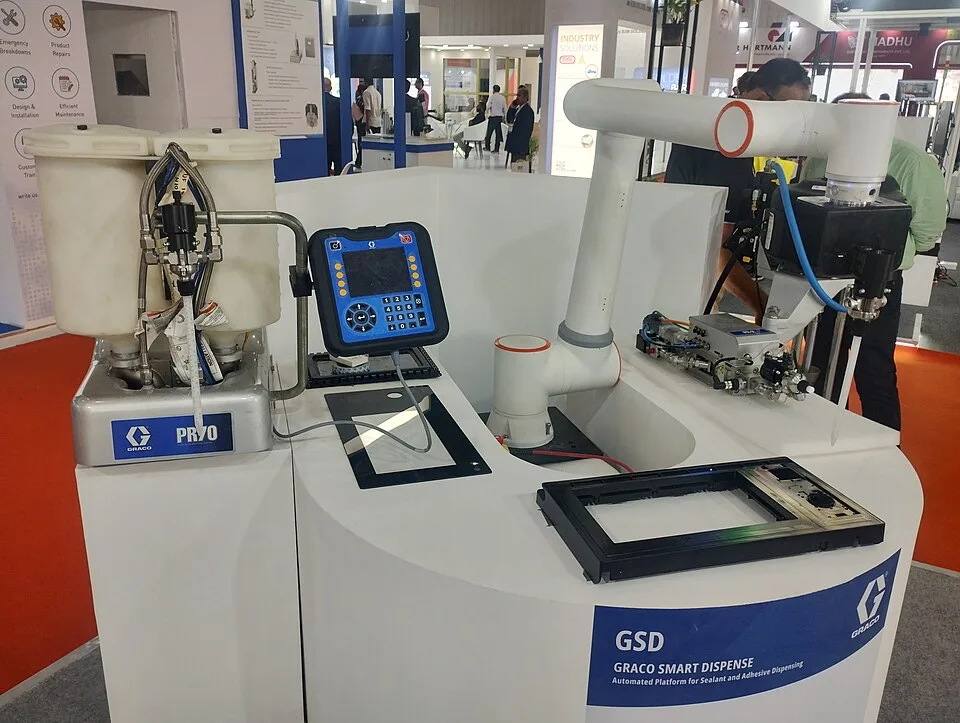

What it does
Meters two reactive materials separately, mixes them in ratio and applies a set amount to the part for bonding, sealing or potting.
How it works
The two supplies stay separate, and the metering unit delivers them at a set volume or other ratio until they meet at the mixer. With dual metering cylinders, different effective areas and synchronized strokes set the volume ratio; static mixer design, flow and back pressure must also suit the material.
Process sequence
- Check materials and supply
- Fill each metering unit
- Confirm ratio and purge
- Mix and dispense along the path
- Manage stoppages and mixed material
- Cure and inspect per the material
Key inputs
- Volume or mass ratio and material densities
- Viscosity, pot life and temperature
- Total amount, flow, mixer and part path
Common problems
- Bubbles or one side running dry upsetting the ratio
- Incomplete mixing
- Curing in the mixer after idle time, stringing or leaks
Limits of application
- Volume ratio is not mass ratio; changing materials means more than reusing old settings
- Metering and mixing are separate from curing
Functional modules
Dual material supply
Keeps A and B separate
Metering
Controls ratio and total amount
Mixing valve and mixer
Blend components at the outlet
Dispensing
Controls position and start and stop
Manufacturer & technical sources
Continue with manufacturer product pages, operating principles and technical information for this equipment type.