
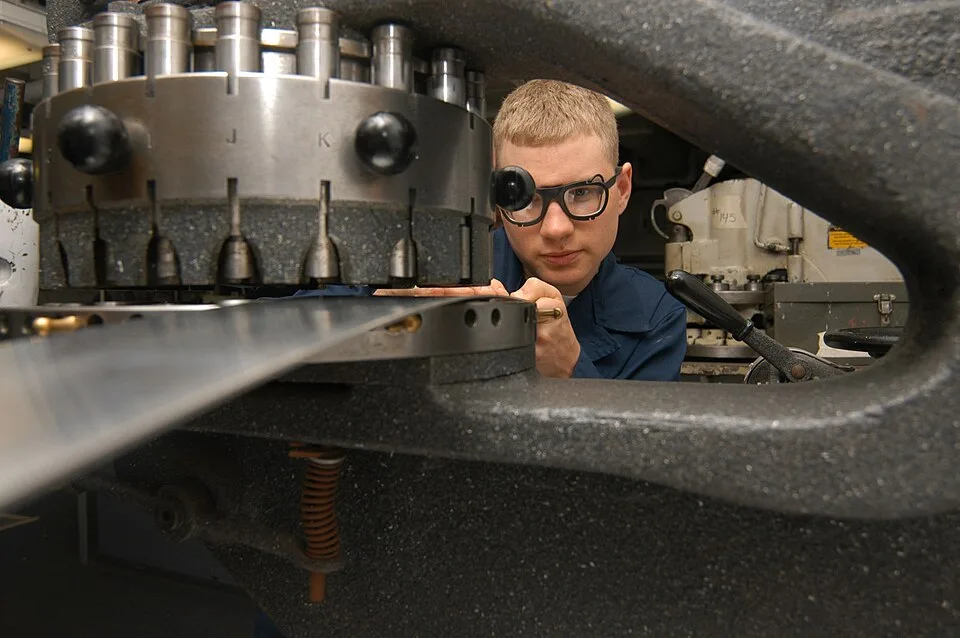

What it does
Holds many punch and die sets in a turret and makes holes, outlines and local forms by tool selection and sheet positioning.
How it works
Upper and lower turrets index to the required tool, the clamps and feed move the target point of the sheet under the punch, and the punch shears or forms the material. Overlapping hits can nibble more complex outlines, auto-index stations can rotate the tool, and the press drive may be servo, hydraulic or other.
Process sequence
- Clamp the sheet and confirm tools
- Select the turret station
- Position the work point
- Punch or form
- Index or change tool and continue
- Unload and inspect
Key inputs
- Material, thickness and punching force
- Tool shape and clearance
- Clamping and repositioning
- Nibbled edges, slug removal and form height
Common problems
- Slug pulling or jamming
- Tool wear causing burrs
- Clamp dead zones conflicting with the program
- Sheet warp affecting feed and forming
Limits of application
- Turret punches and single-punch tool changers store tools differently
- Not every station has auto-index
- Laser freeform cutting and nibbled edges have different quality limits
Functional modules
Upper and lower turrets and tools
Store and select tools
Punching drive
Provides stroke and forming
Table, clamps and feed
Position the sheet
CNC, slug removal and sensing
Organize paths and handle faults
Manufacturer & technical sources
Continue with manufacturer product pages, operating principles and technical information for this equipment type.