
EQUIPMENT / PRINCIPLE / DESIGN

2-axis turntable screwdriver

Indexes parts on a turntable between loading, locating, screwdriving and unloading positions, where screwdriving spindles join them with screws.

Equipment principle & structureRequest design help ↗
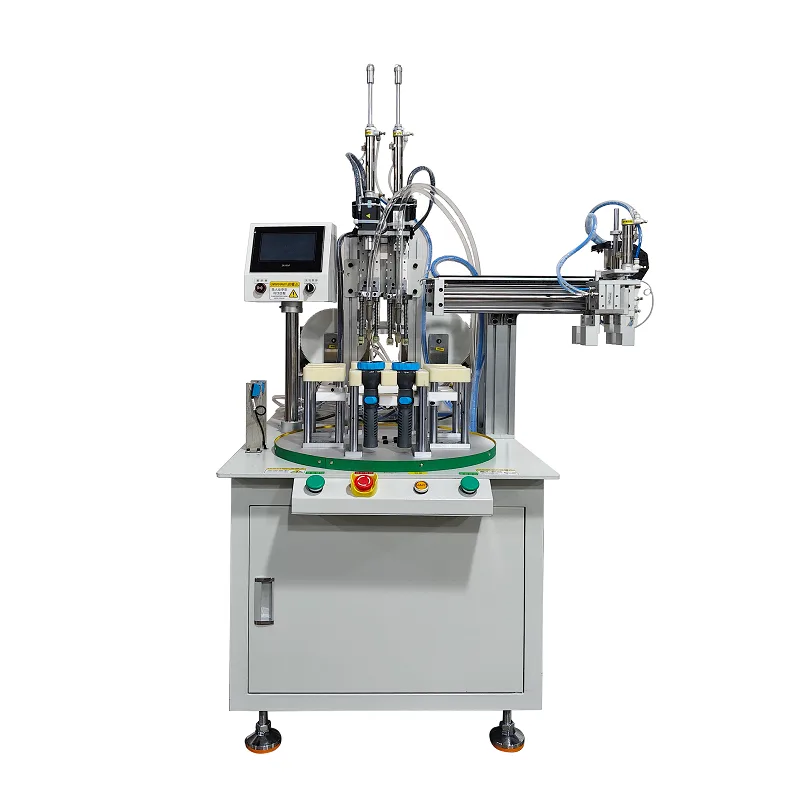
Rotary screwdriving machine: two spindles over the dial, transfer arm at right
Rotary screwdriving machine: two spindles over the dial, transfer arm at right · Source: Shenzhen Riyue website ↗ · © the manufacturer, quoted for reference · Resized proportionally and converted to WebP
2-axis turntable screwdriver · original schematic, not to scale; shows the working principle and modules
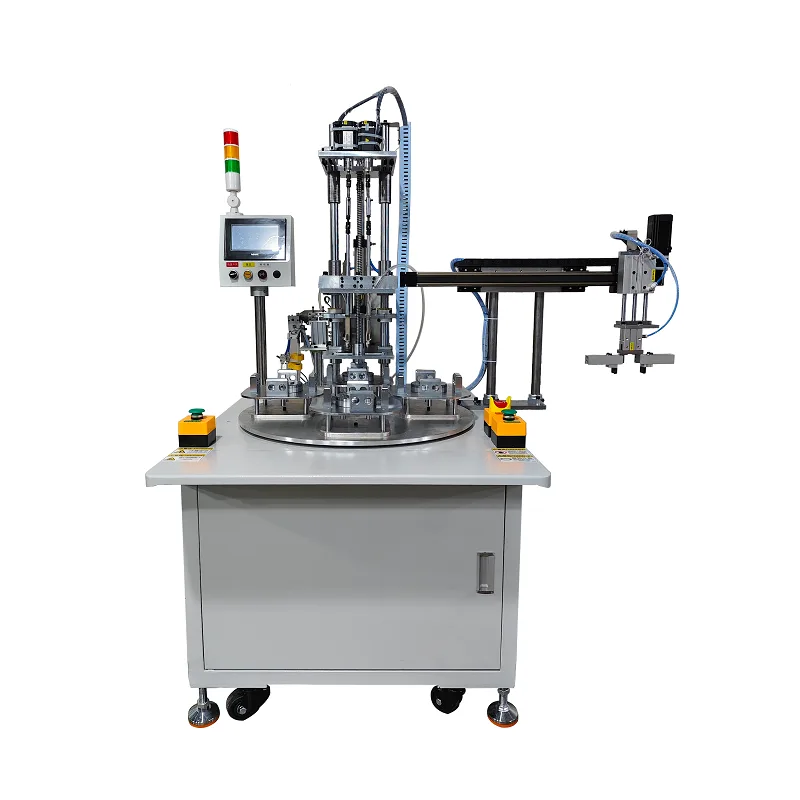
A sister model with four quick-change fixture nests on the dial
A sister model with four quick-change fixture nests on the dial · Source: Shenzhen Riyue website ↗ · © the manufacturer, quoted for reference · Resized proportionally and converted to WebP
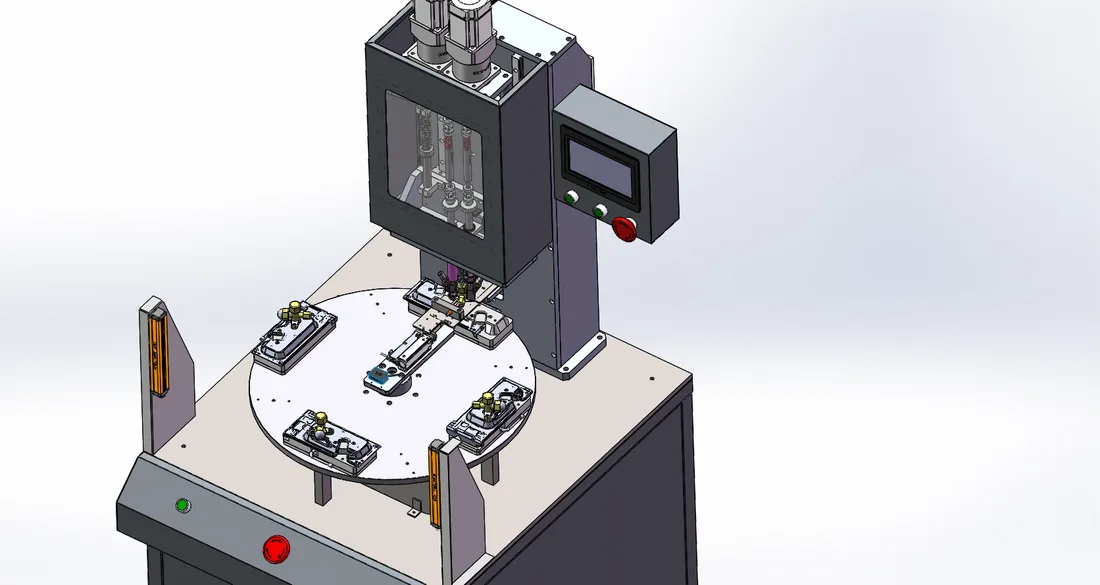
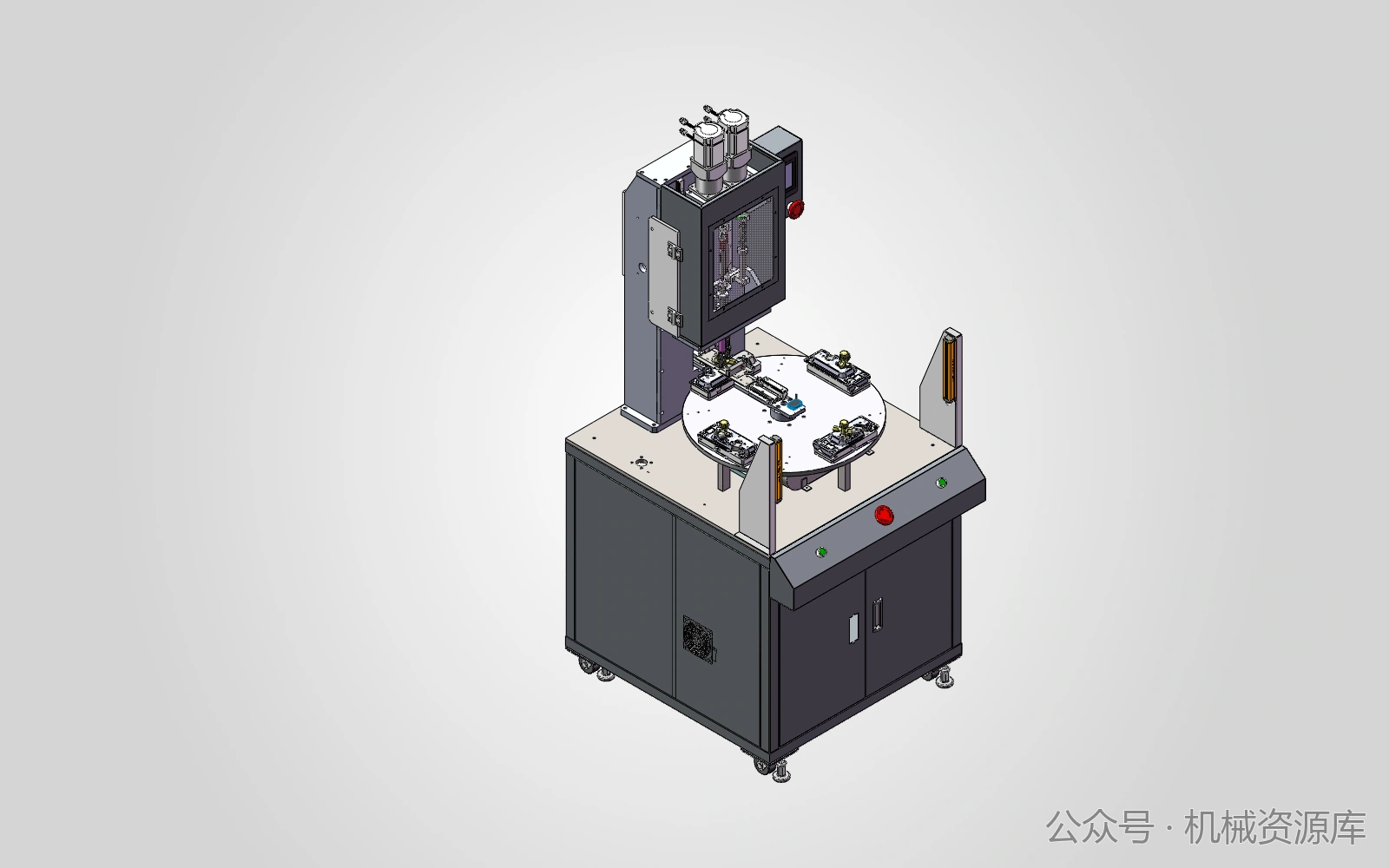
Two-axis rotary screwdriving machine, 3D model: dial, fixtures, drivers above
Two-axis rotary screwdriving machine, 3D model: dial, fixtures, drivers above · LazyStones 3D model · Public model library reference image · Resized proportionally and converted to WebP
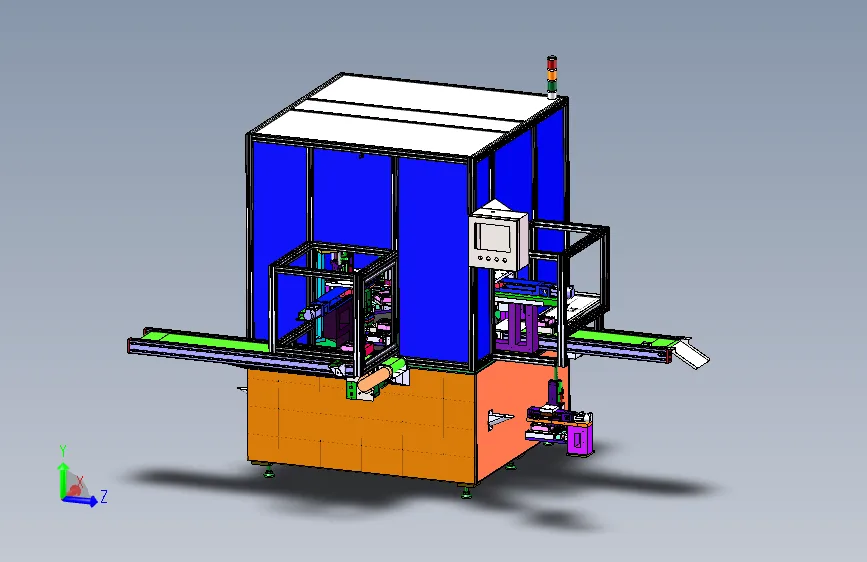
Rotary screwdriving machine with conveyors, 3D model: in and out belts, guard
Rotary screwdriving machine with conveyors, 3D model: in and out belts, guard · LazyStones 3D model · Public model library reference image · Resized proportionally and converted to WebP

What it does

Indexes parts on a turntable between loading, locating, screwdriving and unloading positions, where screwdriving spindles join them with screws.

How it works

The turntable brings the carrier to the screwdriving position; once it is stopped, locked and clamped, the feeder delivers a screw and the bit spindle finds the hole and runs it down. Turntable motion and spindles must be interlocked; a two-axis layout may serve different directions or stations, and the name does not mean two axes always tighten at once.

Process sequence

  1. Load
  2. Confirm spindles are retracted
  3. Index and lock the turntable
  4. Detect clamping
  5. Feed, drive and evaluate
  6. Unclamp and unload

Key inputs

  1. Screw and hole directions
  2. Station layout, indexing and fixture datums
  3. Screw arrival, completion and clearance signals

Common problems

  1. Indexing incomplete when finding holes
  2. Weak clamping letting parts rotate
  3. Missing or jammed screws and indexing before retraction

Limits of application

  1. Station count and spindle count are not the same
  2. Where a different hole order is needed, assign paths or stations; turntable locating cannot replace the bit finding the hole

Functional modules

Indexing carriers

Circulate and locate parts

Clamping and detection

Confirms the part is in place

Screw feeding and driving

Delivers screws and runs them down

Unloading interlock

Removes finished parts after evaluation

Manufacturer & technical sources

Continue with manufacturer product pages, operating principles and technical information for this equipment type.
ONLY ON MECHWIKI / AGGREGATED

Aggregated references: models, makers, patents & videos

References scattered across model articles, vendor sites and patent databases, gathered under this machine. Checked items are listed; the rest are offered as ready-to-open searches.

Patents: how others built it

Patents are useful for drawings and mechanism ideas. None has been vetted for this entry yet, so here are searches pre-filled with the machine name.

Videos: see it run

No licensed video is hosted for this machine yet; these searches are pre-filled with its name.

3D MODELS

3D models and download information

Explore structure and assembly with models. Download methods, file formats and terms are provided by the original article or mini program.

Find more in the model library →