
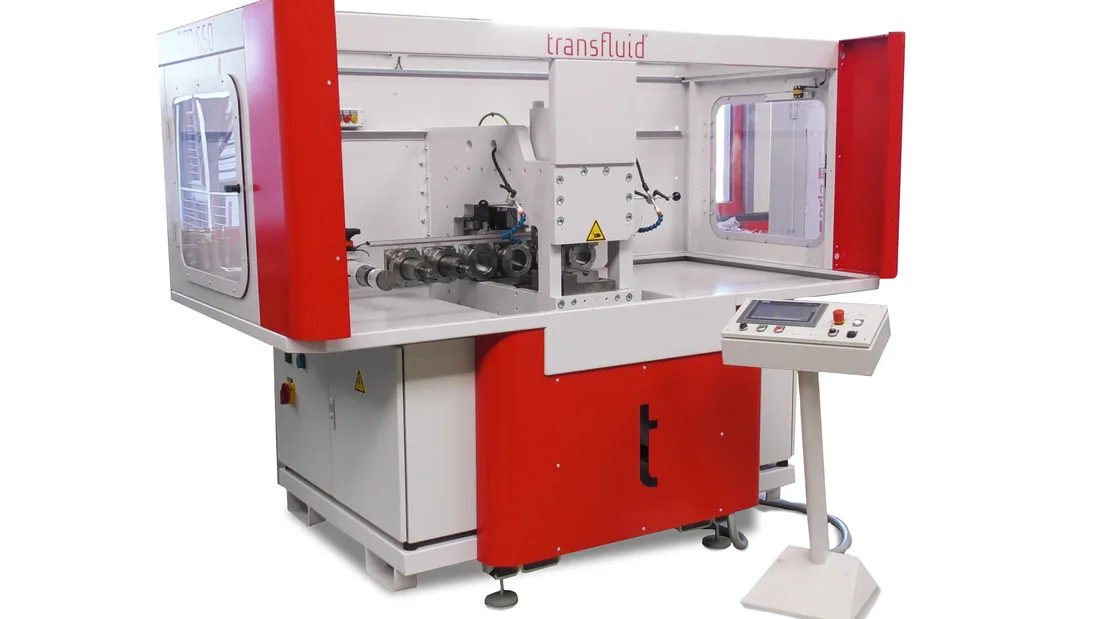

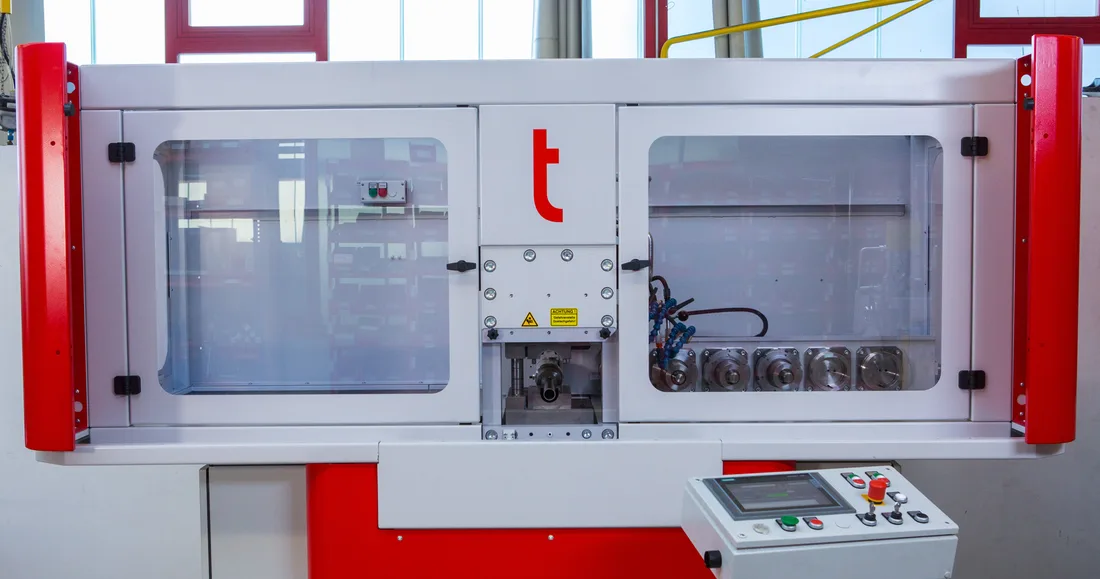
What it does
Applies axial or rotary forming to tube ends to give connection, sealing or locating profiles.
How it works
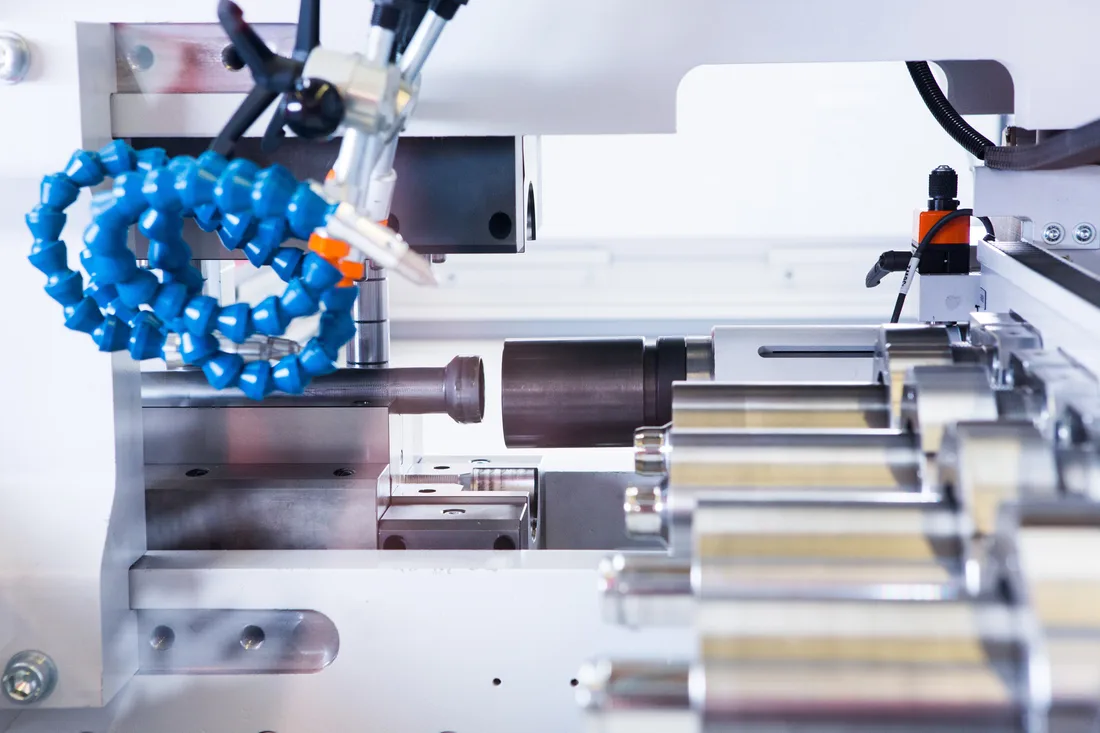
The clamp holds the tube, axial punches progressively change end diameter and shape, and rotary tools can roll beads, grooves and other profiles. Multi-stage machines produce complex ends by indexing and combining tools, and forming force and tool paths must suit tube wall and material flow.
Process sequence
- Locate and clamp the tube
- Do the first forming operation
- Index and repeat axial or rolling operations as needed
- Complete the profile and size
- Release the clamp
- Check end dimensions and wall thickness
Key inputs
- Material, tube diameter and wall
- End form and connection requirements
- Available clamping length
- Stages, tools, force and displacement
Common problems
- Clamp slip affecting length
- Unstable material flow causing wrinkles or cracks
- Wall thickness change
- Accumulated locating error across stages
Limits of application
- Tube end forming differs from bending the whole tube
- Cutting, rolling and axial forming are not the same action
- Whether both ends are formed at once depends on the actual machine
Functional modules
Tube clamping
Sets axial position and takes load
Axial forming
Shapes the end with punches
Rotary rolling
Forms ring profiles as needed
Multi-stage control
Organizes tools, force and displacement
Manufacturer & technical sources
Continue with manufacturer product pages, operating principles and technical information for this equipment type.