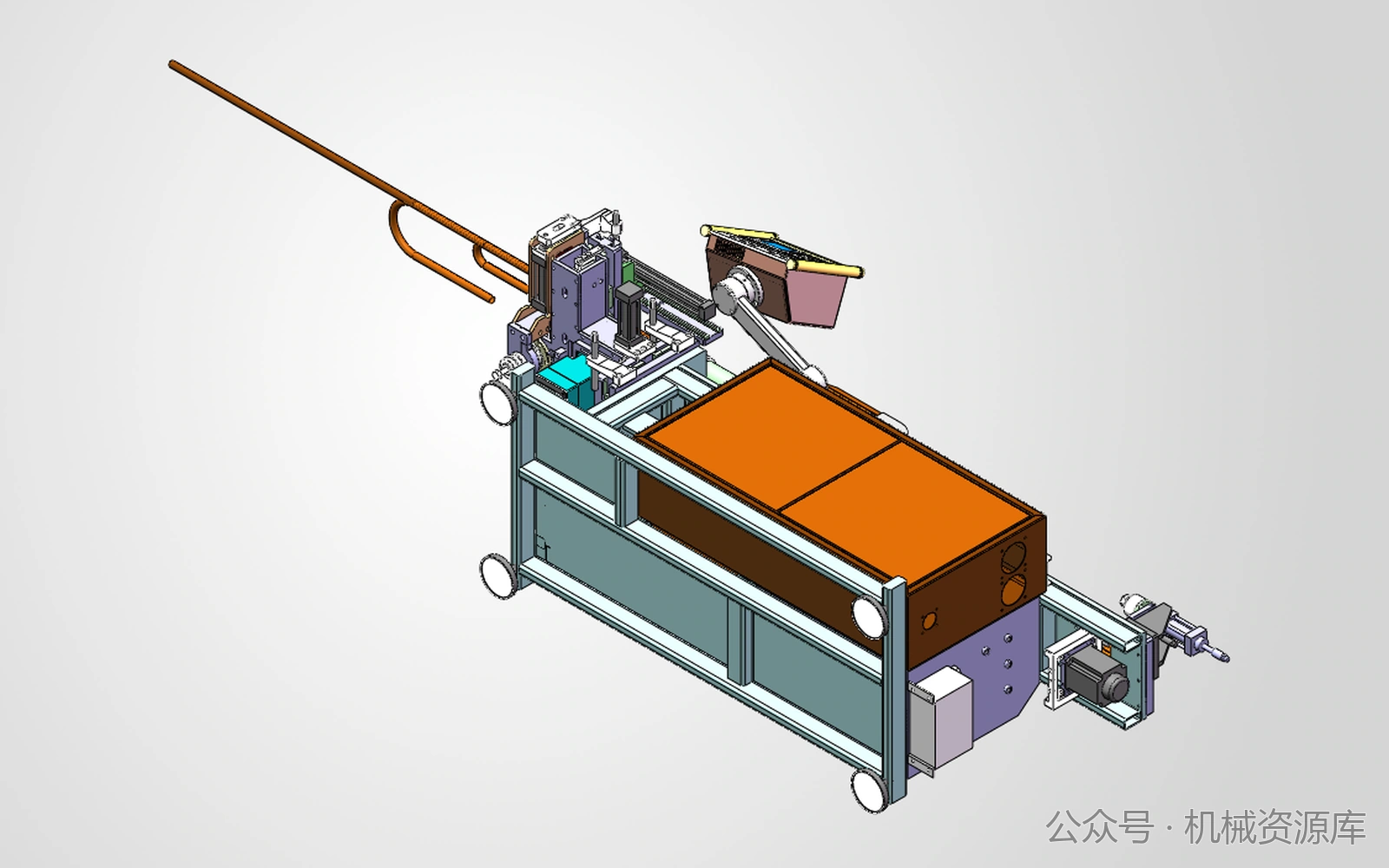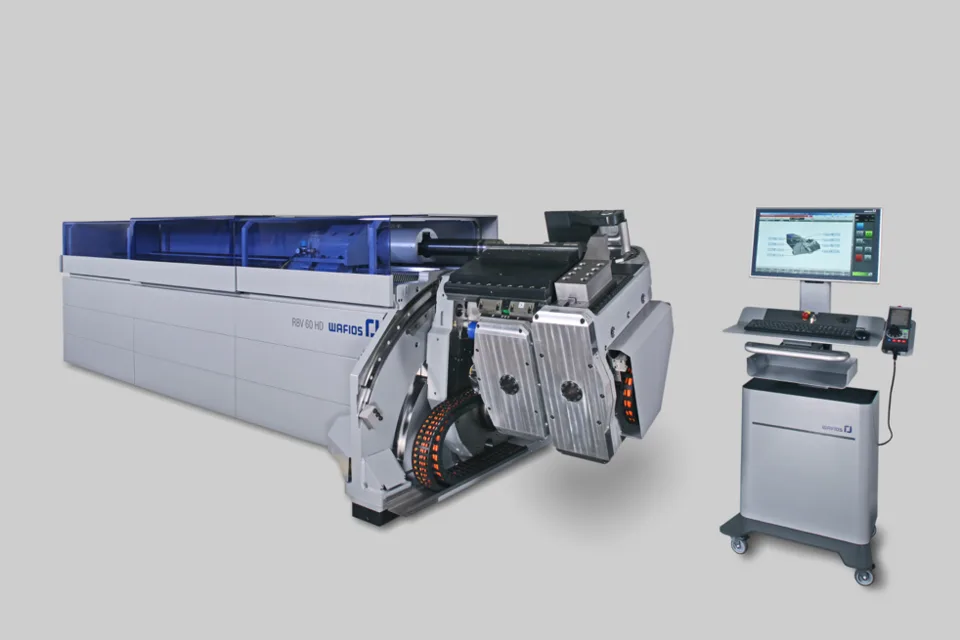

What it does
Coordinates feeding, rotating and bending so tubes get several consecutive bends in space.
How it works
Taking rotary draw bending as an example, the clamp die fixes the tube to the bend die, which rotates and draws the tube wall around the target radius while the pressure die supports tangentially. Where needed a mandrel supports the inner wall and a wiper die controls inner-arc wrinkling; the feed collet sets the length and orientation of each bend.
Process sequence
- Feed, locate and set rotation
- Close clamp and pressure dies
- Set mandrel position as needed
- Draw bend with feed
- Release and move to the next bend
- Withdraw, remove and inspect
Key inputs
- Tube diameter, wall and material
- Bend radius and straight lengths
- Tooling and internal support
- Springback, collisions and clamp length
Common problems
- Wrinkling on the inside of the bend
- Excess thinning or collapse on the outside
- Clamp slip
- Feed and rotation error and interference with formed bends
Limits of application
- This page uses CNC rotary draw bending as the example
- Push bending and roll bending use different tools and paths
- Mandrel and wiper configuration is chosen by wall and radius, not the same for every tube
Functional modules
Bend die and clamp die
Pull the tube and set bend radius
Pressure die
Provides tangential support
Mandrel and wiper die
Limit collapse and wrinkling as needed
Feed, rotation and CNC
Organize the spatial shape
Manufacturer & technical sources
Continue with manufacturer product pages, operating principles and technical information for this equipment type.