
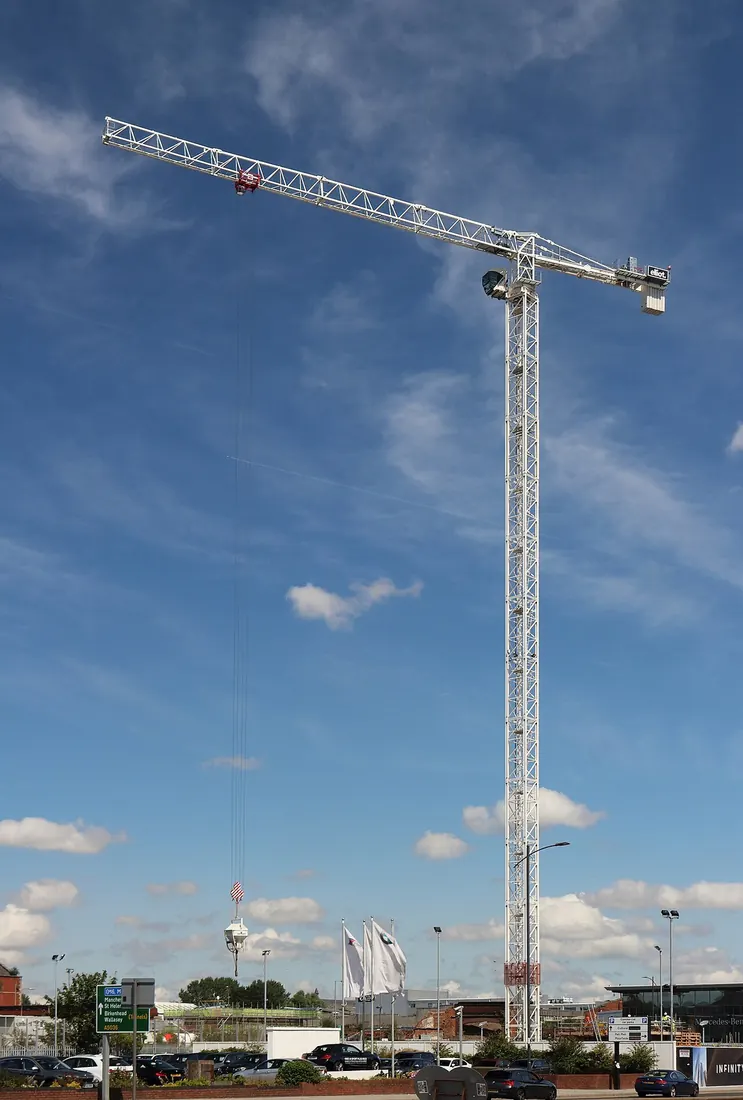

What it does
Moves material to permitted work areas around the tower on construction and similar sites by hoisting, slewing and changing radius.
How it works
Taking a flat-top trolley jib crane as an example, the hoist drum and sheaves change hook height, the trolley moves along the jib to change radius, and the slewing mechanism changes direction. Tower, foundation or ties carry loads into the support system; luffing jib cranes change radius by changing jib angle.
Process sequence
- Confirm work area and load conditions
- Position the hook above the load
- Hoist clear of the ground
- Coordinate slewing and radius change
- Lower to the target
- Unload and stow the hook
Key inputs
- Load, radius, lift height and matching load chart
- Foundation, tower height and tie configuration
- Wind, obstacles, neighbouring cranes and limit systems
Common problems
- Side pulls and load sway
- Exceeding load-radius limits
- Rope wear, limit or support faults
Limits of application
- Trolley jib and luffing jib cranes have different envelopes
- Top-slewing and bottom-slewing designs also differ, so load charts cannot be applied by appearance
Functional modules
Tower and foundation
Provide vertical support and transmit moments
Slewing jib
Changes working direction
Hoist rope system
Raises and lowers the hook
Trolley or luffing
Changes working radius
Manufacturer & technical sources
Continue with manufacturer product pages, operating principles and technical information for this equipment type.