
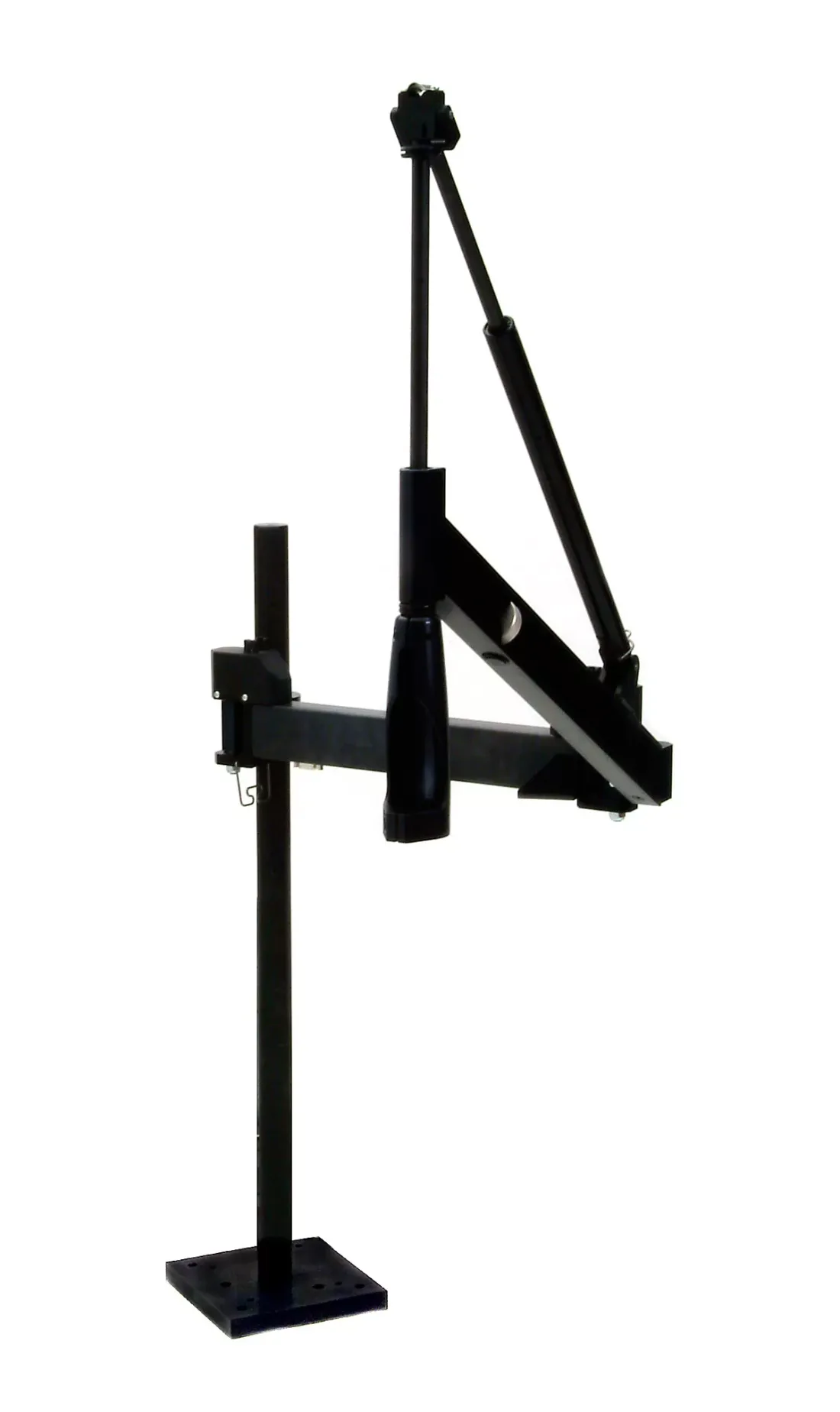

What it does
Supports the tightening tool and transfers its reaction torque to a fixed structure, reducing the tool weight and reaction the operator carries.
How it works
A telescopic or articulated arm lets the tool move to each bolt while the tool holder, arm and mounting base close the reaction path. Arms with position detection can identify the tightening position, but position detection is not a measurement of tightening quality.
Process sequence
- Locate the part
- Move the tool to the fastening point
- Confirm tool and holder state
- Tighten and transfer reaction
- Record the result and move to the next point
Key inputs
- Tool weight, output torque and allowable clamping area
- Fastener layout, working range and attitude
- Base rigidity, balancing and position interlocks
Common problems
- Holder slipping or base loosening
- Insufficient arm travel and attitude interference
- Wrong position confirmation or reaction exceeding the limit
Limits of application
- A suspended balancer cannot necessarily take reaction torque
- Arm torque rating, tool holder and mounting structure must all match
Functional modules
Tool holder
Connects tool and reaction arm
Moving arm
Gives working range and transmits reaction
Fixed support
Takes the base reaction
Position detection
Identifies tool coordinates where configured
Manufacturer & technical sources
Continue with manufacturer product pages, operating principles and technical information for this equipment type.