
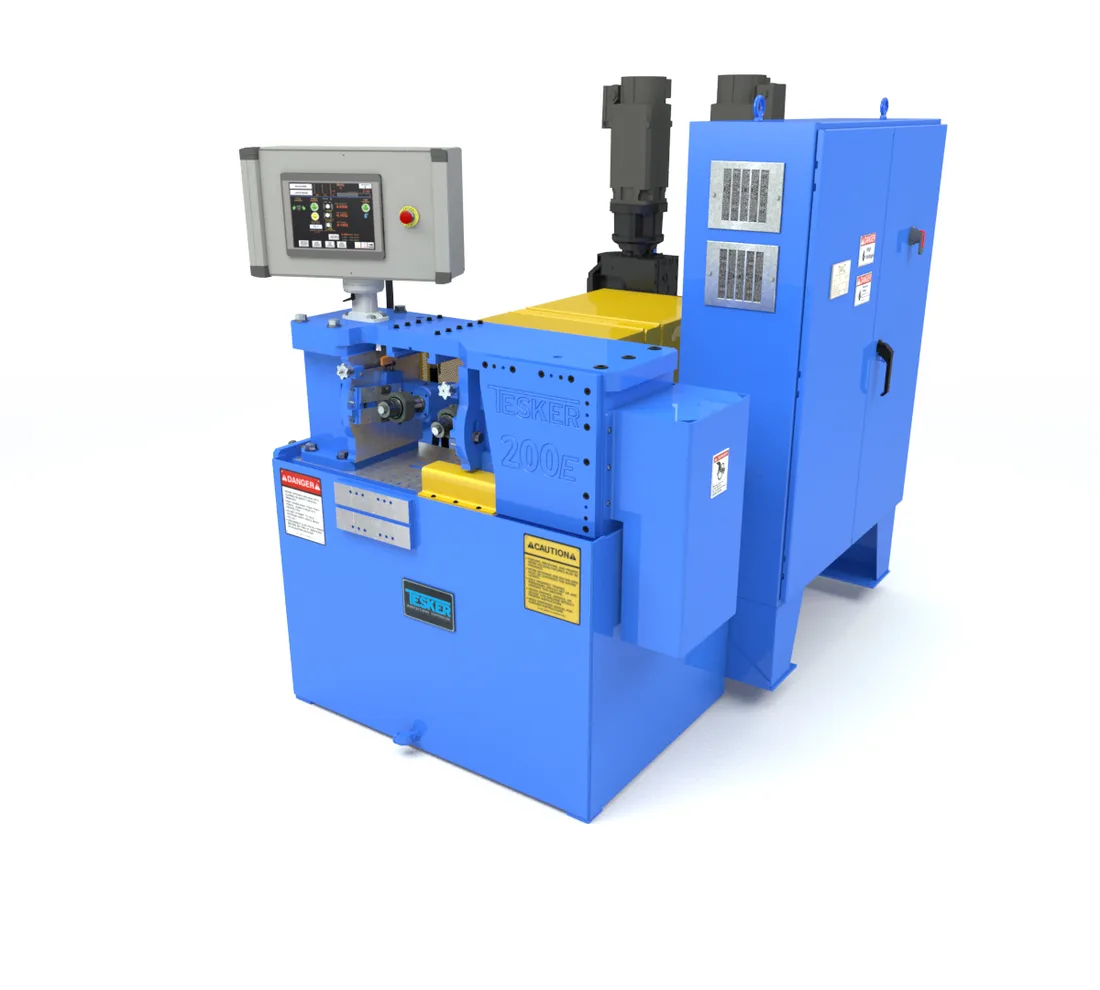

What it does
Squeezes the blank surface with threaded dies to cold-form external threads or similar profiles.
How it works
Taking two cylindrical dies as an example, the part sits on a support between them, both dies rotate in sync, and at least one slide feeds radially so material flows into the die thread form. Infeed rolling usually has no axial feed while forming; through-feed rolling creates axial motion from die thread form and set angle, for longer profiles.
Process sequence
- Check blank diameter, material and thread form
- Fit matching dies and match them
- Place and support the blank
- Rotate in sync and feed in to form
- Retract dies or through-feed out per process
- Check thread form and surface
Key inputs
- Material rollability and hardness
- Blank diameter and target thread form
- Thread length and runout space
- Die match, support and lubrication
Common problems
- Wrong blank diameter affecting crests and fill
- Poorly matched dies causing double threads
- Excessive infeed causing laps or cracks
- Unstable support causing shape errors
Limits of application
- This page uses two-cylindrical-die machines as the example
- Flat die, planetary and lathe rolling heads are built differently
- Thread rolling is plastic flow, so blank diameter cannot be set like a machining allowance
- Thin-wall parts also need buckling risk checked
Functional modules
Rolling dies and spindles
Provide thread form and synchronized rotation
Radial slide and drive
Apply forming infeed
Work support and guides
Keep the part centred
Lubrication and control
Organize forming time and discharge
Manufacturer & technical sources
Continue with manufacturer product pages, operating principles and technical information for this equipment type.