
What it does
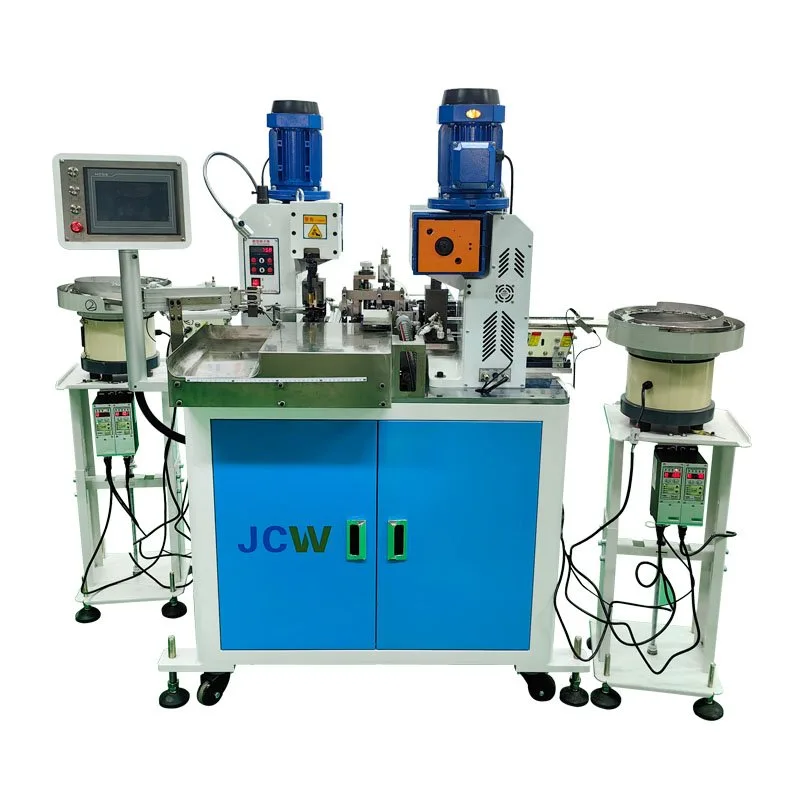
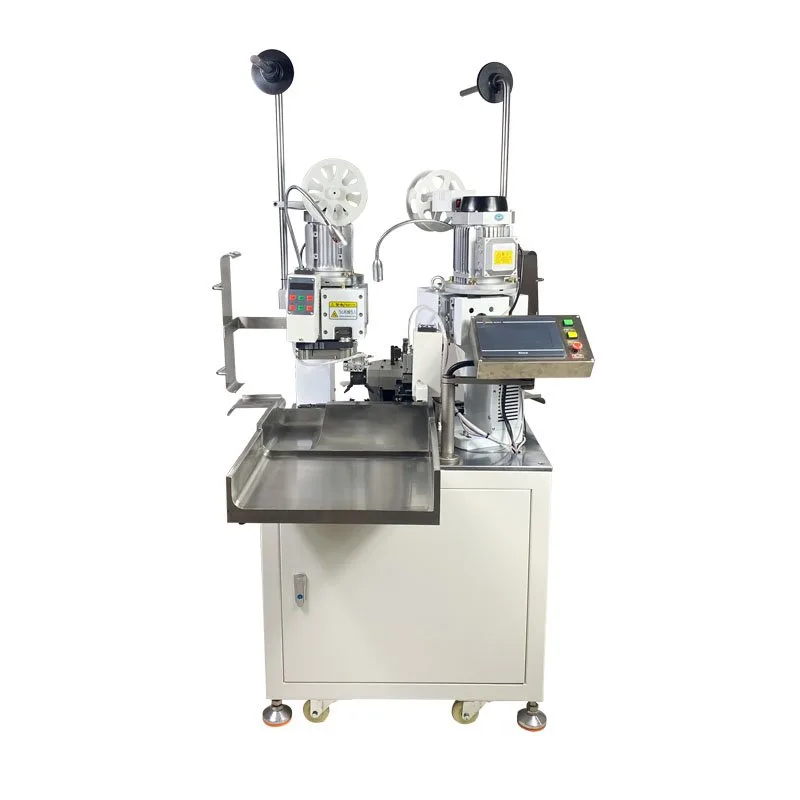
Crimps stripped wire to a matching terminal, wrapping the conductor by deforming the terminal metal and supporting the insulation as designed.
How it works
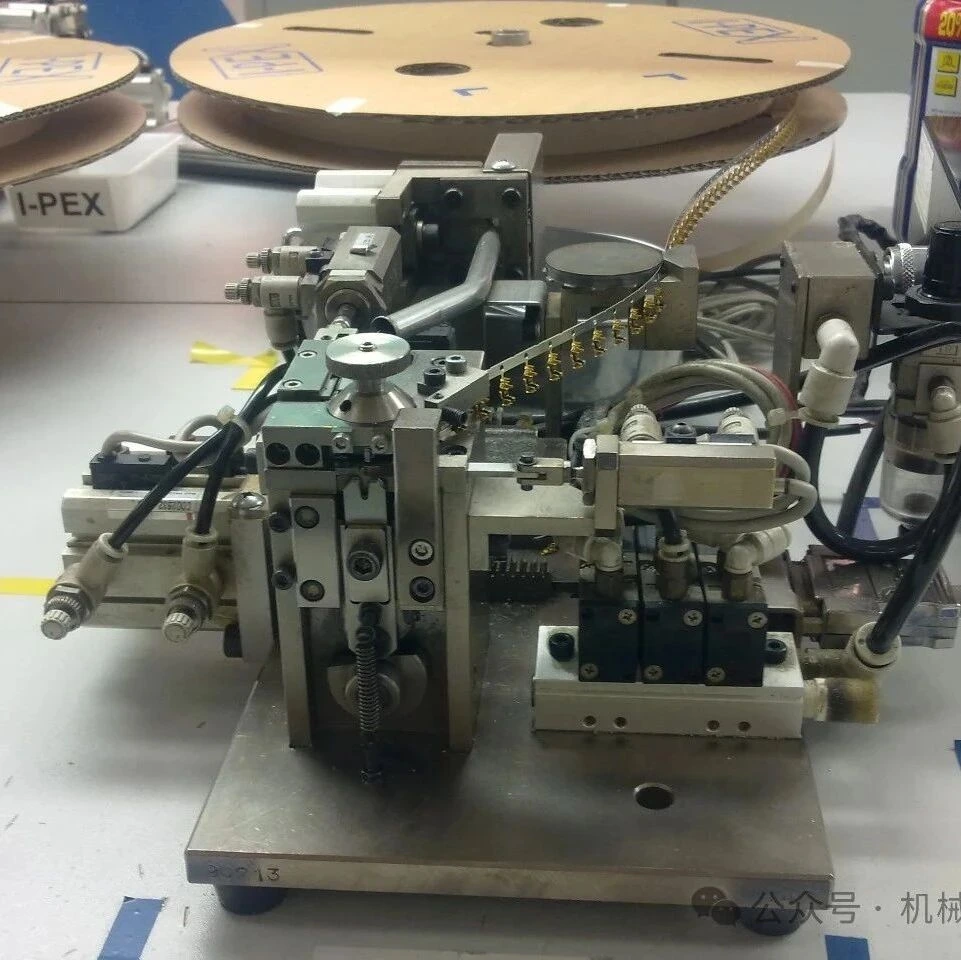
Taking open-barrel strip terminals as an example, the feeder places the terminal on the anvil, the wire conductor enters the crimp area, and the punch closes so the terminal wings wrap and compress the strands. Conductor crimp and insulation support each have their own geometry and quality requirements.
Process sequence
- Select matching terminal, wire and tooling
- Index the terminal
- Locate the stripped wire
- Close and crimp
- Separate the carrier strip and output
- Check crimp quality
Key inputs
- Wire gauge, strands, insulation diameter and terminal type
- Strip length and crimp tooling
- Crimp height, pull-out force and cross-section requirements
Common problems
- Missing or nicked strands, or insulation in the conductor crimp
- Terminal feed offset
- Worn tooling, overcrimping or undercrimping
Limits of application
- Open-barrel, closed-barrel terminals and ferrules use different tooling
- Force monitoring cannot replace all electrical and mechanical verification
Functional modules
Terminal feeding
Locates terminals by pitch
Wire locating
Controls strip length and insertion position
Crimp tooling
Punch and anvil form the crimp profile
Drive and checking
Completes the stroke and manages crimp height and other measures
Manufacturer & technical sources
Continue with manufacturer product pages, operating principles and technical information for this equipment type.