
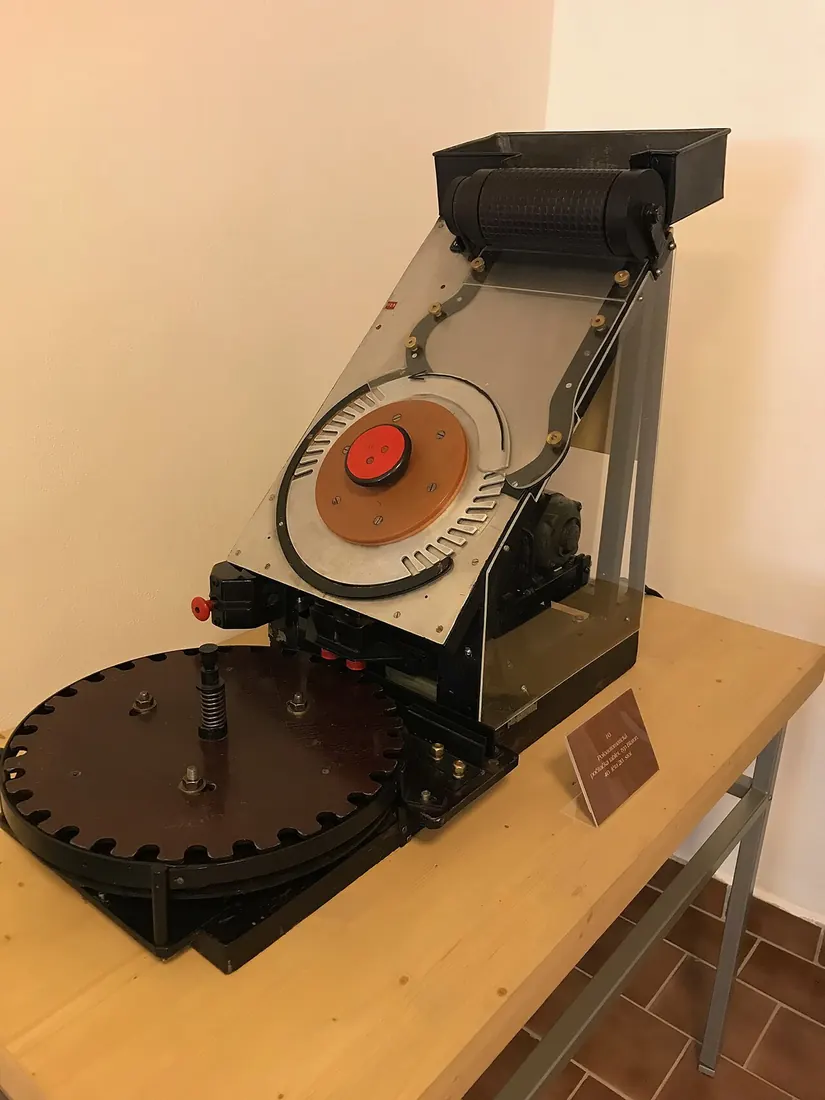

What it does
Counts loose tablets or capsules one by one, batches them to the set count and dispenses them into bottles or other containers.
How it works
The feeder sends small amounts of tablets onto vibratory plates, vibration separates them into channels leading to the scanning area, and sensors count tablets as they fall. Gates hold each counted batch and release it into the waiting container once the count is reached.
Process sequence
- Feed product in portions
- Separate and guide by vibration
- Count piece by piece in the scan area
- Hold the batch at the gate
- Release into the matching container
- Move to the next batch
Key inputs
- Tablet size, shape, dust and fragility
- Count per bottle and container opening
- Channel cleaning, line clearance and count verification
Common problems
- Overlapping or touching tablets causing miscounts
- Dust affecting sensors
- Gate or container positioning errors causing wrong fills
Limits of application
- Counting is not weighing or composition checking
- Each tablet type needs separation and detection verified
Functional modules
Hopper and feeding
Controls how much product reaches the vibratory plates
Vibratory channels
Reduce overlap and form a countable stream
Counting sensors
Detect each piece passing
Holding and release
Separate batches and release into bottles
Manufacturer & technical sources
Continue with manufacturer product pages, operating principles and technical information for this equipment type.