
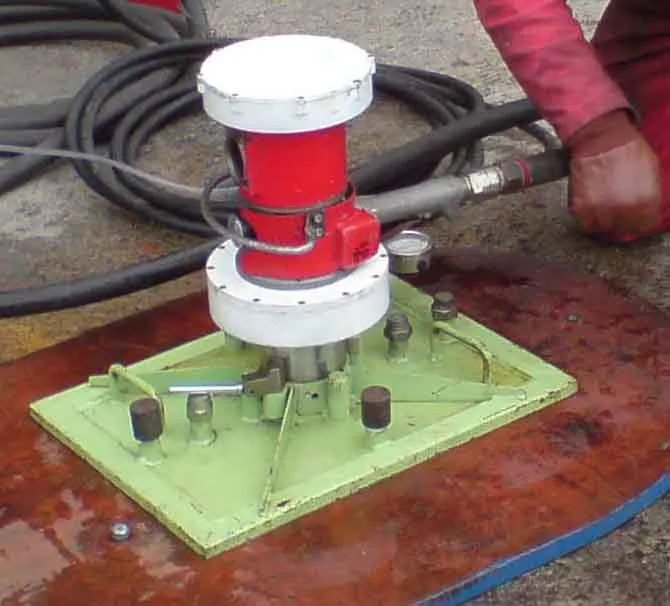

What it does
Welds the end face of a stud or similar fastener directly onto the base metal surface.
How it works
In drawn arc welding the stud first lifts to strike a pilot arc, then the main arc melts the stud end and base metal, and the stud is plunged into the molten zone to solidify. Capacitor discharge welding uses a brief discharge and needs different stud ends and motion.
Process sequence
- Clean and confirm studs
- Load chuck and shielding parts
- Position in contact
- Form the molten zone by the chosen process
- Plunge and solidify
- Check the joint
Key inputs
- Stud and base metal combination
- End shape and process type
- Sheet thickness and reverse-side requirements
- Squareness and shielding
Common problems
- Contaminated end faces affecting fusion
- Abnormal lift or plunge changing the joint
- Poor circuit or shielding
- Stud tilting after welding affecting assembly
Limits of application
- Drawn arc and capacitor discharge use different current and motion programs
- Not needing a drilled hole does not mean weld strength or reverse-side appearance will pass
Functional modules
Power source and control
Organize discharge or arc
Gun and chuck
Hold the stud and lift and plunge
Positioning and circuit
Keep weld position and conduction
Shielding parts
Use ferrules or gas per process
Manufacturer & technical sources
Continue with manufacturer product pages, operating principles and technical information for this equipment type.