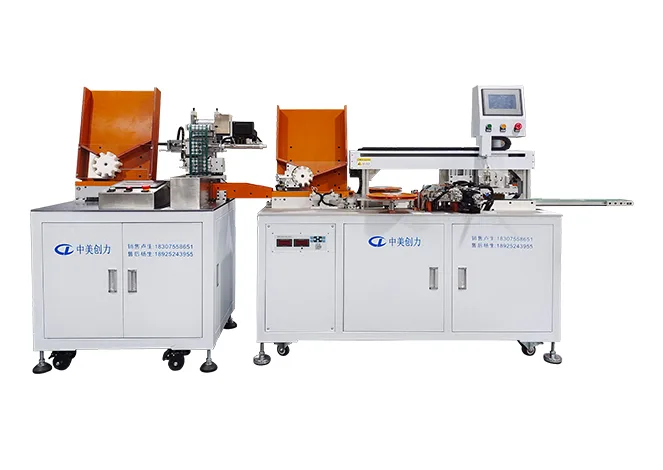

What it does
Links insulation sticker application and connecting tab spot welding on batteries in one product flow, then inspects and outputs.
How it works
Taking battery insulation sheet and tab assembly as an example, the fixture first confirms battery orientation, a feeder applies insulating material to the specified area, and the connecting tab is then fed in orientation to the metal weld area. With resistance spot welding, the electrodes apply force and current passes through the joint to produce local heat, which is held and then released; insulating paper must never sit between surfaces that need to conduct.
Process sequence
- Load oriented cells
- Confirm face and polarity
- Apply the specified insulation sheet
- Locate the connecting tab
- Spot weld with the joint program
- Inspect and collect
Key inputs
- Battery can and terminal construction
- Insulation sheet shape, adhesive and clearances
- Tab plating, electrodes and allowable heat input
Common problems
- Misplaced sticker covering the weld area
- Missing or reversed sticker
- Weak welds, expulsion, overheating through the can and debris shorts
Limits of application
- Paper is an electrical insulating accessory and cannot be welded to metal
- The order of taping and welding follows the product route; one machine finishing does not validate pack safety or life
Functional modules
Battery conveying and identification
Confirms presence and polarity
Insulation supply and application
Separates to length and presses down
Tab feeding and welding
Locates connecting tab and electrodes
Inspection and collection
Checks appearance, connection and insulation
Manufacturer & technical sources
Continue with manufacturer product pages, operating principles and technical information for this equipment type.