
What changed
The steam hammer combined controlled steam drive with a forging hammer to meet the needs of forming larger forgings.
Core mechanism
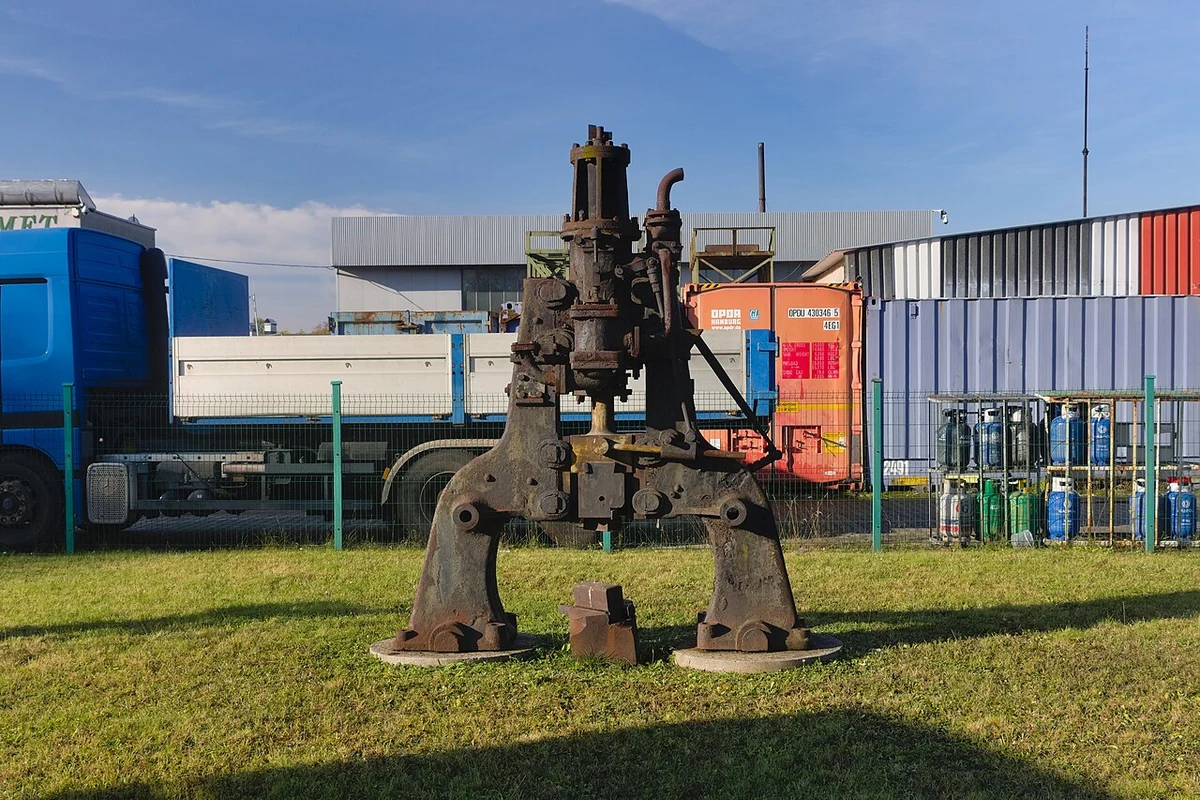
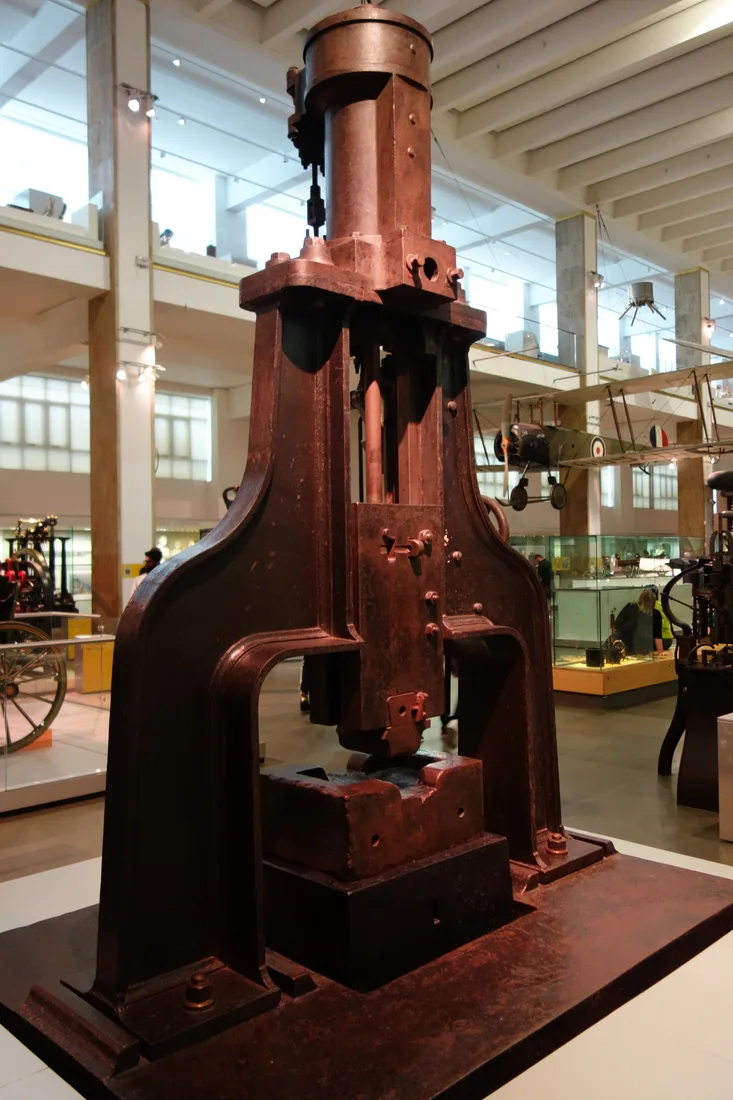
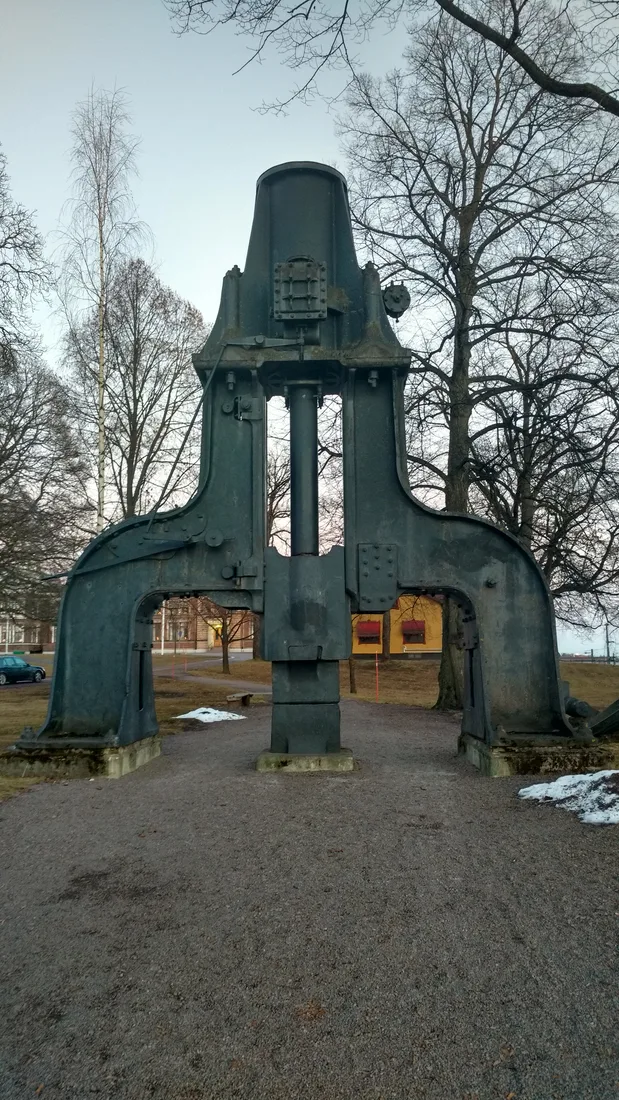
The steam cylinder, piston and rod connect to the hammer head, and valve gear controls its rise and fall; the hammer strikes hot metal against the anvil. The museum machine shows the division between power, guiding and striking parts.
What to look for
- Trace force from the steam cylinder to the hammer head
- Look at hammer guides and anvil block
- Distinguish it from mechanical and hydraulic hammers
Legacy
Large directly driven forging equipment extended the ability to make heavy parts; controlling blow energy and stroke remains a hammer design issue
Reading limits
- A steam hammer is not a mechanical hammer belt-driven from a steam engine
- The museum notes that early credit for the invention is disputed, so no single inventor should be asserted
Key elements
Steam cylinder and piston rod
Transmit power to the hammer head
Hammer head and guides
Produce a constrained striking motion
Anvil block and frame
Support the forging and take the blow
Museum & technical references
Explore this technology through museum and technical references.