
What changed
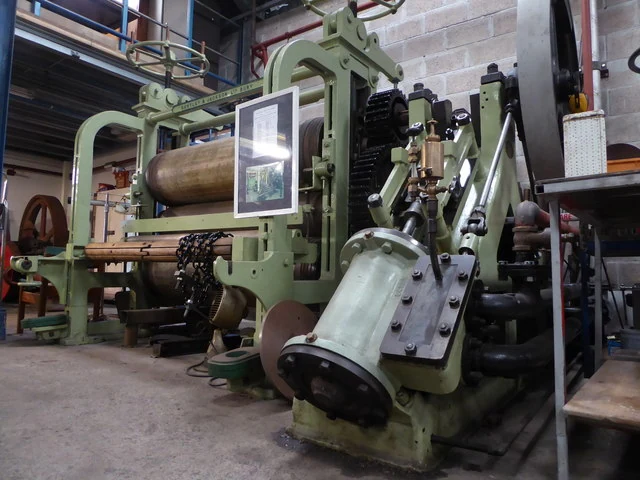
The stationary steam engine turned steam energy into mechanical motion, providing a historical solution for pumping and factory power.
Core mechanism
Steam entering the cylinder changes the force on the piston, and motion is delivered through the piston rod, connecting rod and other linkages. Watt's separate condenser moved condensation outside the cylinder, reducing repeated cooling of the working cylinder.
What to look for
- First identify pumping or rotary output
- Identify cylinder and condenser along the steam path
- Compare early engines with later design changes
Legacy
Power could be distributed to many machines through shafts and drives; steam engine development also spurred work on machine tools, valve gear and control
Reading limits
- Steam engines differ in pressure regime and output mechanism
- The performance of one museum engine cannot be generalized to all steam engines
Key elements
Cylinder and piston
Turn steam pressure into motion
Valve gear
Organizes steam admission and exhaust
Separate condenser
Condenses steam outside the cylinder on suitable engines
Museum & technical references
Explore this technology through museum and technical references.