
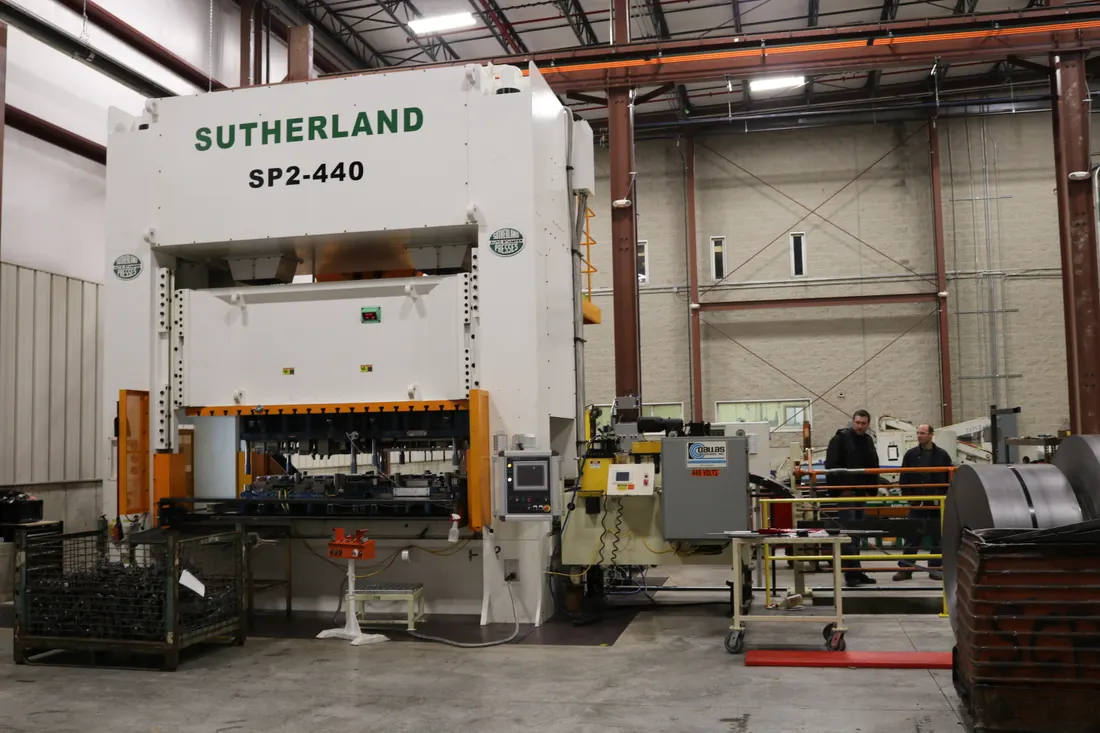

What it does
Moves strip at a fixed pitch through several stations in one progressive die, completing the part step by step.
How it works
Material usually stays connected by a carrier strip, each station punches, bends or performs other operations on the same stroke, and the strip advances one pitch with each feed. Pilots enter existing pilot holes to correct position, and the last station cuts the part off the carrier while scrap is ejected separately.
Process sequence
- Set the die, thread the strip and set pitch
- Feed to the pilot position
- Close the die to work all stations
- Return and strip
- Advance one station
- Cut off at the end and inspect
Key inputs
- Material and carrier strip layout
- Pitch and piloting
- Force and energy for each operation
- Die protection, stripping and scrap path
Common problems
- Pitch and pilots not matching
- Carrier distortion destabilizing positioning
- Slugs jamming or pulling up
- Unreasonable station loads and sequence
Limits of application
- Progressive dies transfer parts on the carrier strip, unlike transfer dies that move separate blanks with fingers
- Achievable depth and side features must be confirmed in the specific die design
Functional modules
Uncoiling, straightening and feed
Feed strip continuously
Multi-station progressive die
Form features step by step
Press and pilots
Synchronize stroke and position
Part and scrap handling
Separate outputs
Manufacturer & technical sources
Continue with manufacturer product pages, operating principles and technical information for this equipment type.