
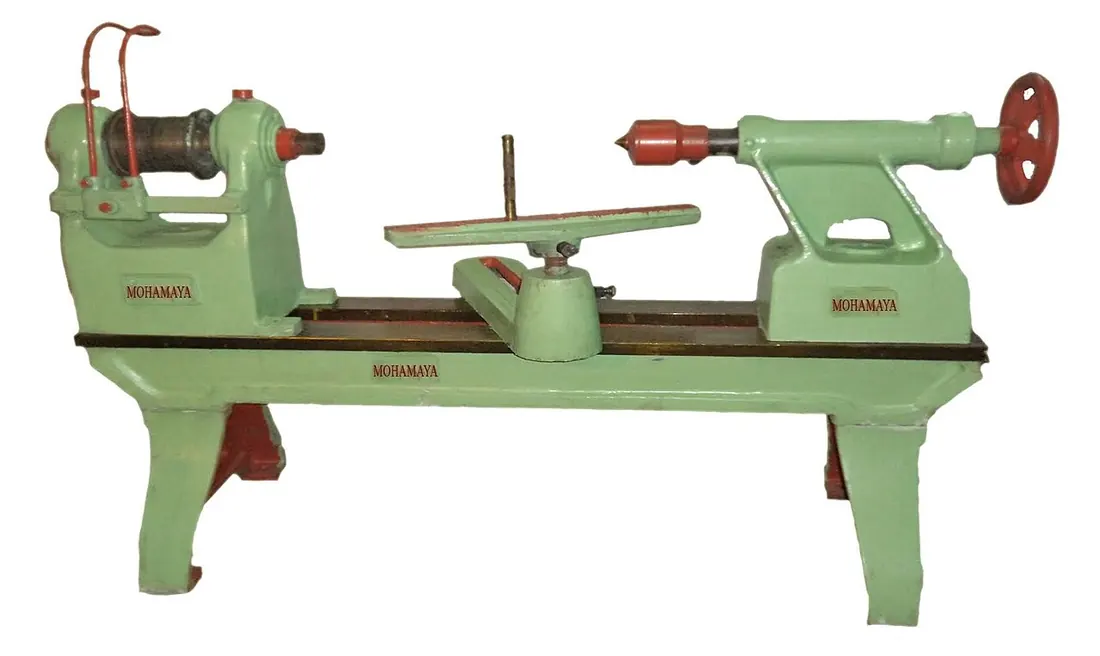

What it does
Forms round blanks or preforms into hollow parts of revolution with a rotating workpiece and locally fed rollers.
How it works
The blank is clamped to the mandrel and turns with the spindle, while the roller feeds along a set path in several passes so material gradually conforms to the mandrel contour. It forms mainly by plastic deformation, and trimming or contour machining can follow in the same setup; mandrel shape and part removal must be considered together.
Process sequence
- Prepare blank and mandrel
- Clamp and locate concentrically
- Start rotation
- Form with the roller pass by pass
- Trim or size as configured
- Remove and check contour and wall thickness
Key inputs
- Material ductility and blank size
- Target contour of revolution
- Roller path and passes
- Clamping, mandrel removal and wall thickness requirements
Common problems
- Wrong pass feed causing wrinkles or fracture
- Poor clamping or concentricity causing wobble
- Friction and contact causing surface defects
- Formed part unable to come off the mandrel
Limits of application
- This page uses conventional sheet spinning as the example
- Shear spinning and flow forming control wall thickness and material flow differently
- Forming of revolved shapes cannot be extended to arbitrary non-axisymmetric shapes
Functional modules
Spindle and mandrel
Turn the blank and support the contour
Tailstock clamping
Keeps the blank centred and clamped
Roller and feed axes
Apply local forming pass by pass
Frame and control
Take loads and organize the path
Manufacturer & technical sources
Continue with manufacturer product pages, operating principles and technical information for this equipment type.