
What changed
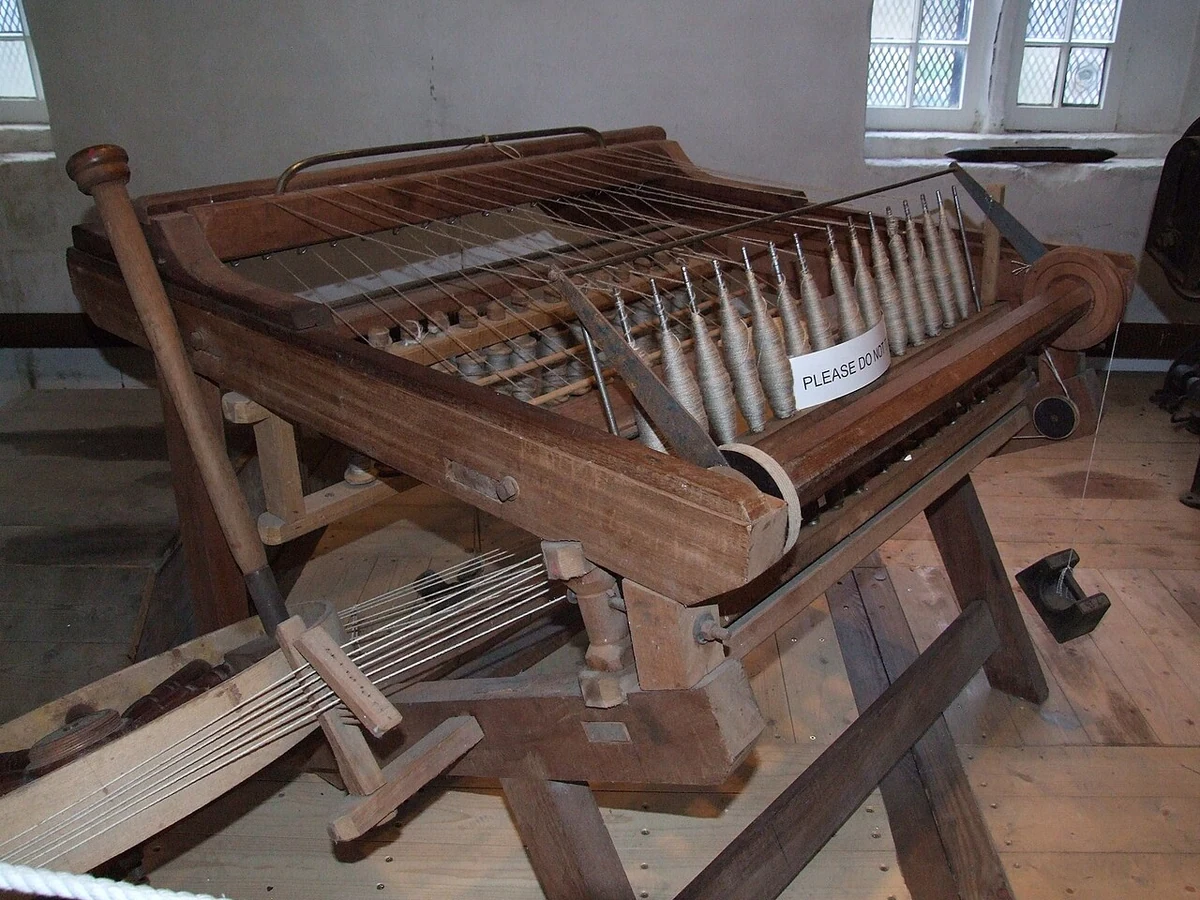
The spinning jenny gathered spinning of many yarns into one hand-powered device, while the power loom wove yarn into cloth; they belong to different processes.
Core mechanism
On the jenny a hand wheel drives many spindles while the operator controls drafting with the clasp bar, and the process is not continuous. A loom divides the warp into a shed, inserts weft through it, then the reed beats the new weft into the fell; let-off and take-up supply yarn and wind the cloth. The power loom mechanized these weaving motions and does no spinning.
What to look for
- First separate fibre to yarn from yarn to cloth
- See how many spindles work with manual drafting
- Follow shedding, picking and beating to trace how warp and weft interlace
Legacy
Multi-spindle spinning and power weaving improved yarn and cloth production respectively, and later machines developed other continuous spinning and weaving methods
Reading limits
- The jenny is a hand-operated multi-spindle spinning machine, not a power loom
- This page cites modern manufacturer material for basic weaving motions and does not read modern weft insertion back into early museum looms
Key elements
Hand wheel and spindles
Drive many yarns in parallel on the jenny
Drafting mechanism
Controls stretching of the yarn
Shedding and picking
Open the warp shed and insert weft on the loom
Reed, let-off and take-up
Beat weft into the fell and supply warp and wind cloth continuously
Museum & technical references
Explore this technology through museum and technical references.