What it does
Recovers reusable distillate from suitable contaminated solvents.
How it works
Heating drives volatile components into the vapour phase, the vapour condenses back to liquid in the condenser, and low-volatility residue stays in the still.
Process steps
- Check material compatibility
- Load and close
- Heat and evaporate under control
- Condense and collect distillate
- Cool and handle residue
Key inputs
- Solvent composition
- Contaminants and water
- Thermal stability
- Cooling and fire protection configuration
Common misconceptions
- Simple distillation recovers distillate by volatility difference and cannot guarantee splitting any solvent mixture into pure components.
Limits of application
- Atmospheric and vacuum, continuous and batch units run differently.
- Cleaning functions depend on the whole unit and its accessories.
Functional modules
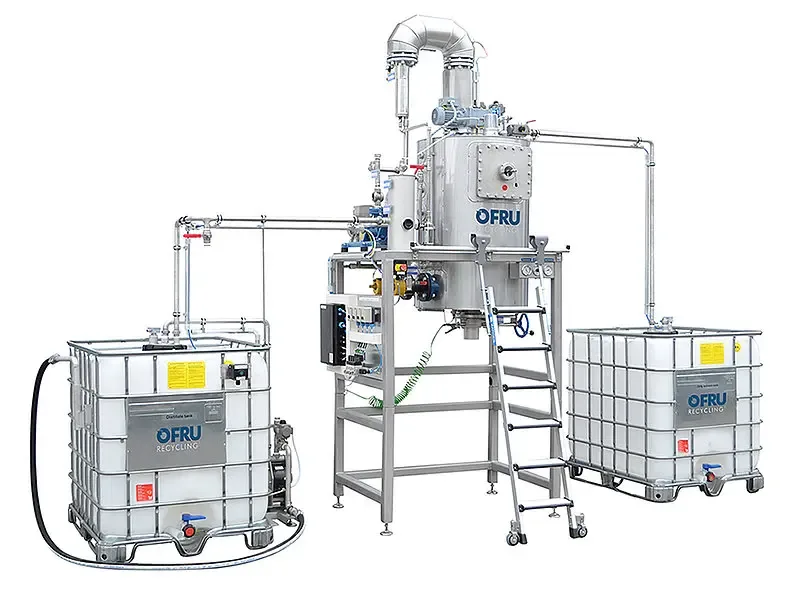
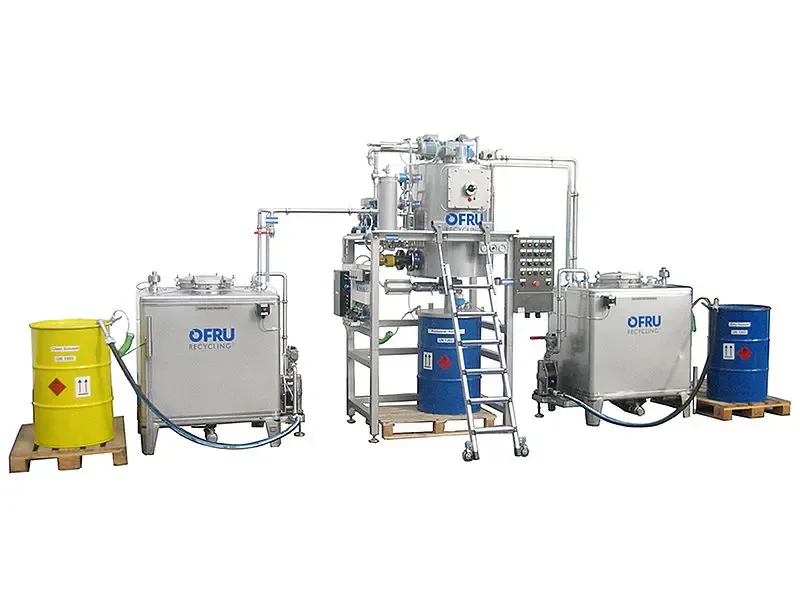
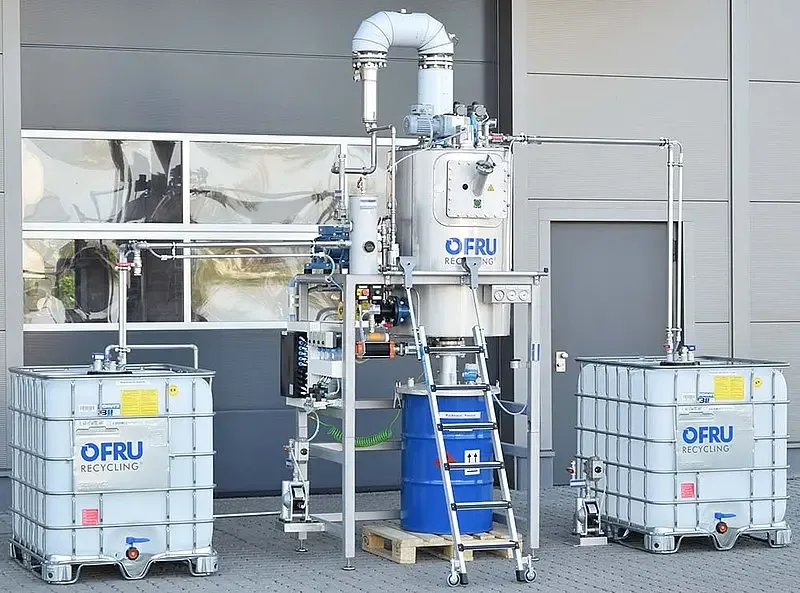
Still vessel
Holds the contaminated solvent and keeps low-volatility residue after distillation.
Heating unit
Heats the charge so volatile components evaporate.
Vapour path
Leads vapour from the still to the condenser.
Condenser and receiver
Cool the vapour back to liquid and collect distillate.
Temperature and pressure monitoring
Monitors temperature and pressure during distillation.
Manufacturer & technical sources
Continue with manufacturer product pages, operating principles and technical information for this equipment type.