
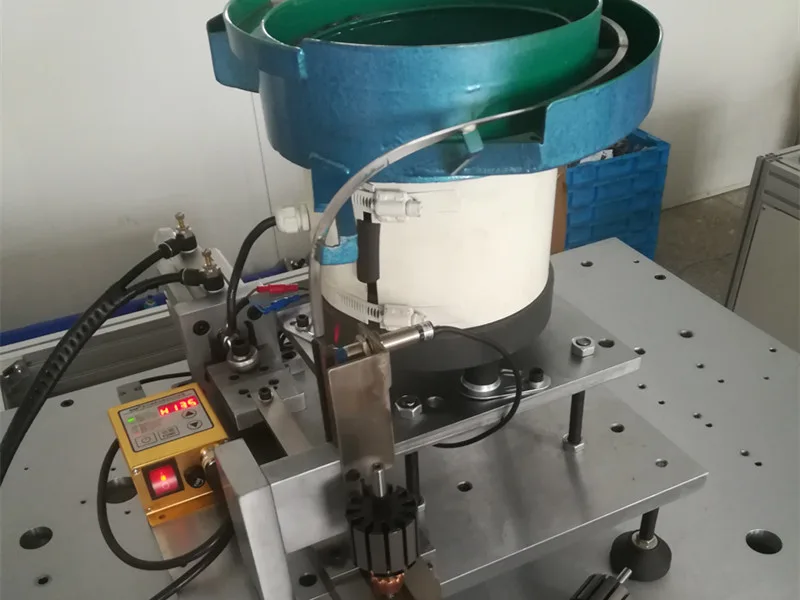

What it does
Fits retaining rings into shaft or bore grooves for axial retention; automatic types may add escapement, guiding and seating checks.
How it works
Taking an external spring retaining ring as an example, a guide or dedicated tool expands the ring under control, moves it along the shaft to the groove, and lets it contract. Push sleeve, tapered guide and part centring together prevent tilting or overexpansion; whether the ring fully enters the groove bottom is the key assembly check.
Process sequence
- Confirm ring and groove type
- Locate part and ring
- Expand under control, guide and push
- Release at the groove to contract
- Check full seating
- Unload
Key inputs
- Ring type, material and allowable installation deformation
- Shaft or bore, groove width, diameter and chamfer
- Installation path, tool guidance and support space
Common problems
- Overexpansion causing permanent set
- Tilted or half-seated rings
- Groove edge damage, wrong ring type or wrong push position
Limits of application
- Expanding external rings and compressing internal rings need different tools
- Spiral retaining rings cannot simply reuse the installation method for gap-type rings
Functional modules
Ring locating
Holds ring type and gap orientation
Expansion guide
Controls expansion and guides over the shaft
Pusher and support
Push the ring to the groove and support the part
Seating check
Confirms full circumferential seating and axial position
Manufacturer & technical sources
Continue with manufacturer product pages, operating principles and technical information for this equipment type.