

What it does
Fuses polymer powder layer by layer with a laser in a powder bed to make functional plastic parts.
How it works
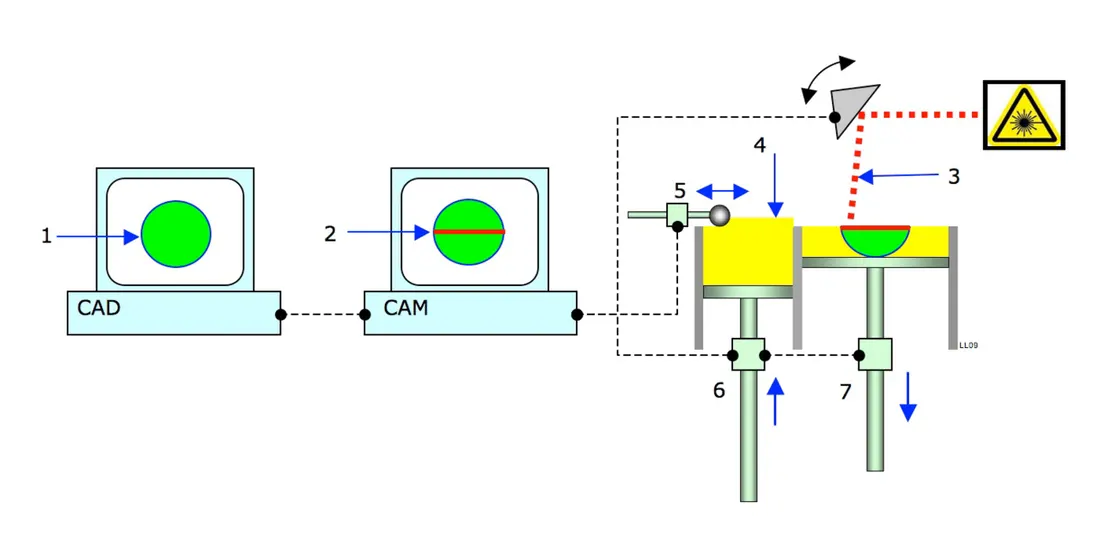
After recoating, the laser selectively fuses polymer particles in the cross-section and later layers continue the build; surrounding unfused powder supports the parts. After cooling, parts are depowdered and surface-treated as needed; powder bed support does not mean thermal distortion or powder escape design can be ignored.
Process sequence
- Prepare orientation, nesting and slices
- Prepare powder and build environment
- Recoat and scan
- Build layer by layer
- Cool per process
- Depowder and inspect
Key inputs
- Polymer powder system
- Part wall thickness and powder escape holes
- Batch nesting and cooling process
- Conditions for using new and recycled powder
Common problems
- Uneven powder layers or thermal field affecting shape
- Cooling causing warp
- Residual powder in narrow internal spaces
- Powder condition affecting surface and properties
Limits of application
- This page covers polymer SLS only
- Settings from metal powder bed fusion should not be applied
- Usually no separate supports are needed, but geometry and thermal process still need assessment
Functional modules
Powder supply and recoating
Form polymer powder layers
Laser scanning
Joins particles in the cross-section
Platform and temperature control
Organize layering and thermal process
Depowdering and recovery
Release parts and handle excess powder
Manufacturer & technical sources
Continue with manufacturer product pages, operating principles and technical information for this equipment type.