
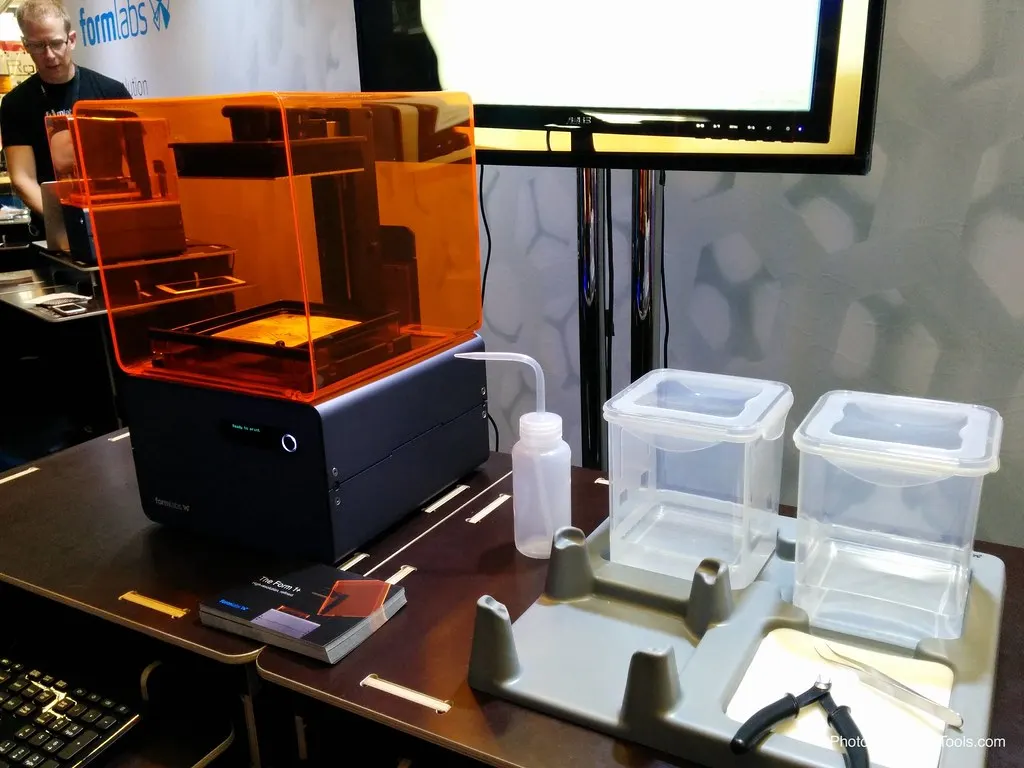

What it does
Cures liquid photopolymer resin layer by layer with controlled light.
How it works
Laser SLA scans each cross-section point by point, while DLP projects a whole layer image; both depend on platform motion between layers and resin replenishment. Prints are washed to remove residual resin and post-cured as the material requires, and final dimensional quality cannot be judged from display pixels alone.
Process sequence
- Orient and generate supports
- Confirm resin and platform
- Expose a cross-section
- Move between layers, recoat and repeat
- Wash and remove
- Post-cure and inspect by material
Key inputs
- Resin matched to the optical system
- Orientation, supports and drainage
- Exposure and layer separation
- Washing and post-curing conditions
Common problems
- Exposure or resin condition changing dimensions
- Weak supports causing distortion or detachment
- Peel forces at the tank bottom affecting the build
- Residual liquid and post-cure affecting surface and properties
Limits of application
- Laser SLA, DLP projection and LCD masking have different optics
- Final accuracy also depends on resin, calibration, orientation and post-processing
Functional modules
Resin tank and supply
Hold and replenish liquid resin
Laser or projection optics
Select areas to cure
Platform and Z axis
Set layer height and layer separation
Washing and post-curing
Remove residual liquid and reach required properties
Manufacturer & technical sources
Continue with manufacturer product pages, operating principles and technical information for this equipment type.