
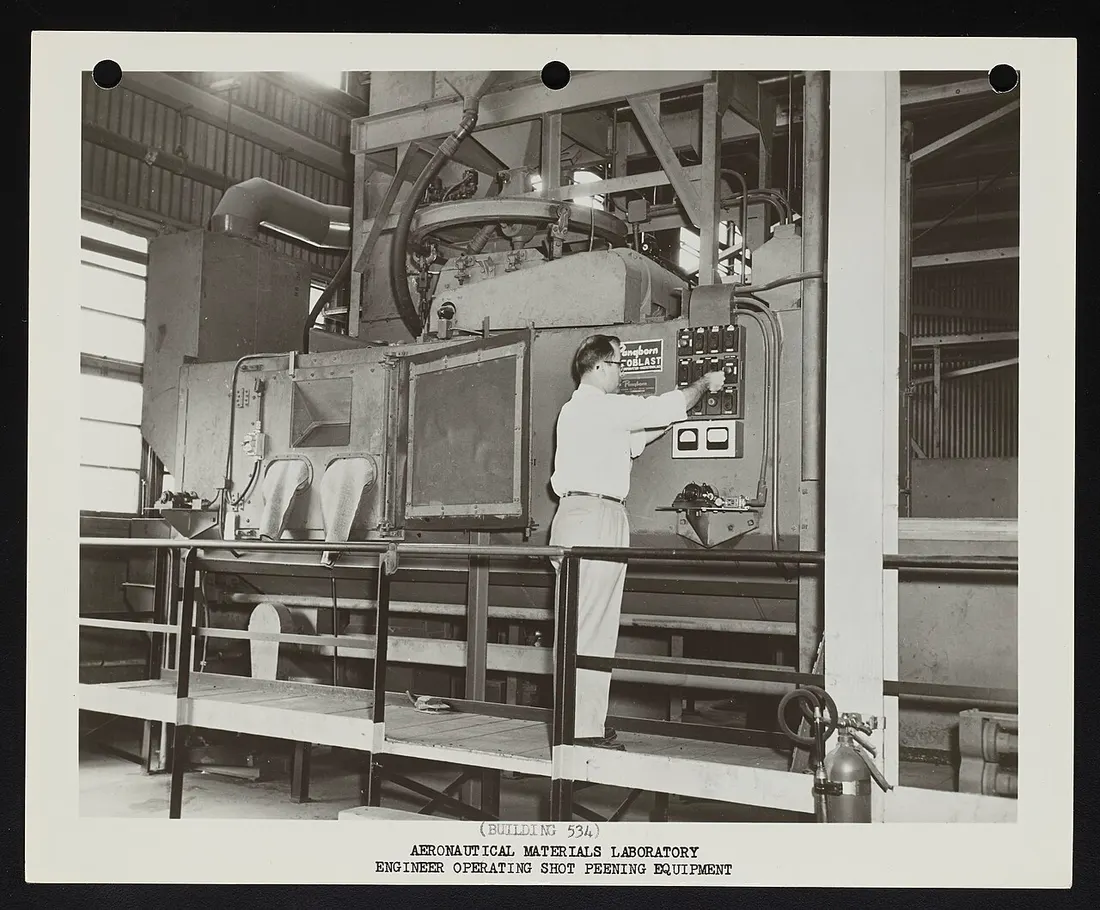

What it does
Impacts surfaces with controlled shot so they deform plastically and gain residual compressive stress.
How it works
Shot accelerated by compressed air or a blast wheel covers the part surface; repeated impacts cold-work a shallow layer, forming a compressive stress layer that helps fatigue performance. Motion and blasting conditions must cover the target areas, and the aim differs from simple derusting and cleaning.
Process sequence
- Confirm peening areas and masking
- Fixture and check shot
- Establish controlled impact
- Cover surfaces along the path
- Clean and inspect
- Verify the specified peening measures
Key inputs
- Material and target areas
- Shot shape, size and condition
- Impact direction and coverage
- Process intensity and acceptance method
Common problems
- Broken or mixed shot changing impact
- Shadowing leaving low coverage
- Overpeening damaging the surface
- Path and attitude changes affecting consistency
Limits of application
- Peening effect must be verified by the specified process and measures
- Shot peening does not remove all fatigue defects automatically and is not the same as ordinary blasting
Functional modules
Shot acceleration
Provides impact by nozzle or blast wheel
Part and nozzle motion
Covers specified surfaces
Shot recovery and classification
Keeps media in condition
Process monitoring and dust collection
Control conditions and manage dust
Manufacturer & technical sources
Continue with manufacturer product pages, operating principles and technical information for this equipment type.