
What it does
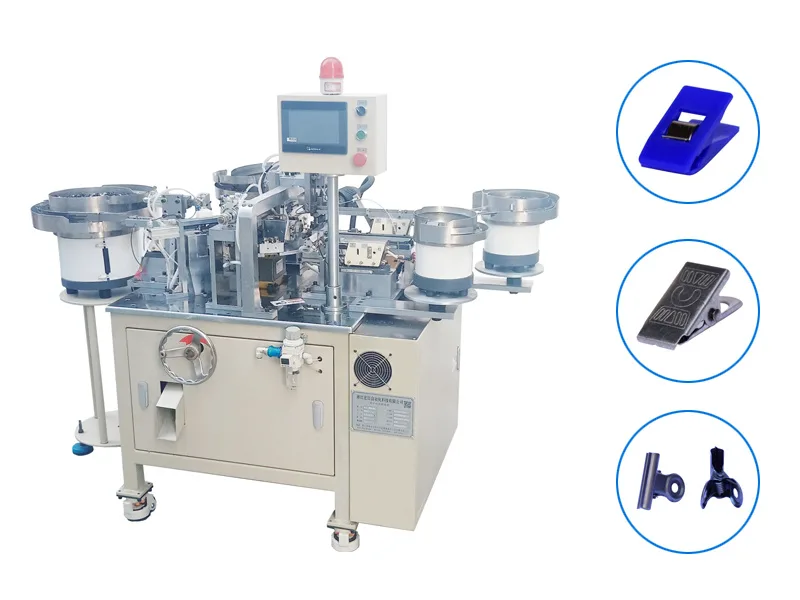
Combines small steel plates, housings, springs and pins in their assembly relationship and checks pin position and actuation force.
How it works
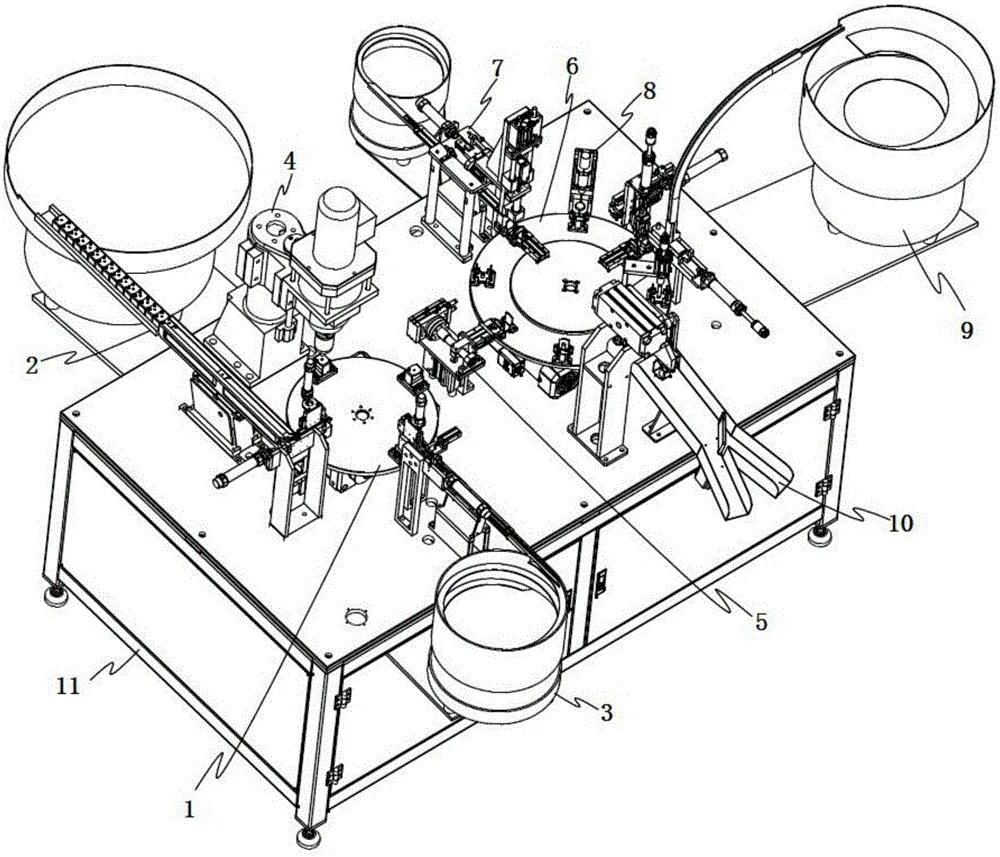
Taking a spring-loaded steel plate and pin assembly as an example, turntable fixtures hold the housing, spring and plate in turn; the parts are pressed against each other so their holes align, then the pin is inserted in a straight line. Support during pin insertion must carry the spring preload, and after assembly both pin end positions and the plate's specified actuation force are checked.
Process sequence
- Locate the housing
- Place the spring
- Seat the plate and hold it
- Insert the pin through the holes
- Confirm both end positions
- Check actuation force and divert
Key inputs
- Plate outline, burrs and orientation
- Spring anchor points and preload
- Hole and shaft relationship, pin length and force standard
Common problems
- Double plates or plate not fully in its slot
- Spring popping out
- Pin entering crooked, uneven ends and abnormal actuation force
Limits of application
- Plate assembly is not general pressing of all steel sheet
- This example is a plate, spring and pin assembly; welded panels, laminated cores and sheet metal housings use other processes
Functional modules
Part distribution
Keeps plate faces the right way
Turntable nests
Give a common assembly datum
Preload and pin insertion
Holds the spring and aligns holes
Position and force check
Checks pin position and spring action
Manufacturer & technical sources
Continue with manufacturer product pages, operating principles and technical information for this equipment type.