
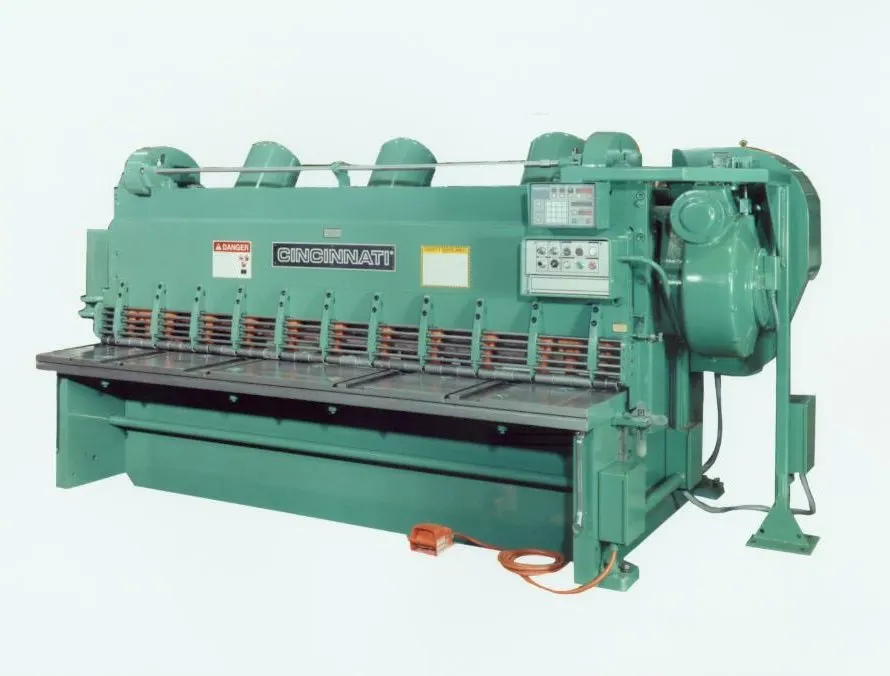

What it does
Separates metal sheet by relative motion of upper and lower blades, producing straight-edged blanks.
How it works
The sheet is located by side and back gauges and held by hold-downs, and the moving blade beam cuts progressively along the shear line. Blade gap, rake angle and stroke must suit material thickness and strength; too large a rake or the wrong gap affects distortion of narrow strips and the cut edge.
Process sequence
- Confirm blades and material
- Set gap, rake and gauges
- Locate the sheet
- Hold down and shear
- Return the blade beam
- Remove pieces and inspect
Key inputs
- Material thickness and strength
- Cut length and strip width
- Blade gap, rake and edges
- Locating, support and outfeed space
Common problems
- Worn edges or wrong gap causing burrs
- Narrow strips twisting and bowing
- Backgauge not parallel causing size differences
- Sheet slipping or blocked outfeed
Limits of application
- This page uses a straight guillotine shear as the example
- Swing beam and circular shears move blades differently
- Machine capacity, blade material and sheared material must be confirmed together
Functional modules
Upper and lower blades and blade beam
Make the cut
Drive and guides
Organize blade beam motion
Backgauge and table
Set cut size and support
Hold-downs and outfeed
Hold the sheet and collect pieces
Manufacturer & technical sources
Continue with manufacturer product pages, operating principles and technical information for this equipment type.