

What it does
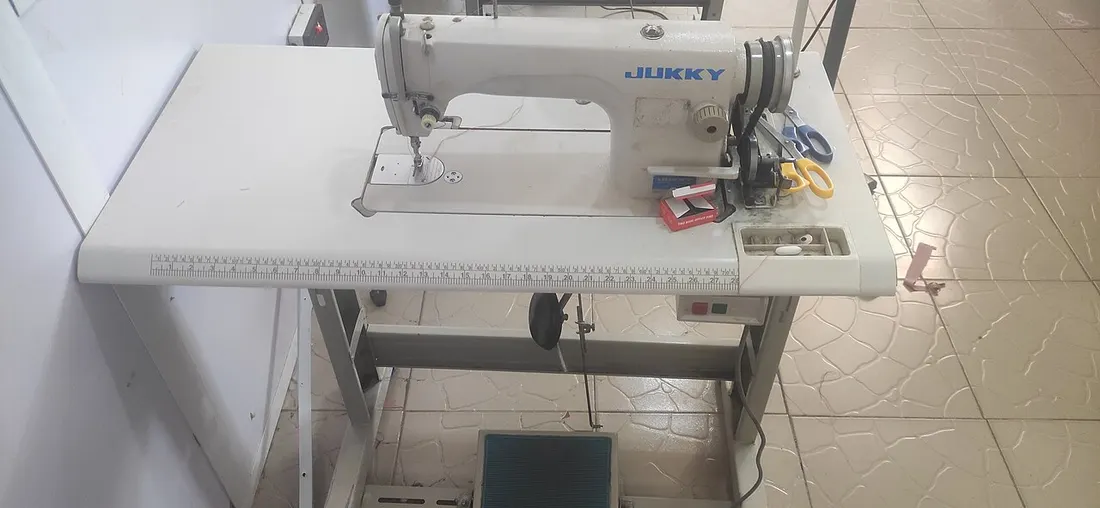
Sews fabric, leather or technical textiles along a set path by program-controlled relative motion of clamp and sewing head.
How it works
Taking a template sewing unit with lockstitch as an example, the needle pierces the material and forms a loop as it rises, and the rotary hook interlocks needle thread with bobbin thread. The clamp feeds intermittently along the seam path and stops while the needle is in the material, and the presser foot and tension system keep material and stitches stable.
Process sequence
- Load and clamp
- Confirm clamp and program
- Form stitches with needle and hook in sync
- Feed intermittently along the path
- Trim thread at the end
- Index, unload and inspect
Key inputs
- Material thickness, plies and friction
- Needle and bobbin threads and stitch requirements
- Clamp holding, stitch length and path corners
Common problems
- Plies slipping inside the clamp
- Skipped stitches, thread breaks and running out of bobbin thread
- Stitch buildup or puckering at corners
Limits of application
- Lockstitch needs a bobbin
- Chainstitch uses loopers and other loop-forming parts
- Automatic template sewing does not mean any soft material can be laid flat automatically without a clamp
Functional modules
Sewing head and rotary hook
Interlock needle and bobbin threads
Clamp and feed
Locate the material and follow the seam path
Presser foot and tension
Hold plies and control thread loops
Program and sensing
Manage path, clamp and thread break status
Manufacturer & technical sources
Continue with manufacturer product pages, operating principles and technical information for this equipment type.