
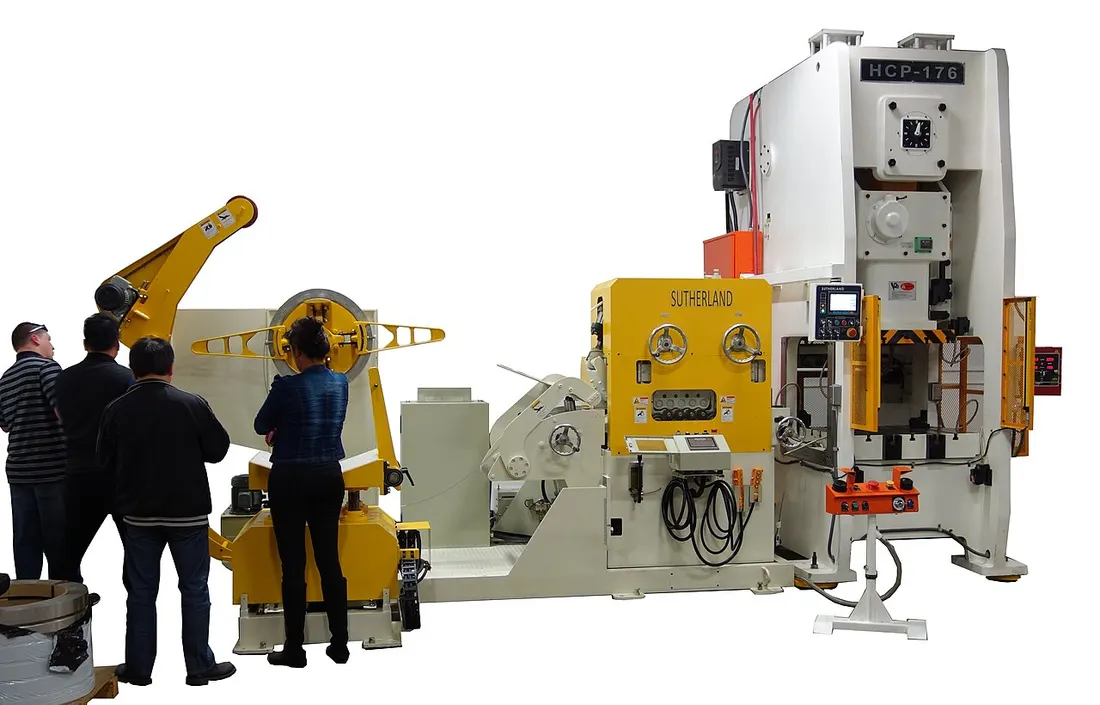

What it does
Changes slide time-position profiles with controllable electric drive so the stroke suits forming and transfer.
How it works
Taking a servo mechanical press as an example, torque motors drive the mechanism in place of the conventional flywheel and clutch, and slide stroke and speed profiles are programmable. Full rotation or pendulum strokes can slow down in the working zone and move quickly elsewhere, but capability is still limited by mechanism torque, thermal load and similar factors.
Process sequence
- Confirm die and motion program
- Approach the working zone quickly
- Form at the set speed
- Dwell or run in-die actions as needed
- Return and transfer
- Check status and continue
Key inputs
- Forming load and energy
- Slide motion profile
- Process and transfer windows
- Drive thermal load and protection
Common problems
- Program profile not suited to the die
- Low speed at high load overheating the drive
- Transfer window conflicts
- Mistaking programmability for unlimited tonnage
Limits of application
- This page mainly covers servo mechanical presses for stamping
- Ball screw assembly presses and servo-hydraulic presses are built differently
- Dwell and pendulum capability depends on the actual model
Functional modules
Servo motor and drive
Produce controlled motion
Mechanical transmission and slide
Convert it into pressing
Control and feedback
Run the time-position profile
Die and transfer interface
Match process and feed
Manufacturer & technical sources
Continue with manufacturer product pages, operating principles and technical information for this equipment type.