
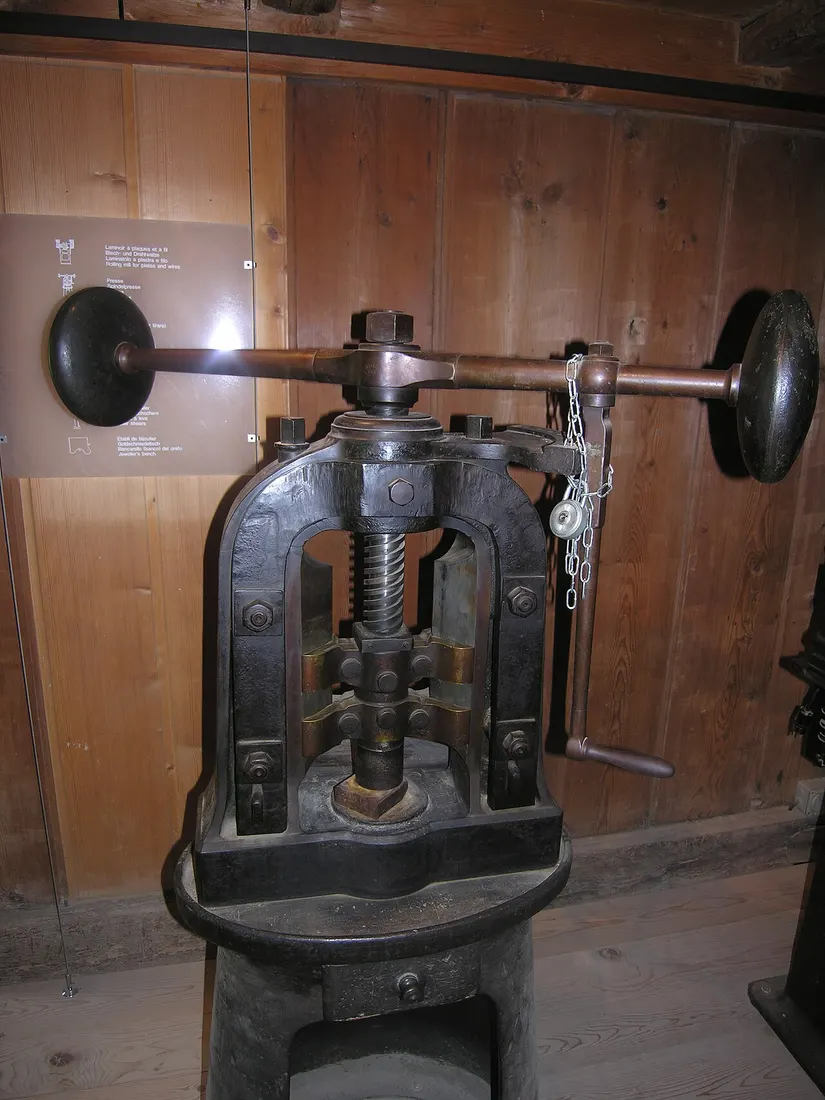

What it does
Converts rotary drive into slide pressing through a screw, forging and forming with a set working energy.
How it works
The drive spins flywheel and screw, the screw pair moves the slide linearly, and the energy of the moving system is delivered to work and dies. Travel after contact depends on forming resistance and available energy; direct-drive types control blow and return with a reversible motor, unlike the fixed bottom dead centre of crank motion.
Process sequence
- Confirm blank, dies and energy setting
- Spin up and descend
- Contact the work and form
- Brake and reverse to return
- Eject and remove
- Check thickness or process result
Key inputs
- Blank and forming resistance
- Energy per blow and maximum load
- Die height and ejection
- Drive thermal load and cycle
Common problems
- Wrong energy causing underfill or overload
- Die height changes affecting forming
- Off-centre loads damaging guides
- Ejection out of sync with removal
Limits of application
- This page covers metal forming screw presses, not dewatering screw presses
- Friction and direct motor drives are built differently
- Do not think of it like a hydraulic press holding constant pressure
Functional modules
Rotary drive and flywheel
Build working energy
Screw and nut
Convert rotation to linear motion
Slide, frame and dies
Transmit forming load
Energy control and ejection
Organize blows and part removal
Manufacturer & technical sources
Continue with manufacturer product pages, operating principles and technical information for this equipment type.