
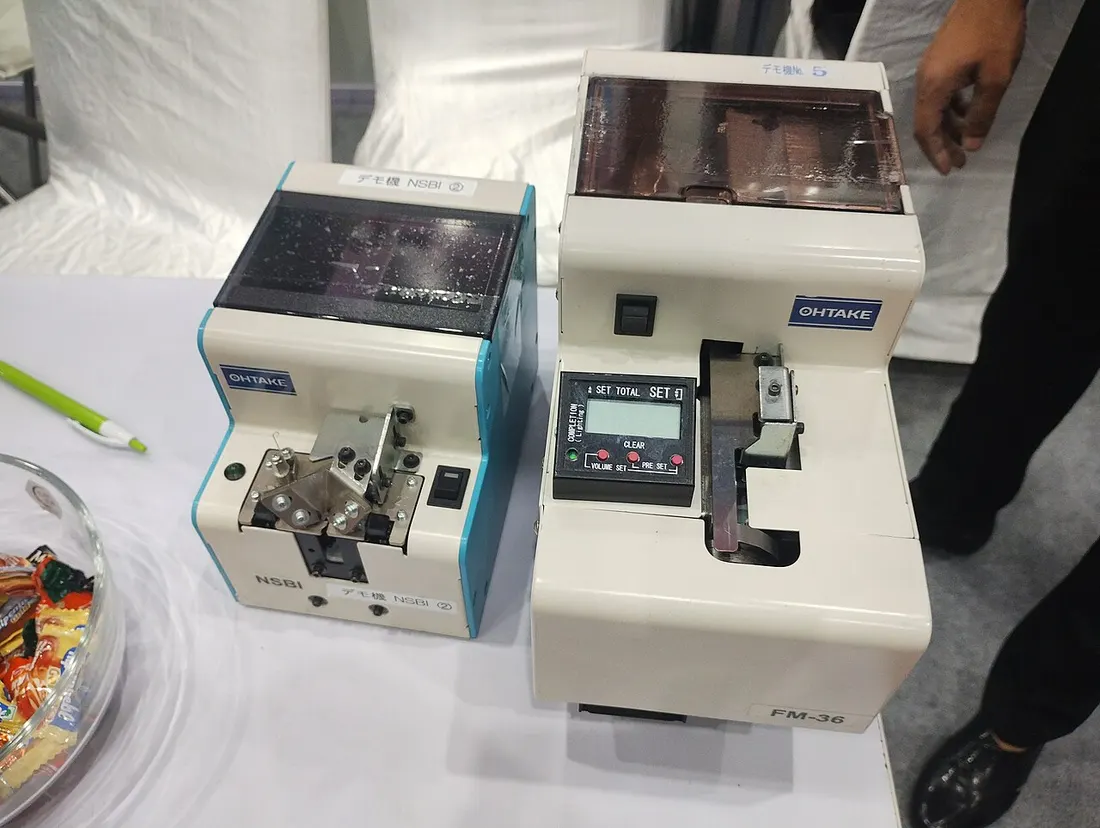

What it does
Orients and separates bulk screws, then blows them one at a time through a feed tube to the tightening tool, reducing manual handling.
How it works
Screws are lined up in the correct attitude in a vibratory bowl or step feeder, and an escapement lets one at a time into the feed tube. Airflow pushes the screw forward, and a cushioning and receiving mechanism at the end brings it into the tool; sensors link feed and arrival status.
Process sequence
- Refill the hopper
- Orient
- Separate one screw
- Blow into the tube
- Detect arrival and cushion
- Tool receives and prepares for the next
Key inputs
- Screw head type, length-to-diameter ratio and surface
- Tube bore, length and bends
- Airflow, receiving attitude and tightening cycle
Common problems
- Jammed, stacked or misoriented screws
- Tube wear and tight bends
- Excess air impact or faulty arrival signals
Limits of application
- Not every long, short or special screw can be blow-fed
- Screw delivery and tightening quality are two separate judgments
Functional modules
Oriented feeding
Arranges loose parts
Single-piece escapement
Limits how many enter the tube each time
Blow-feed tube
Conveys with matched airflow
Arrival cushioning
Detects and slows incoming screws
Manufacturer & technical sources
Continue with manufacturer product pages, operating principles and technical information for this equipment type.