
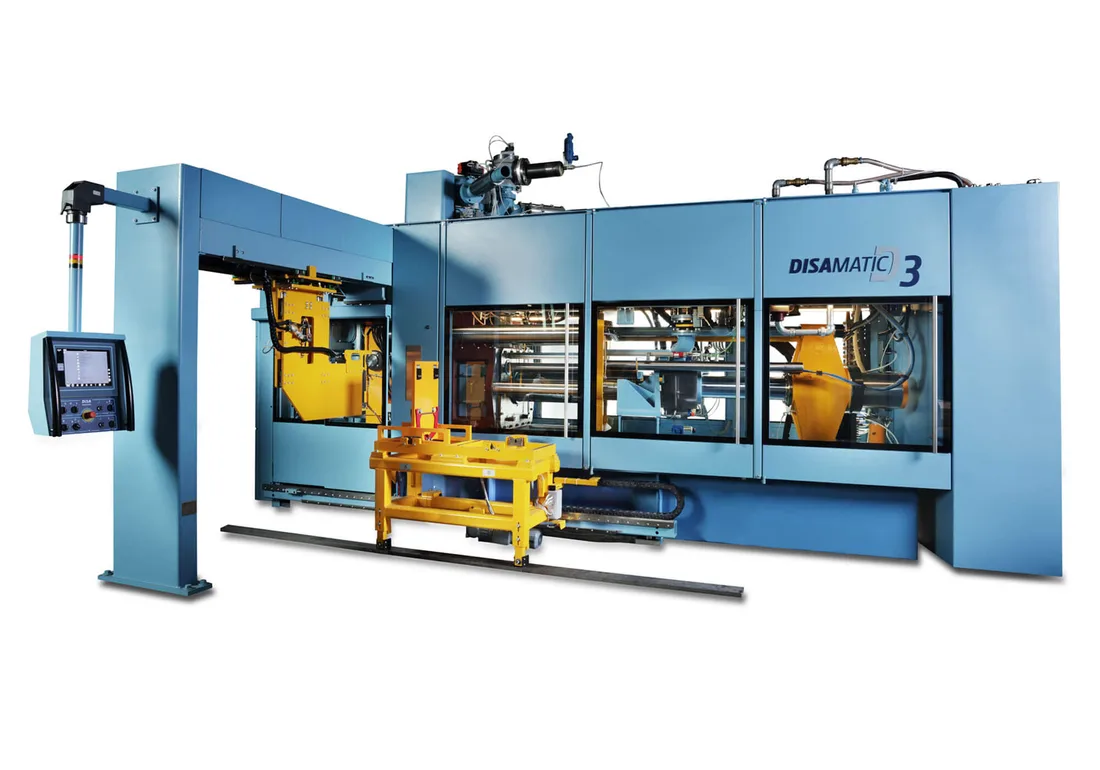

What it does
Links sand mixing, moulding, core setting and closing, pouring and cooling, and shakeout and sand return into one production flow.
How it works
Moulding sand is compacted or cured around the pattern, which is drawn to leave a cavity, and any cores form internal passages; after closing, metal is poured, cools and solidifies, and then the sand mould is broken. Sand handling and moulding machines vary between green sand and chemically bonded sand systems.
Process sequence
- Prepare patterns and sand
- Mould and draw the pattern
- Set cores and close
- Pour and cool
- Shake out and separate
- Treat used sand and clean castings
Key inputs
- Metal and casting shape
- Sand and binder system
- Cores, gating, risers and venting
- Cooling time and used sand handling
Common problems
- Unstable sand and compaction affecting the cavity
- Core shift changing wall thickness
- Insufficient pouring and feeding causing defects
- Early shakeout affecting castings
Limits of application
- A casting line is more than a moulding machine
- Green sand and resin sand cannot use the same sand reclamation
- Sand moulds are usually broken after every pour
Functional modules
Sand handling and moulding
Prepare sand and form the cavity
Core setting and closing
Complete the mould
Pouring, cooling and conveying
Organize metal filling and solidification
Shakeout and reclamation
Release castings and treat used sand
Manufacturer & technical sources
Continue with manufacturer product pages, operating principles and technical information for this equipment type.