
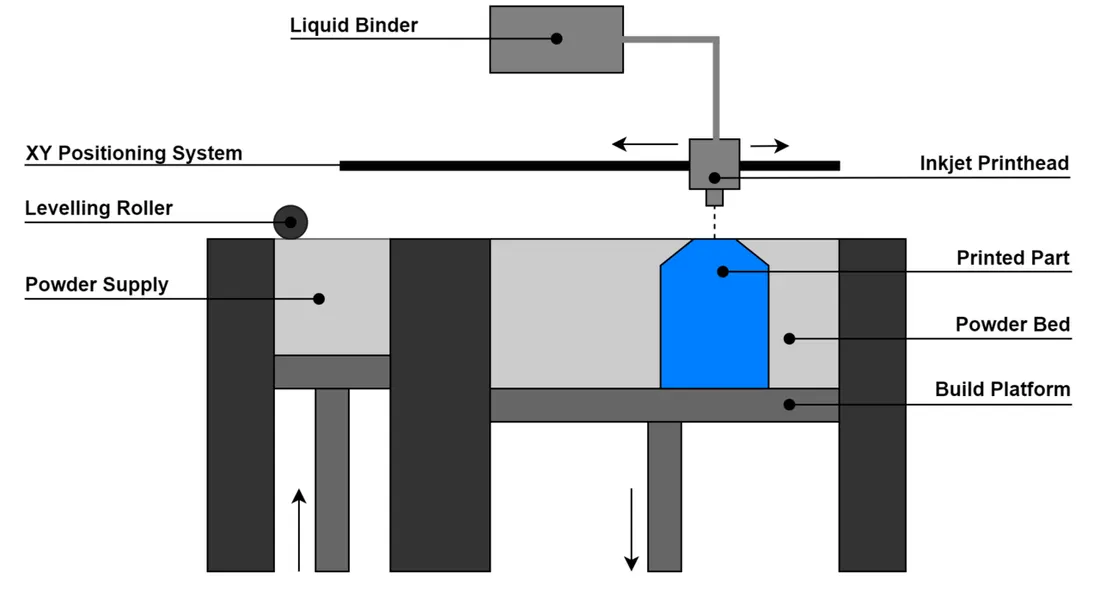

What it does
Makes foundry sand moulds and cores directly from CAD data, reducing the dependence of complex cores on conventional patterns.
How it works
The recoater spreads a thin layer, the printhead applies liquid binder where the section requires, and the sand grains cure together. After layer-by-layer building, loose sand is removed and the mould is cured, checked and treated per the foundry process; the output is moulds and cores, and metal parts still need pouring afterwards.
Process sequence
- Prepare core design and sand
- Spread sand
- Jet binder by cross-section
- Cure and repeat layer by layer
- Remove loose sand
- Inspect cores and pass to casting
Key inputs
- Foundry sand and binder system
- Wall thickness and space for sand removal
- Core strength and permeability requirements
- Match with pouring and cleaning processes
Common problems
- Recoating moving printed areas
- Printhead and binder condition affecting bonding
- Thin walls breaking during depowdering
- Dimensional error affecting mould assembly
Limits of application
- This page covers binder jetting of sand moulds
- It is not a machine for printing dense metal parts directly
- Suitability must be confirmed with actual casting trials
Functional modules
Sand recoating and supply
Form printable sand layers
Printhead and binder
Bond particles in specified areas
Job box
Holds the layered mould
Curing and depowdering
Release cores and prepare for casting
Manufacturer & technical sources
Continue with manufacturer product pages, operating principles and technical information for this equipment type.