
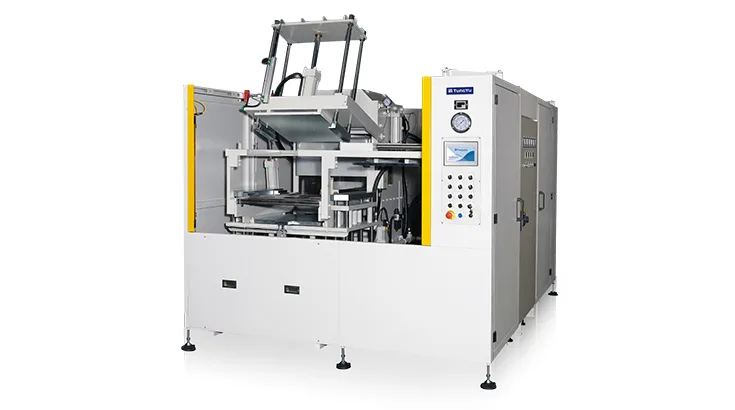

What it does
Applies heat and pressure to rubber compound in a mould so it takes shape and crosslinks.
How it works
The charged mould closes between heated platens, pressure drives filling and surface contact, and a controlled heat history forms the crosslinked network. Cure time and temperature in compression moulding depend on the material and part thickness; afterwards the mould opens for removal, with post-cure where needed.
Process sequence
- Prepare mould and measured compound
- Charge and close
- Bump and apply pressure per the process
- Heat and hold to vulcanize under control
- Release pressure and open
- Remove, deflash and inspect
Key inputs
- Compound and cure system
- Part thickness and mould
- Platen temperature and pressure
- Venting, take-out and post-cure requirements
Common problems
- Uneven heat transfer causing cure differences
- Insufficient venting leaving defects
- Charging or clamping affecting flash
- Wrong time causing undercure or degraded properties
Limits of application
- This page mainly covers hot platen compression vulcanizing
- Continuous vulcanizing tubes and tyre presses are built differently
- Vulcanization is not physical setting by cooling
Functional modules
Platens and mould
Transfer heat and define shape
Hydraulic clamping
Builds and holds forming force
Temperature and time control
Organize the crosslinking process
Opening and take-out
Release parts and prepare for the next charge
Manufacturer & technical sources
Continue with manufacturer product pages, operating principles and technical information for this equipment type.