
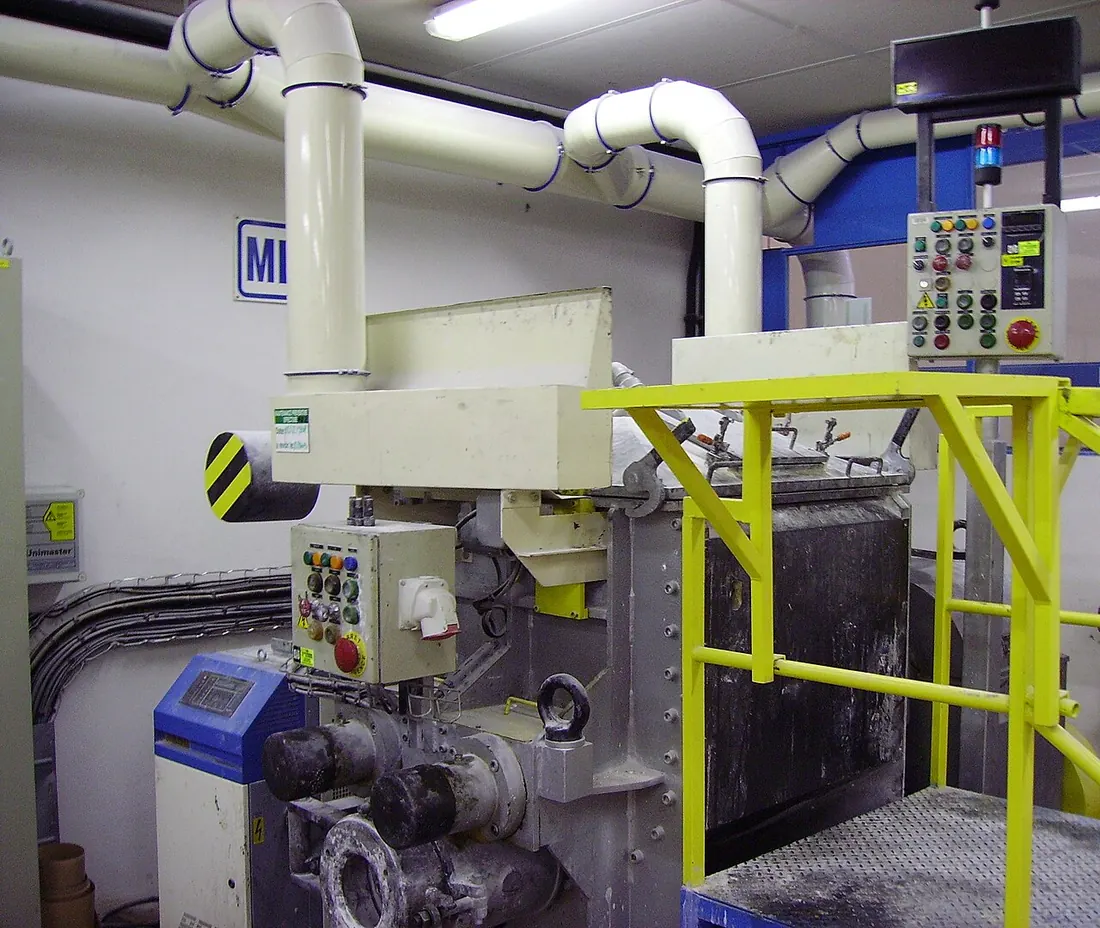

What it does
Conveys rubber compound continuously through a die to form hose, profiles, coverings and other cross-sections.
How it works
The screw conveys and works the compound in the barrel and pushes it through the head and die into the required section. Heating and cooling together manage compound state, and cold-feed, hot-feed and pin-barrel designs suit different feedstock and mixing needs; downstream setting, haul-off and vulcanization are set by the line process.
Process sequence
- Prepare compound and die
- Feed steadily
- Convey by screw with temperature control
- Form through the head
- Match downstream haul-off and setting
- Vulcanize and inspect per the line
Key inputs
- Compound formulation and incoming state
- Cold or hot feed
- Head section and output requirements
- Temperature control, haul-off and later vulcanization
Common problems
- Unstable feed causing section variation
- Shear heat and residence time affecting compound state
- Uneven die flow
- Downstream haul-off not matching output
Limits of application
- Processing rubber compound is not the same as melt extrusion of thermoplastics
- Vulcanization may be done in a separate downstream section
- Screw and pin configuration must suit the compound
Functional modules
Feeding system
Supplies cold or preheated compound
Screw and barrel
Convey and organize compound flow
Temperature control
Manages process heat and material state
Head and die
Form the continuous section
Manufacturer & technical sources
Continue with manufacturer product pages, operating principles and technical information for this equipment type.