
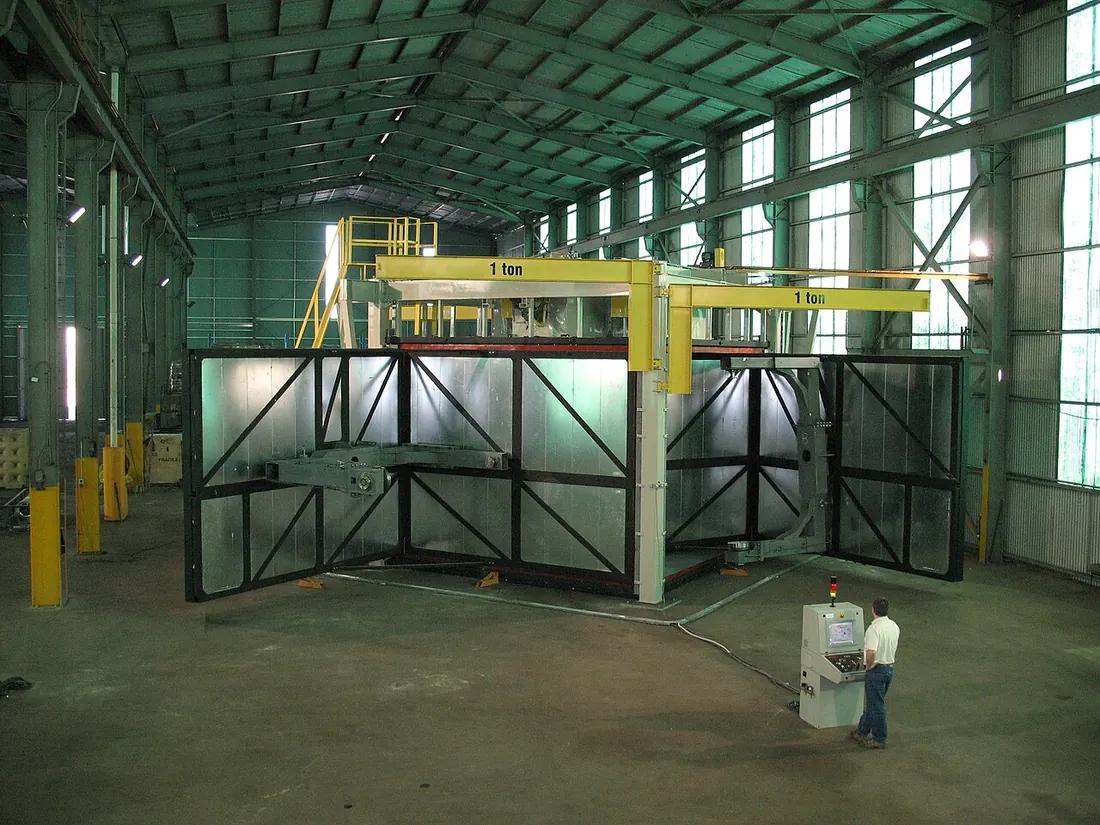

What it does
Rotates a closed mould charged with a measured amount of plastic powder through heating and cooling to form hollow parts.
How it works
The mould turns slowly about two axes, and the powder melts on the heated mould wall and gradually spreads over the inner surface. Once fully fused it keeps rotating while cooling, then the mould opens to release the hollow part; material is laid down by contact with the turning wall, not by high-speed centrifugal casting.
Process sequence
- Place inserts as needed and charge powder
- Close, heat and rotate biaxially
- Melt material onto the mould walls
- Keep rotating while cooling
- Open and remove
- Trim and check dimensions
Key inputs
- Resin powder and charge weight
- Mould geometry and inserts
- Rotation and thermal cycle
- Cooling distortion and demoulding
Common problems
- Insufficient heating leaving incomplete fusion
- Local heating and distribution differences affecting wall thickness
- Fast cooling causing stress and distortion
- Inserts and parting lines affecting demoulding
Limits of application
- Suits hollow parts in suitable materials
- It does not inflate a blow moulding parison
- Different powders and geometries need the heating cycle and cooling method set again
Functional modules
Measured charge and mould
Set part material and shape
Biaxial rotation
Spreads material over the inner wall
Heating zone
Fuses the powder
Cooling and take-out
Set and release the part
Manufacturer & technical sources
Continue with manufacturer product pages, operating principles and technical information for this equipment type.