
Rollers and supports
Roller diameter and pitch to support the smallest load without catching it in a gap.
A roller conveyor carries cases and pallets on unpowered or powered rollers; with mature accumulation and curve modules it is a common backbone for case and pallet lines.
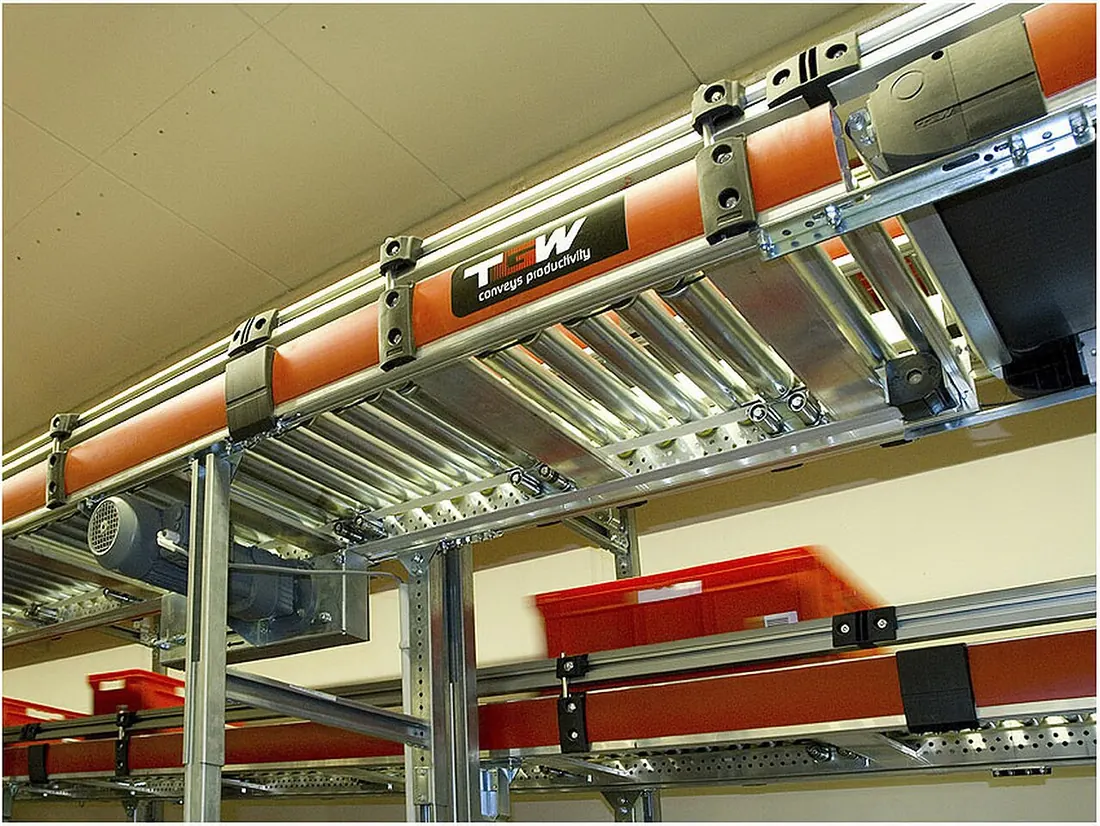

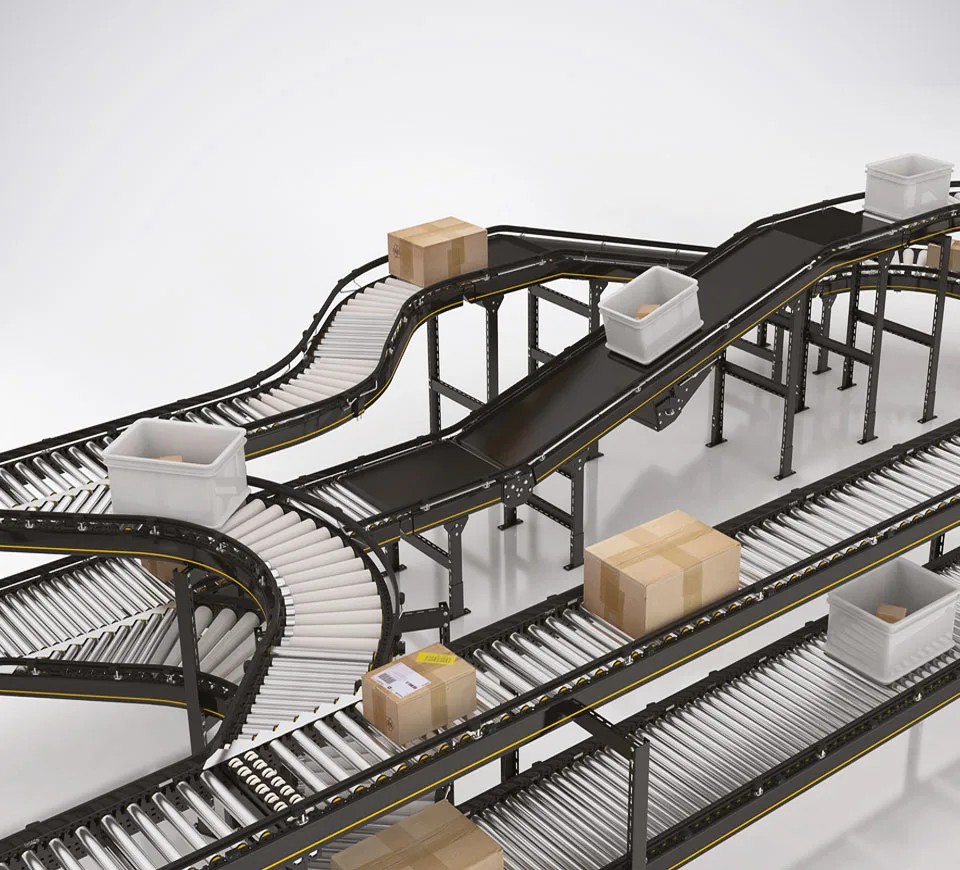
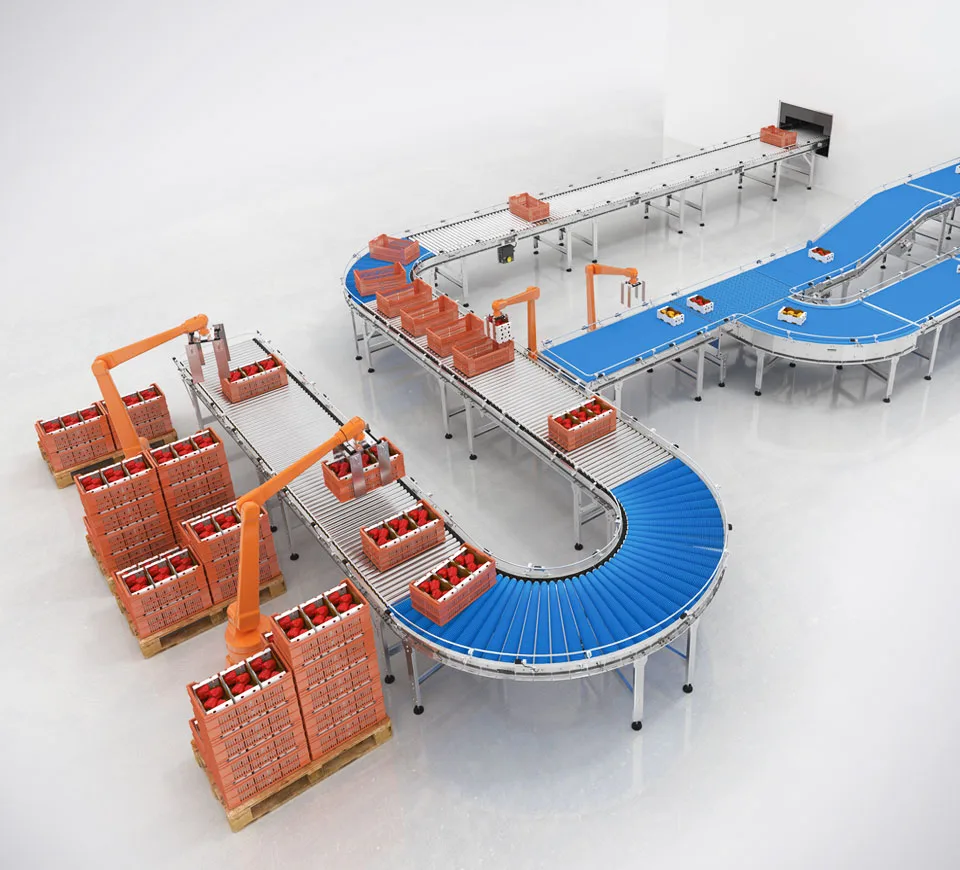
Roller diameter and pitch to support the smallest load without catching it in a gap.
Motor, drive transmission and zone control.
Accumulation behavior and controls.
Interfaces for lift-and-transfer, angled rollers and other transfer units.
Load presence and full-line detection.
Nip-point and side guards.
Rollers carry cartons or pallets by powered drive or manual push. Accumulation allows upstream loads to stop while downstream loads continue. The conveyor can connect to curves, lifts and diverters.
Sequence: load → convey on rollers → accumulate if needed → divert or turn → discharge.
Used for cartons, totes and pallets in logistics, packaging and warehouse infeed. Use another conveyor if small loose items or flexible bags can catch between the rollers.
Rolling supports reduce friction. Powered rollers or a chain drive move the load. Accumulation uses friction clutches or electrically controlled zones.
Rotating rollers move the load in a straight line. Zones commonly start and stop independently.
References scattered across model articles, vendor sites and patent databases, gathered under this machine. Checked items are listed; the rest are offered as ready-to-open searches.
Matched by machine name from the public model articles indexed on this site; formats, licensing and download terms are stated at the source.
The patents below were checked against their abstracts and are listed for their mechanisms; scope and legal status are stated at the source.
No licensed video is hosted for this machine yet; these searches are pre-filled with its name.
Explore structure and assembly with models. Download methods, file formats and terms are provided by the original article or mini program.
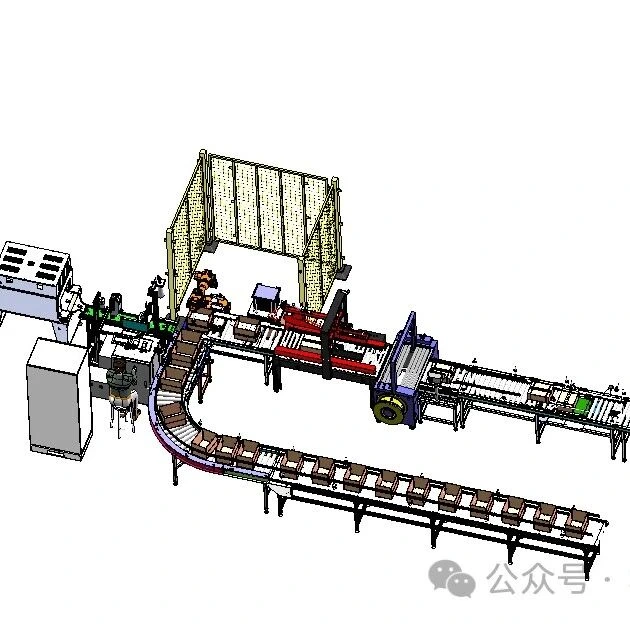 02 — Packaging line with roller conveyor, robot and belt conveyorModel details and download options →Original WeChat article
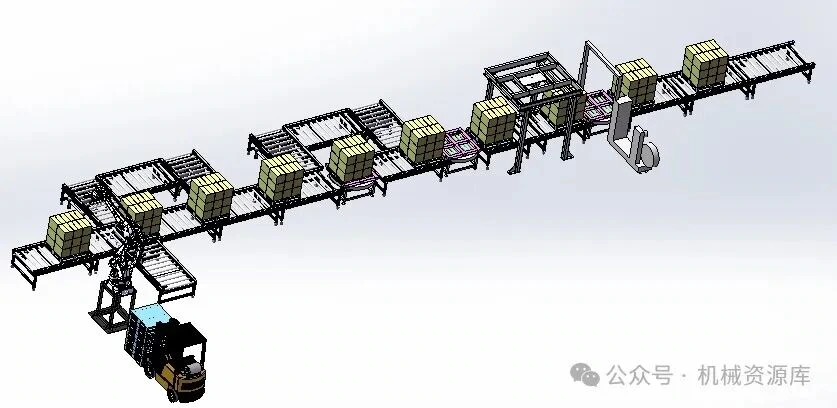 05 — Packaging line with a roller turntable, robot, forklift and strapping machine (native SolidWorks)Model details and download options →Original WeChat article
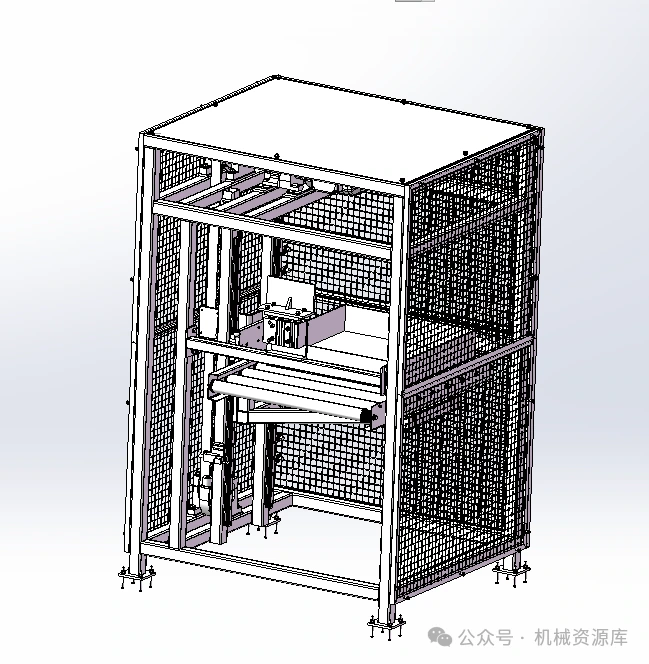 07 — Lift roller conveyor with a timing pulley and standard motorModel details and download options →Original WeChat article
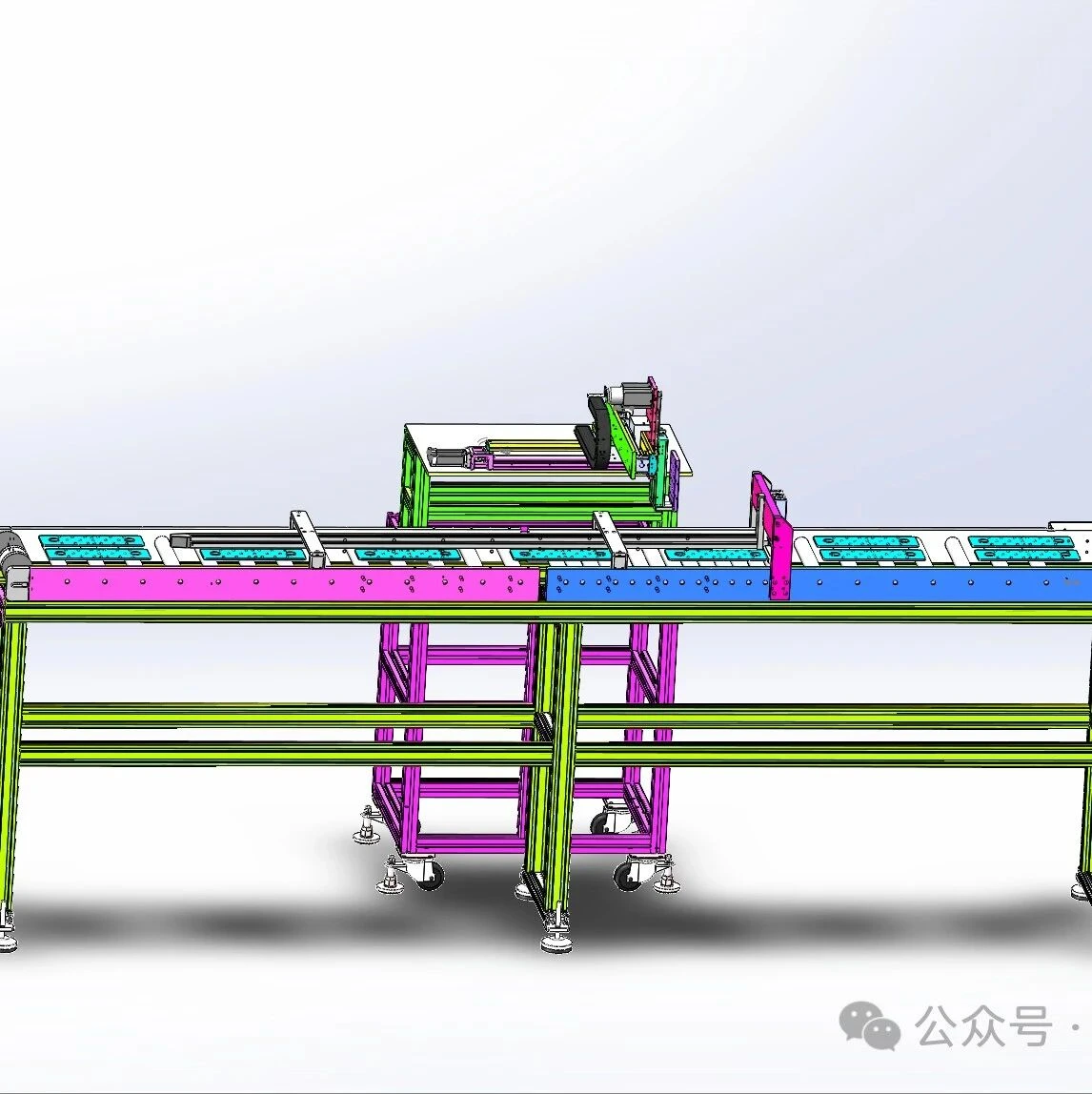 07 — Extrusion-framed roller conveyor and inspection mechanism (native SolidWorks)Model details and download options →Original WeChat article
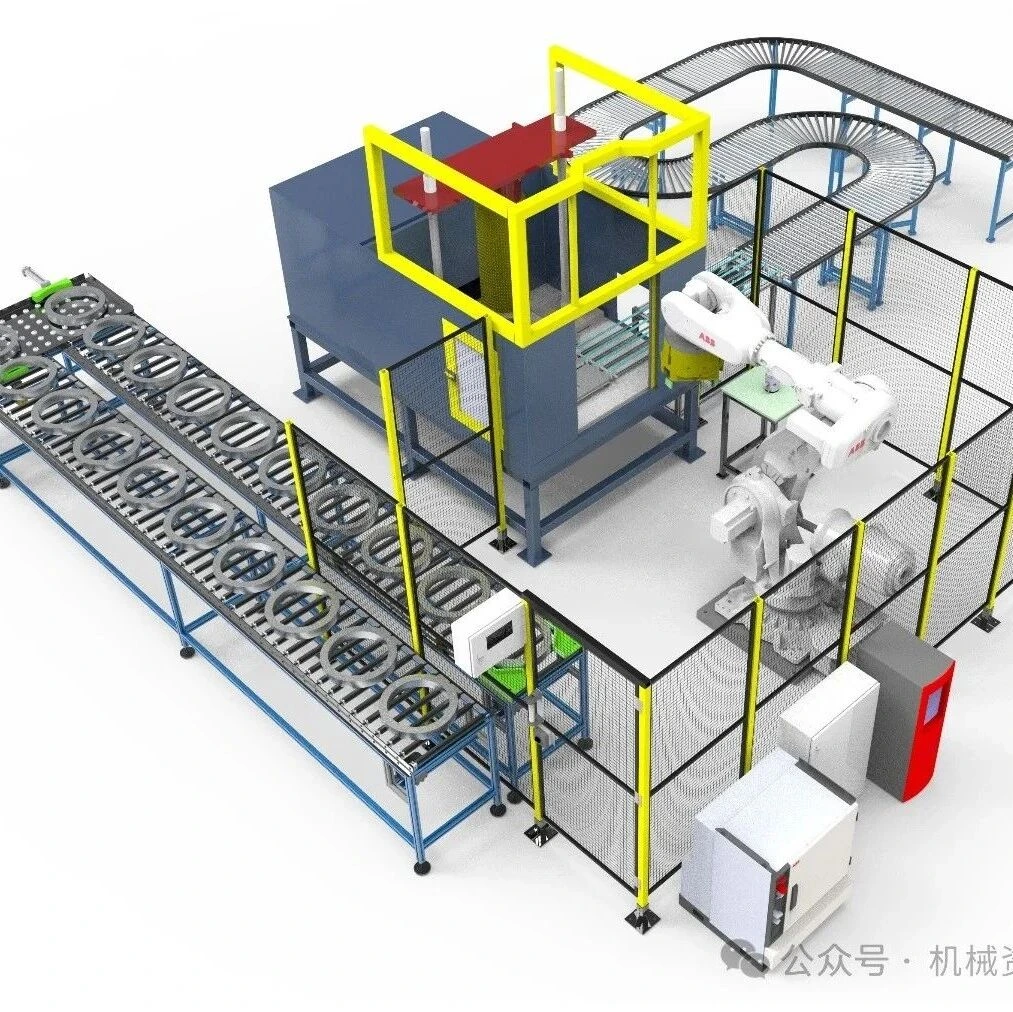 Robotic broaching cell with a curved roller conveyor and wire-mesh guardingModel details and download options →Original WeChat article
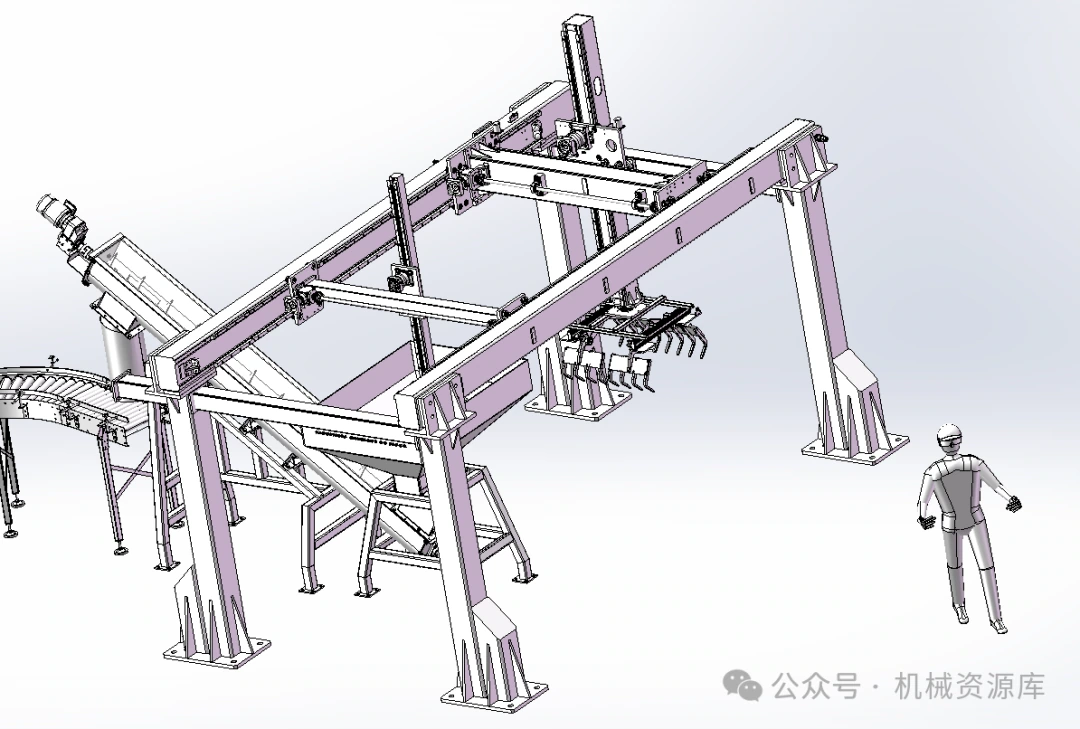 05 — Gantry pick-and-place cell with curved roller conveyor (STEP)Model details and download options →Original WeChat article
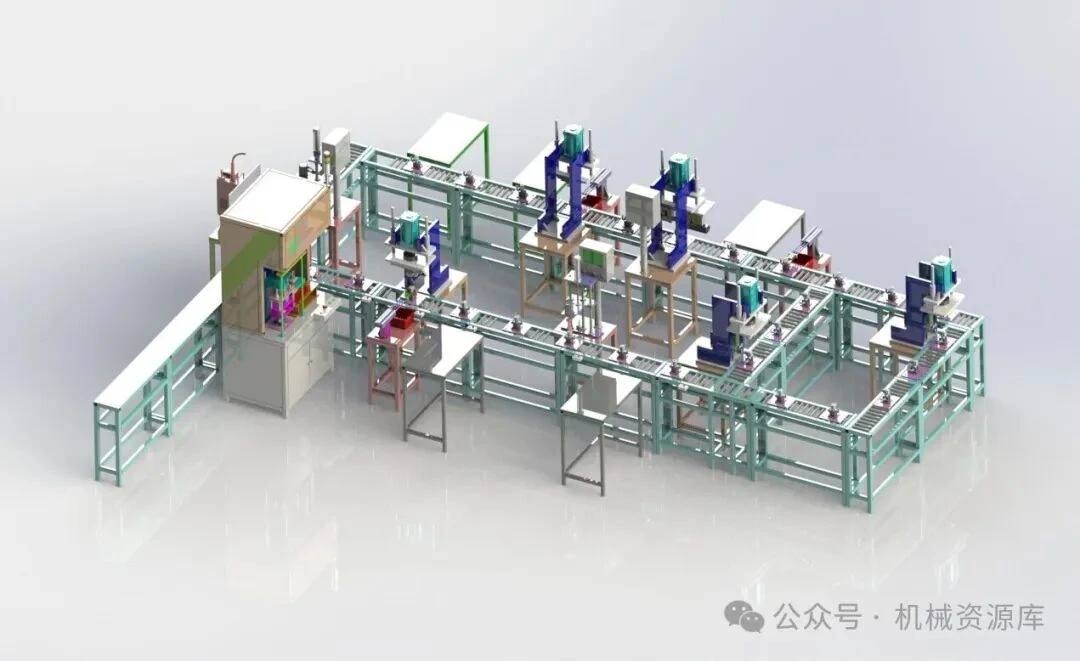 06 — Globe valve assembly and testing line with roller conveyors (native SolidWorks)Model details and download options →Related model: roller conveyor layout for a valve assembly lineOriginal WeChat article
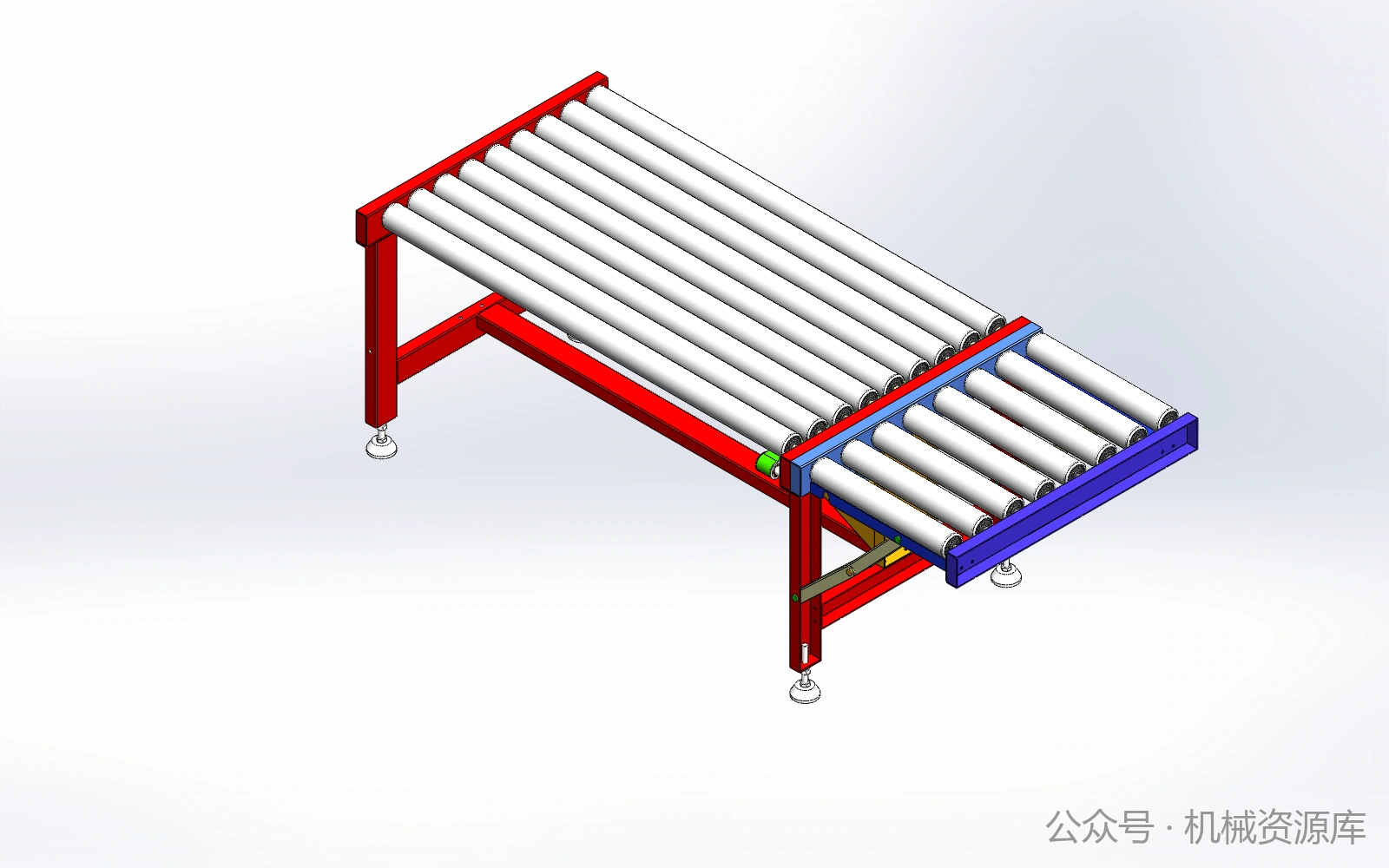 04 — Under-belt friction drive for conveyor rollers (SW16)Model details and download options →Original WeChat article