
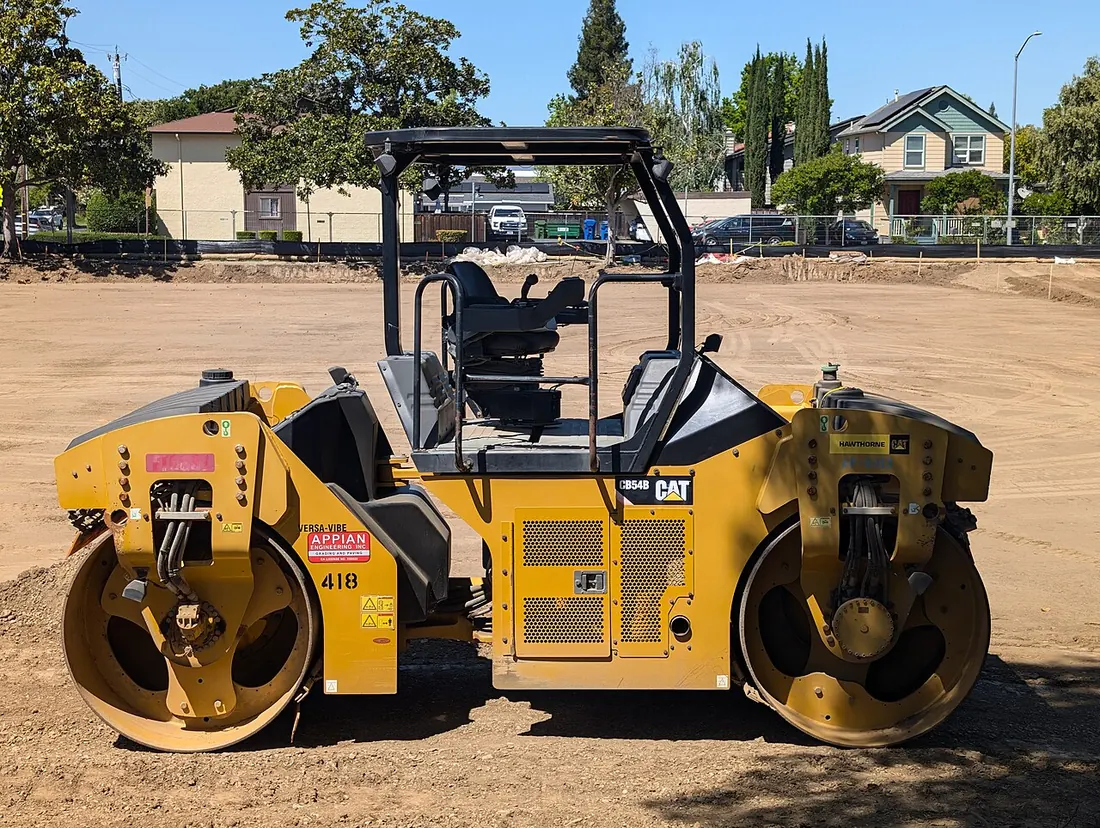

What it does
Rearranges particles in layers or soil to reduce voids, reaching the required density and surface condition.
How it works
Static rollers compact through drum load, while vibratory rollers also generate cyclic force with rotating eccentric masses inside the drum. Oscillating rollers apply alternating torque to the drum axis, sending shear into the material; bigger amplitude is not automatically better in every situation.
Process sequence
- Confirm material and layer condition
- Choose suitable drums and action
- Roll along the pattern
- Cover overlap areas
- Check density and surface
- Adjust passes and method
Key inputs
- Material grading, moisture or temperature
- Layer thickness, base and allowable vibration
- Speed, amplitude and frequency, passes and test targets
Common problems
- Undercompaction or overcompaction
- Shoving, cracking and material sticking to drums
- Speed and vibration mismatch or disturbance to nearby structures
Limits of application
- Smooth drum, padfoot and pneumatic tyre compaction act differently
- Vibration and oscillation use different exciters, and compaction still needs suitable testing
Functional modules
Drums
Transmit static or dynamic action to the layer
Exciter
Produces vibration or oscillation as configured
Travel and steering
Control compaction path and speed
Water spray and scrapers
Manage sticking and drum surfaces by material
Manufacturer & technical sources
Continue with manufacturer product pages, operating principles and technical information for this equipment type.