
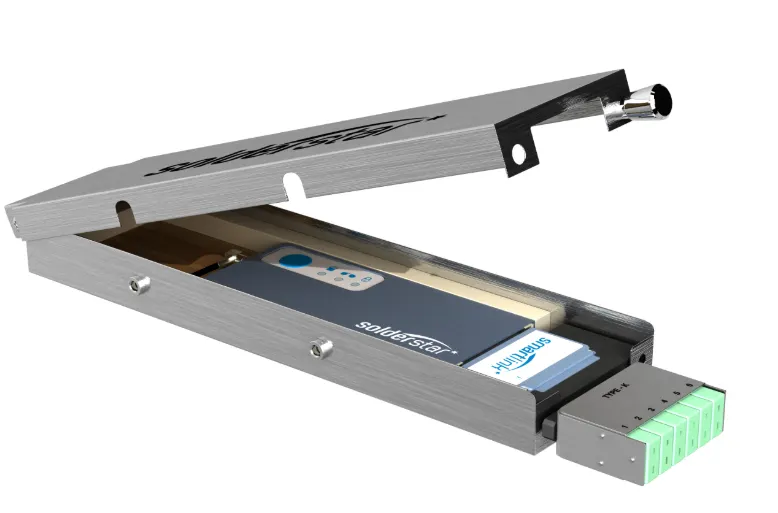

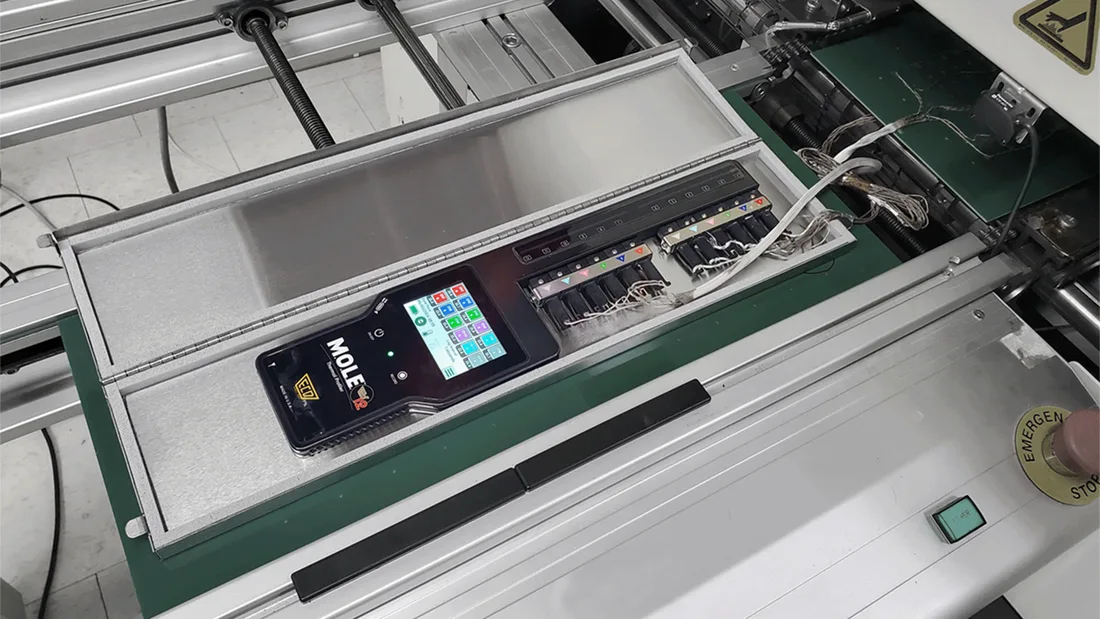
What it does
Records actual temperature over time on an assembled board through reflow, to set up and check the process window.
How it works
Thermocouple junctions are fixed to representative joints, components or board surface, travel with the test board through the oven zones, and the logger records each point's curve. The curves are compared with material and component windows to help adjust zone temperatures and conveyor speed.
Process sequence
- Choose a representative test board
- Place and label measuring points
- Confirm oven temperatures are stable
- Record temperatures with the board
- Read each point's curve
- Compare with the window, adjust and remeasure
Key inputs
- Real assembly layout and heat capacity
- Measuring point positions, attachment and channels
- Solder paste window, component heat tolerance and logger temperature rating
Common problems
- Poor junction contact or detachment
- Measuring oven air and mistaking it for joint temperature
- Bare versus populated board differences or aged test boards
Limits of application
- Measuring a profile does not automatically prove joints are good
- Oven zone setpoints are not the same as measured product temperature
Functional modules
Measuring points
Sense actual temperature at specific locations
Data logger and thermal barrier
Record in-oven data and protect the logger
Test board
Represents the heat capacity of the real assembly
Analysis software
Compares ramp, peak and time above limits
Manufacturer & technical sources
Continue with manufacturer product pages, operating principles and technical information for this equipment type.